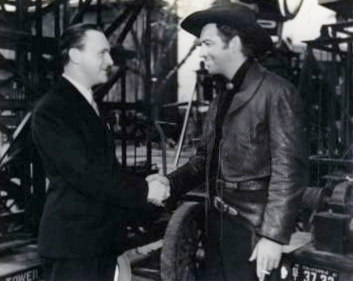
Devil’s Doorway, 1950, Is Playing on TCM on July 12 (USA)

Devil’s Doorway, 1950, is playing on Turner Classic Movies on Tuesday, July 12 at 2 a.m. est.  Closed captioned.  Please note, this will actually play on Wednesday, July 13.

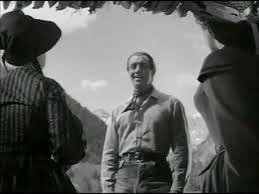
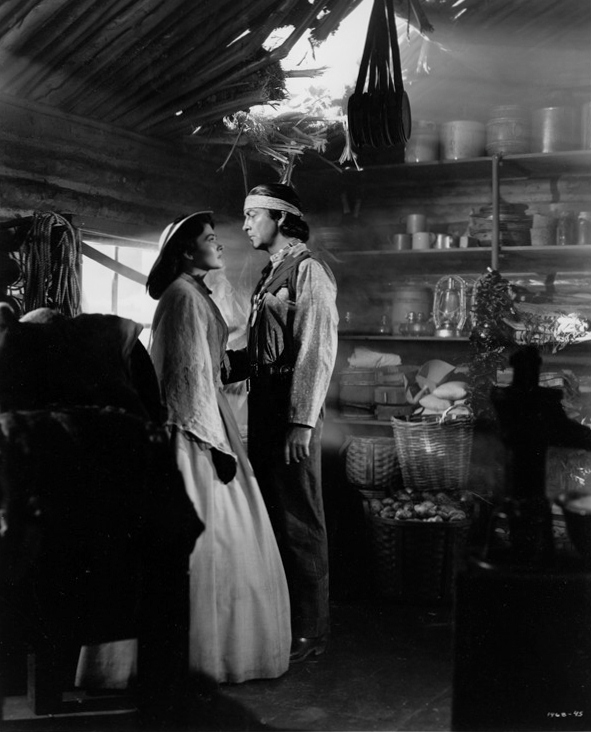
RT1969Devil’s Doorway is an indescribably sad movie. It is directed by Anthony Mann and photographed in Caravaggesque black and white by cinematographer John Alton. The film is a story about war, peace, love and bigotry. At the end of the Civil War, a veteran of the Union Army, Lance Poole, returns to his home in Wyoming. Poole, (Robert Taylor), a Shoshone Indian, has had his fill of fighting and simply wants to live in peace on his family’s ancestral acres.

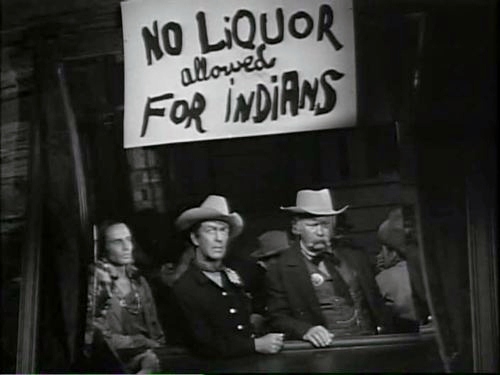
The West, however, is changing. Wyoming has become a territory and the railroad is spreading westward. Immigration from the drought ridden states of the Midwest is filling Wyoming with sheepherders who need land and water to survive. New territorial laws are Draconian in respect to Indians—they are not American citizens, but wards of the government. Land that has been in their families for generations is now open to anyone who wants to homestead there.

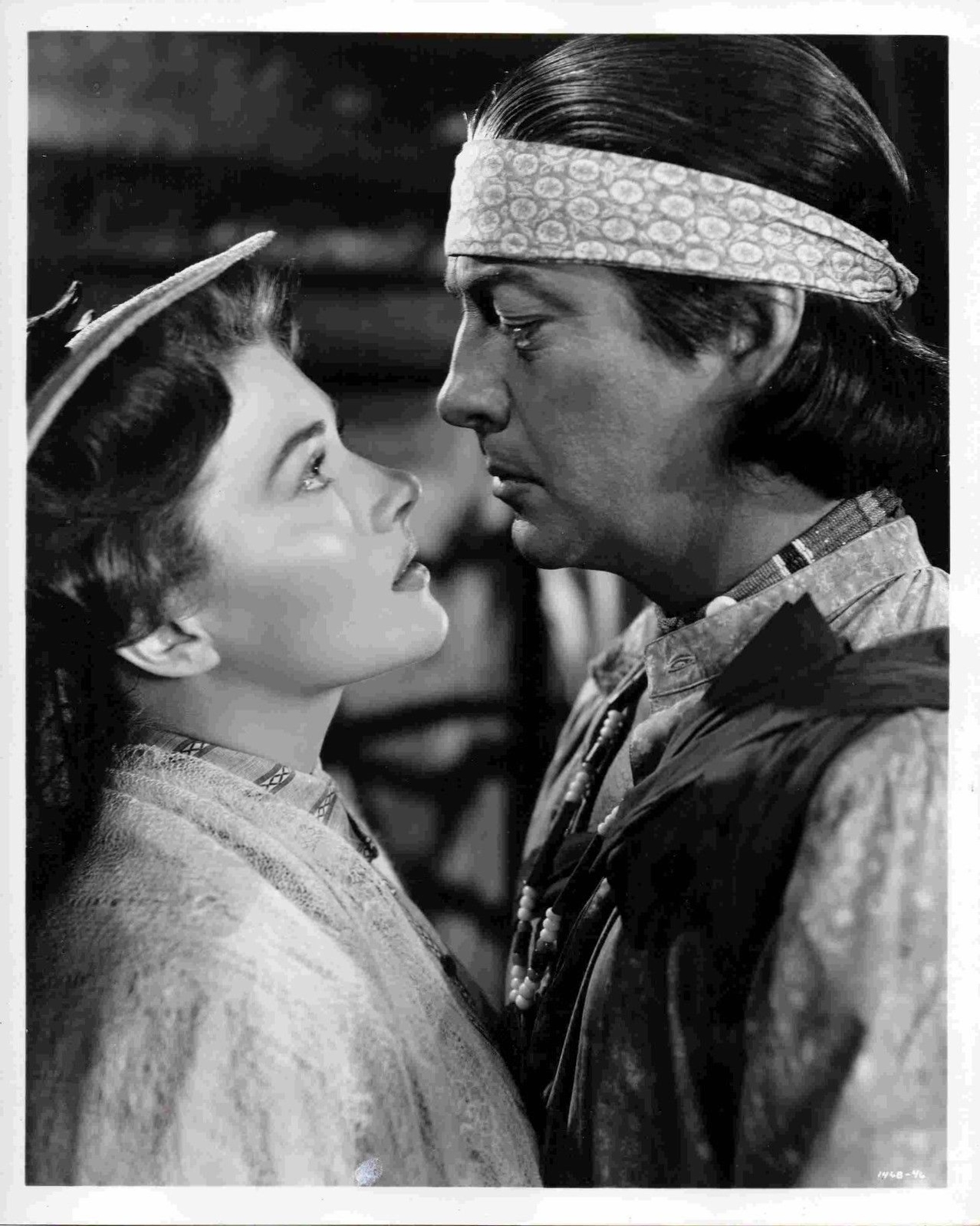
A lawyer named Vern Coolan (Louis Calhern) has moved West for his health. He hates Indians, especially Lance Poole, or Broken Lance, a “rich Indian.” Coolan stirs up trouble Devil02by encouraging the sheep men to homestead Poole’s land. Poole goes to the only lawyer in town other than Coolan, one A. Masters (Paula Raymond). At first horrified that she is a woman, Poole does hire her to help him.

Coolan is successful in mobilizing the sheep men and the Indians, led by Broken Lance, must fight to survive. Masters involves the army in a misguided attempt to save the man she now loves. A final battle ensues with the predictable outcome. Broken Lance, a holder of the Congressional Medal of Honor for his war service, surrenders to the cavalry.

A sub-theme of the film is the confinement of Indians to the reservations. Their men dead, a small group of women and children is forced to return to a reservation from their shelter on Poole’s land. Watching them trudge away to a life of confinement is heart breaking. devil03There are no happy endings here.

Robert Taylor is superb as Broken Lance Poole. When offered the role, Mr. Taylor was happy to act in a film that, for once, saw things from the Indian point of view. It is the same year he made another film, Ambush, that saw Indians as villains. Lance Poole gradually morphs into Broken Lance as Taylor is forced to accept that the world only sees the color of his “hide.”His manner of dress changes as does his personality. Lance Poole was a happy man looking forward to the future. Broken Lance sees that there is no future for him.

The supporting cast of Marshall Thomson, James Mitchell, Edgar Buchanan, Spring Byington and Fritz Lieber, are first rate. The music by Daniele Amfithreatrof is muted and devil01sorrowful, except for the battle scenes.
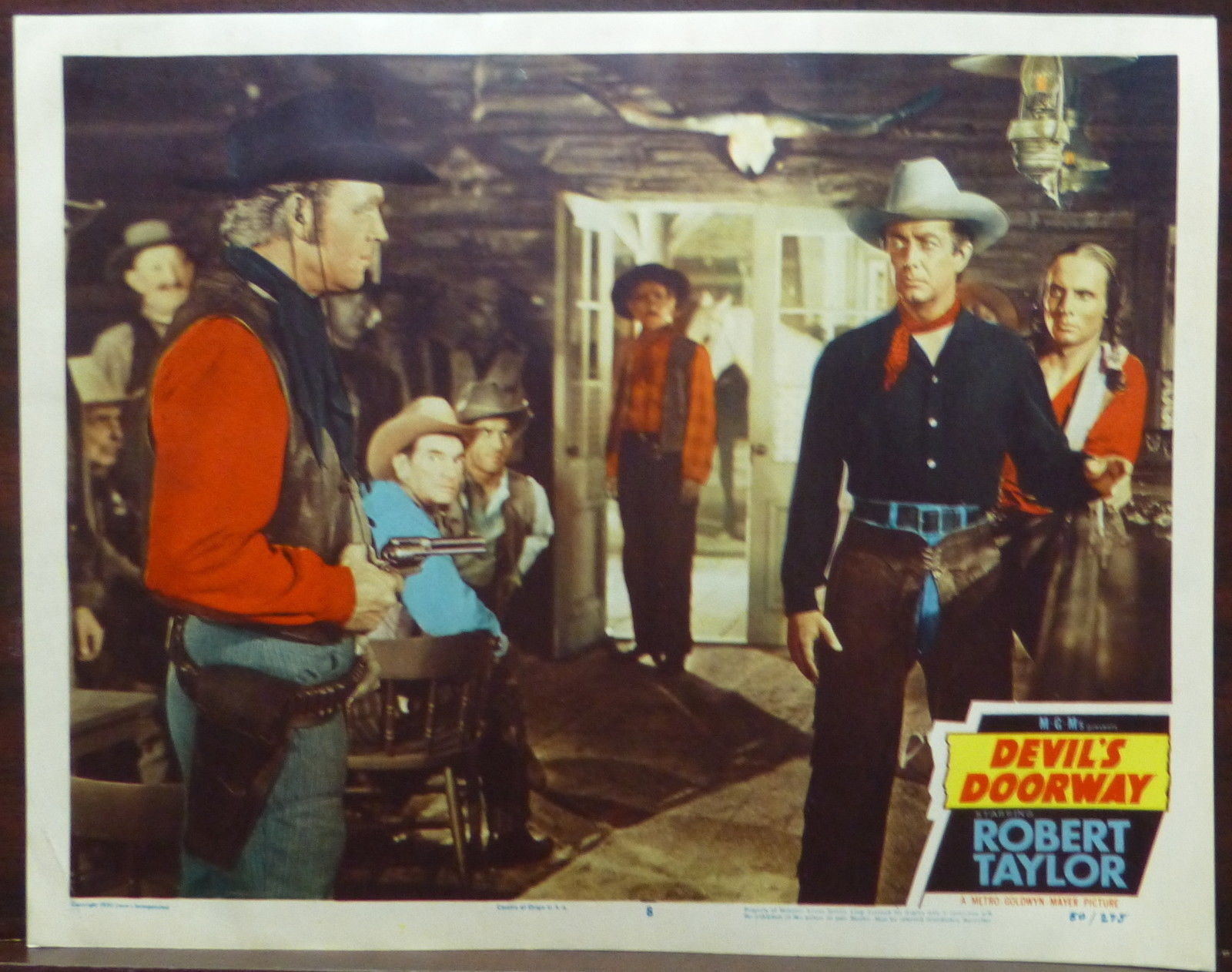
Broken Arrow, with James Stewart and Jeff Chandler, was made after Devil’s Doorway but released first. It was a more upbeat and successful take on Indians. Devil’s Doorway did make money but, according to the studio, only a net profit of $25,000. Today the film is highly regarded for its hard edged honesty, first-rate acting, subtle direction and superb photography.  (Article by me.)

Photos:

????RT4222devils-doorway4083c

????????yhhffs (17)

RT4414RT4421RT2625????
With Paula Raymond

RT4417RT4418RT6563

RT4093RT3949????
Middle photo: with Fritz Lieber
xyz (2)RT5096

Promotional materials:

RT7895Devil's Doorway (1950) Directed by Anthony Mann Shown: poster artRT3850book

RT4311doorway (2)RT7457ddoorway

doorRT7995RT6446RT6661

RT6662Actor Robert TaylorRT7019????

RT7530????RT7158

Posted in Films | Tagged , , , , , , , , , , , , , , , , , , , , , , , , | 2 Comments

Bob Taylor’s Career Has Been Scandal Free

This gallery contains 6 photos.

April 5, 1957 Toledo Blade Hollywood’s Ageless Stars (8th of a series) Bob Taylor’s Career Has Been Scandal-Free Robert Taylor is so normal, he’s almost a bore. He has never been involved in a scandal, has never won an Oscar … Continue reading

More Galleries | Tagged , , , , , , , , , , , , , , , , , | 7 Comments

I Love Melvin, 1953, Is Playing On TCM on June 15 (USA)

I Love Melvin, 1953, is playing on Turner Classic Movies on June 15 at 1:30 p.m. est.  Closed captioned.

Okay, I Love Melvin isn’t a Robert Taylor movie.  It is a fun movie with a delightful cameo by Mr. Taylor.

RT6288

Robert Taylor and Debbie Reynolds in “I Love Melvin.”

This film is an absolute delight from the pre-credit sequence where Debbie Reynolds writes the title of the film in lipstick on a mirror to the hilarious chase through Central Park at the end. In between Debbie dreams of becoming a Hollywood star in some magnificently staged dream sequences, thanks to the genius of Cedric Gibbons, in one of which she meets Robert Taylor as Robert Taylor! In another sequence she dances with three dancers in Fred Astaire masks and three in Gene Kelly masks – before winning an Oscar! Great stuff.

Debbie is perfect as both great movie star and girl next door. Her Broadway performance as a football is a riot. Equally good is Donald O’Connor as her lover and aspiring photographer. His roller-skate sequence is brilliant, as is a dance sequence in which he travels the world and plays numerous characters (again thanks to Gibbons). There is great support from Allyn Joslyn, as Debbie’s exasperated father, and from Jim Backus as a crabby photographer. And the little girl has a good song too.

The score is jazzy and upbeat, and it’s great to see the real Central Park and other New York locations, shot in gorgeous technicolor. I think this terrific musical is very under-rated.
Review by David Atfield (bits@alphalink.com.au) from Canberra, Australia for the IMDb.

ist2_3198263-decorative-swirl-motif

Trivia: Howard Keel was to have originally been the star in Judy (Debbie Reynolds)’s dream, but Keel and his song “And There You Are” were cut after previews and replaced with a brief scene between Reynolds and ‘Robert Taylor’.

Posted in Films | Tagged , , , , , , , , , , , , , , , , , , , , , , , , , , | Leave a comment

Remembering Robert Taylor 1911-1969

fl-funeral01Under1125fl-funeral

Robert Taylor died on June 8, 1969 at St. John’s Hospital in Santa Monica after a long battle with lung cancer.
Governor Ronald Reagan gave the eulogy. Here are some of the things he said:

“How to say farewell to a friend named Bob. He’d probably say, ‘Don’t make any fuss. I wouldn’t want to cause any trouble’…..how to speak of Robert Taylor–one of the truly great and most enduring stars of the golden era of Hollywood.

“MGM was a giant and the home of giants. It had the greatest stars in an era when Hollywood was a Mount Olympus peopled with godlike stars…..Bob Taylor became of the all-time greats of motion picture stardom. Twenty-four years at that one studio, MGM, alone. Thirty-five years before the public. His face, instantly recognizable in every corner of the world. His name, a new one–a household word.

“Perhaps each one of us has his own different memory, but I’ll bet that somehow they all add up to ‘nice man.’

Mervyn Leroy, who directed so many of his great pictures, speaks of his always showing consideration for everyone who worked with him. Artie Deutsch said he never worked in a company where he wasn’t well-loved, well-liked, even beloved by cast and crew.

“He loved his home and everything it meant. Above all he loved his family and his beautiful Ursula; the lovely Manuela, all grown up; little Tessa; Terry, a young man in whom he had such great pride.

[To the family] “As the years go by you will be very proud. Not so much of the things we have talked about here–you are going to be proud of simple things. Things not so stylish in certain circles today, but that just makes them a little more rare and of greater value. Simple things like honor and honesty, responsibility to those he worked for and who worked for him, standing up for what he believed, and yes, even a simple old fashioned love for his country, and above all, an inner humility.” (Quoted in Ursula Thiess, My Life Before, with  & After Robert Taylor, XLibris Corporation, 2007)

swirl

Robert Taylor’s death certificate. The date was originally listed as June 7, then changed to June 8.

img999

Posted in Biography | Tagged , , , , , , , , , , , , , , | 4 Comments

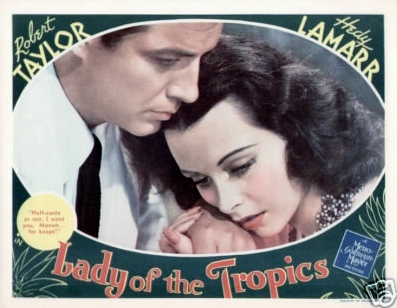
Lady of the Tropics, 1939 and Billy the Kid, 1941 Are Playing on TCM on June 8 (USA)

On June 8, 1969, Robert Taylor died of lung cancer at St. John’s Hospital in Santa Monica, CA.  On the anniversary of this day, Turner Classic is playing two of his films–Lady of the Tropics, 1939 at 4:30 p.m. est and Billy the Kid, 1941 at 6:15 p.m.  The latter is closed captioned but not the former.

RT5162

Robert Taylor and Hedy Lamarr.

For those who don’t realize it the Lady of the Tropics we’re referring to is Hedy Lamarr who falls big time for visiting playboy Robert Taylor in Saigon. Of course one look at Hedy Lamarr and his romantic goose is cooked as well. But there’s is a forbidden love and sad to say the message in Ben Hecht’s screenplay is stick to your own kind.

Lady of the Tropics was shot while Hedy Lamarr was on hiatus from the ill-fated I Take This Woman. Louis B. Mayer nor any of the other movie moguls believed in letting their players sit idly by. So Lady of the Tropics became Lamarr’s second film and her only pairing with that other screen beauty Robert Taylor.

Taylor plays a very honorable character here or at least more honorable than most. He’s part of a visiting party of tourists off a yacht that lands in Saigon right before World War II starts. As we well know Vietnam was then under that colonial umbrella known as French Indo-China and Saigon was its capital. Among others Taylor is with is his American fiancé Gloria Franklin.

Of course the romantic sparks start the second that Lamarr and Taylor catch sight of each other in that Saigon café. Taylor does an unheard of thing, he breaks it off with Franklin and weds Lamarr post haste.

Sad to say, but implicit is the message that what you do with exotic beauties not 100% Caucasian is bed them don’t wed them. But Taylor and Lamarr don’t see it that way. As was said by Queen Latifah in the recent Hairspray, they’re in for a whole world of stupid.

This was 1939 not 1967 in America. We still had miscegenation laws in most states at the time so the message of sticking to your own kind was in keeping with 1939 mores. This is the exact opposite message the screen would give in 1967 in Guess Who’s Coming To Dinner.

Taylor and Lamarr are stunning, no two ways about that. The sets showing tropical Saigon are great and the film did get an Oscar nomination for cinematography. But the story is both melodramatic and thank God, dated. Review by BKoganbing, Buffalo, New York,  for the IMDb.

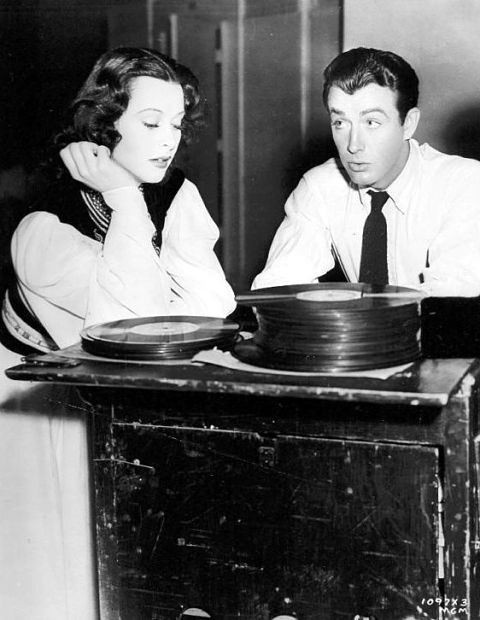
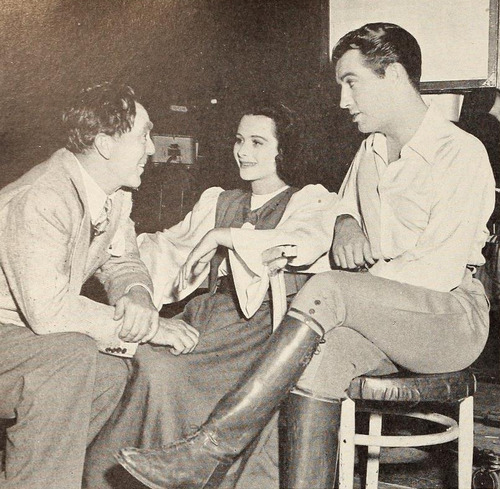
Some behind the scenes photos:

RT3302RT3274RT276RT5285
Left to right: Hedy Lamarr and Robert Taylor; unknown, Ms. Lamarr, Mr. Taylor; unknown, Mr. Taylor; Ms. Lamarr and Mr.Taylor

swirl

bk22Billy the Kid (1941) is an early example of the use of Technicolor. The film is visually outstanding. Cinematographers Leonard V. Skall and Leonard Smith received an Oscar nomination for their work on the film and should have won. From close-ups to panoramic views of Monument Valley, Kanab, Utah and other locations they used color, composition and especially light masterfully. Some scenes evoke the stillness of a Vermeer and others the chiaroscuro of Rembrandt. Near the end of the movie Billy is standing near the window of a tumbledown shack. The viewer is outside and can see his body fading into the shadows except for the upper part of his face, especially the intense blue eyes. There is a Caravaggio-like spotlight on the hand and gun the outlaw is pointing out the window.

Historically, there is little resemblance between the film and the actual life of Billy the Kid. The general details of his background is correct but the names have all been changed, perhaps to head off the complaints of purists. There is no Pat Garrett, but rather a Jim Sherman (Brian Donlevy), no William Tunstall but an Eric Keating (Ian Hunter). The filmmakers obviously wanted to tell a good story without regard to historical accuracy.

Robert Taylor was 30 when Billy the Kid was filmed. He’s too old for the part but not by as much as some have made out. To seem younger, Taylor plays Billy as uncouth, uneducated and probably illiterate. The outlaw is incapable of understanding the consequences of his actions. He’s always being bombarded by new ideas and new customs. There is a lighthearted scene where Billy is handed a teacup and saucer, objects obviously new to him. He picks the cup up as though it were a glass until he sees what Keating is doing. Billy holds the cup awkwardly by the handle until Keating turns away then he gulps the tea with his original hold.

This was Robert Taylor in his element. He was a superb rider and did all of his own riding in this film, even in the long shots. Taylor also had the western swagger down pat and seems very comfortable in his cowboy costumes. In private life, he often wore jeans, boots and a Stetson. In the first and last parts of the film, Billy dresses all in black. In the middle he wears a blue shirt to indicate his changed lifestyle. Robert Taylor practiced left-handed drawing and shooting for weeks before the film and used the skill again in the film “Ride Vaquero” in 1953.

Taylor and Donlevy are comfortable with one another, having worked together before in “This Is My Affair” in 1937. The easiness of their relationship makes Billy’s (temporary) transformation into an honest cowboy believable. Mary Howard has a small role as Eric Keating’s sister and makes the most of it. Ian Hunter is believable as rancher Keating.

The villains, especially Hickey (Gene Lockhart) are suitably nasty. Henry O’Neill, a leading character actor, throws himself with gusto into the role of a newspaper publisher whose press is constantly being sabotaged. Review by me for the imdb.

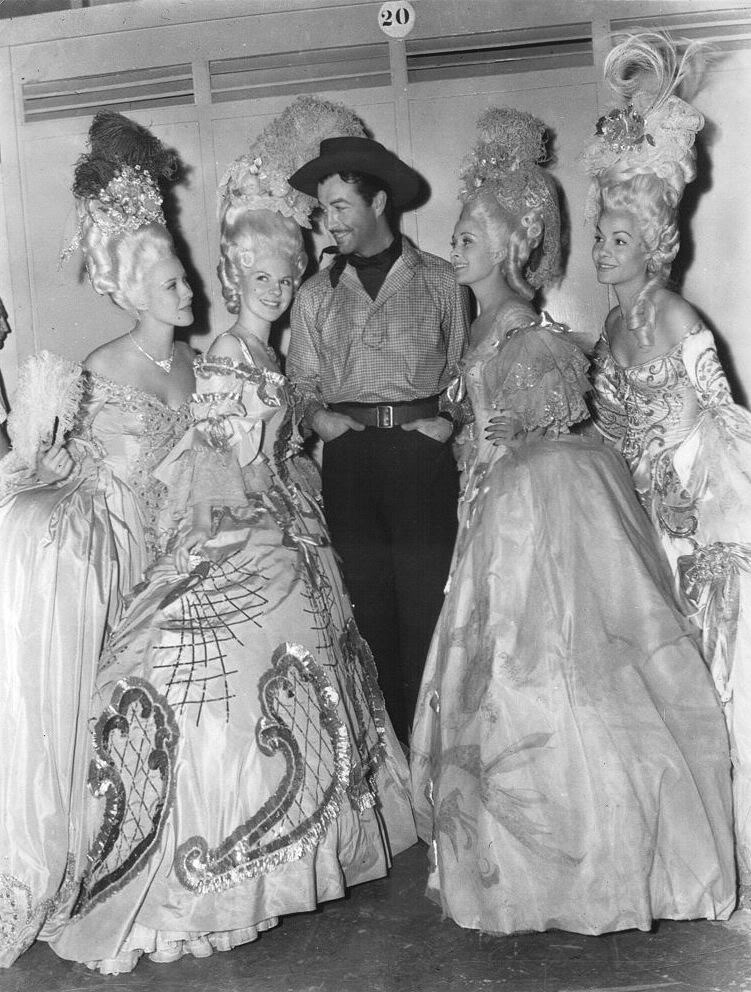
Some behind the scenes photos:

RT1772RT448RT534
Left to right: Robert Taylor with some of the ladies from Marie Antoinette; round up; unknown with Robert Taylor.

Posted in Films | Tagged , , , , , , , , , , , , , , , , , , , , , , , , , , , , , , , , , | 2 Comments