Ivanhoe, 1952, is playing on Turner Classic Movies on Monday, February 27 at 3:45 p.m. est.
Ivanhoe was one of the most successful films of the year and brought in over $10 million at the box office, about $89,823,018.87 in 2015.
Wonderful movie! This film is an exciting adventure-romance which never once loses its pace or feel. Robert Taylor brings depth to a potentially dull lead character. Jean Fontaine is great as his love, the Lady Rowenna. Elizabeth Taylor, though, steals the show with her stunning portrayal of Rebecca of York! This film has aged very well and shows first-hand to a young generation just why Elizabeth Taylor was such a star.
Although this film is an extremely enjoyable adventure, it also has the guts to tackle some complicated issues and resolve them in a very non-Hollywood fashion. As Ivanhoe feels his love for the beautiful Rebecca grow will he defy convention and pursue the lovely Jewish girl or remain with the safe charms of the blond, Anglo-Saxon Rowena? The answer is intelligently handled and surprising. This film is one of the greatest examples of the classic adventure. Review by David Arbury for the IMDB
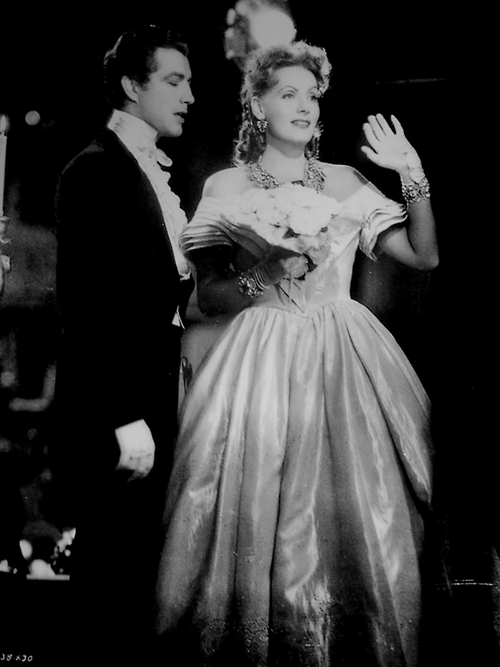
Camille, 1936, Is Playing on TCM on Friday, February 17 at 9:00 a.m.
Just in time for Valentine’s Day–this is the love story of all love stories and shouldn’t be missed.
This film further proves that the assembly-line system of Hollywood studios back then should also be taken seriously in terms of artistry. Just because movies were produced run-of-the-mill doesn’t mean that they weren’t paid critical attention to by their makers. The usual impression on studio-era Hollywood is: take a formulaic narrative style, maybe adapt a stage play for the screen, blend in a handful of stars from the stable and the films rake in the profit at the box office. Not quite, that’s the easy perception. George Cukor, another of those versatile directors, made it apparent with Camille that filmmaking as an art may still flourish despite (and even within) certain parameters. Camille is beautiful, in so many respects. And it’s not just because of Greta Garbo.
Sure, the acting is amazing, the casting is perfect. Garbo is luminous, mysterious, cruel, and weak at the same time. Robert Taylor surrenders himself to be the heartbreakingly young and vulnerable Armand. Henry Daniell’s coldness and sadism is utterly human and familiar. The others are just plain wonderful. The writing contains so much wit and humor, devotion and pain – but it never overstates anything. The rapport and tensions between lovers, friends, and enemies are palpable and consistent. The actions flow so naturally, just like every scene, that checking for historical inconsistencies seem far beside the point.
There is so much that I love about Camille that it’s hard to enumerate them all, but with every little discovery comes the realization that this is “but” a studio production, so it makes the experience more exquisite. Camille is a gentle, poignant romantic movie that, like Garbo, takes its place delicately and self-effacingly in the history of American cinema, but makes itself indelible in the heart and mind of the lovelorn individual viewer. Review by tsarevna for the IMDb
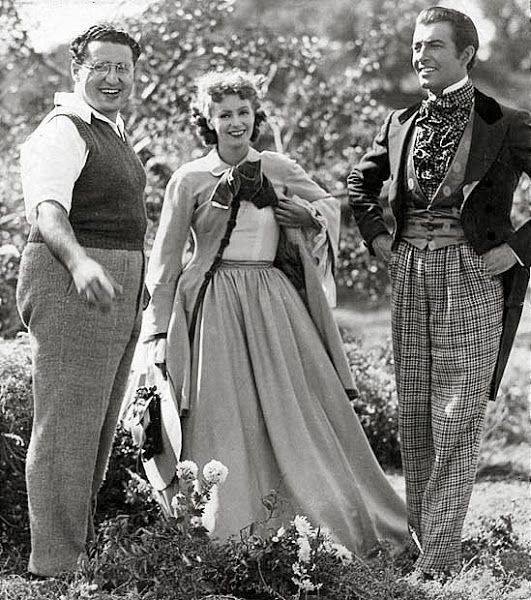
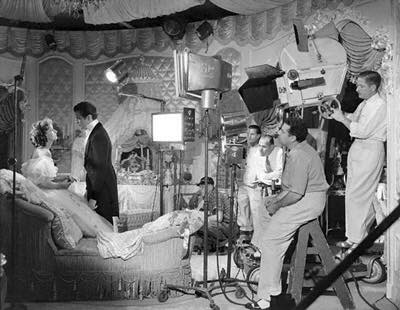
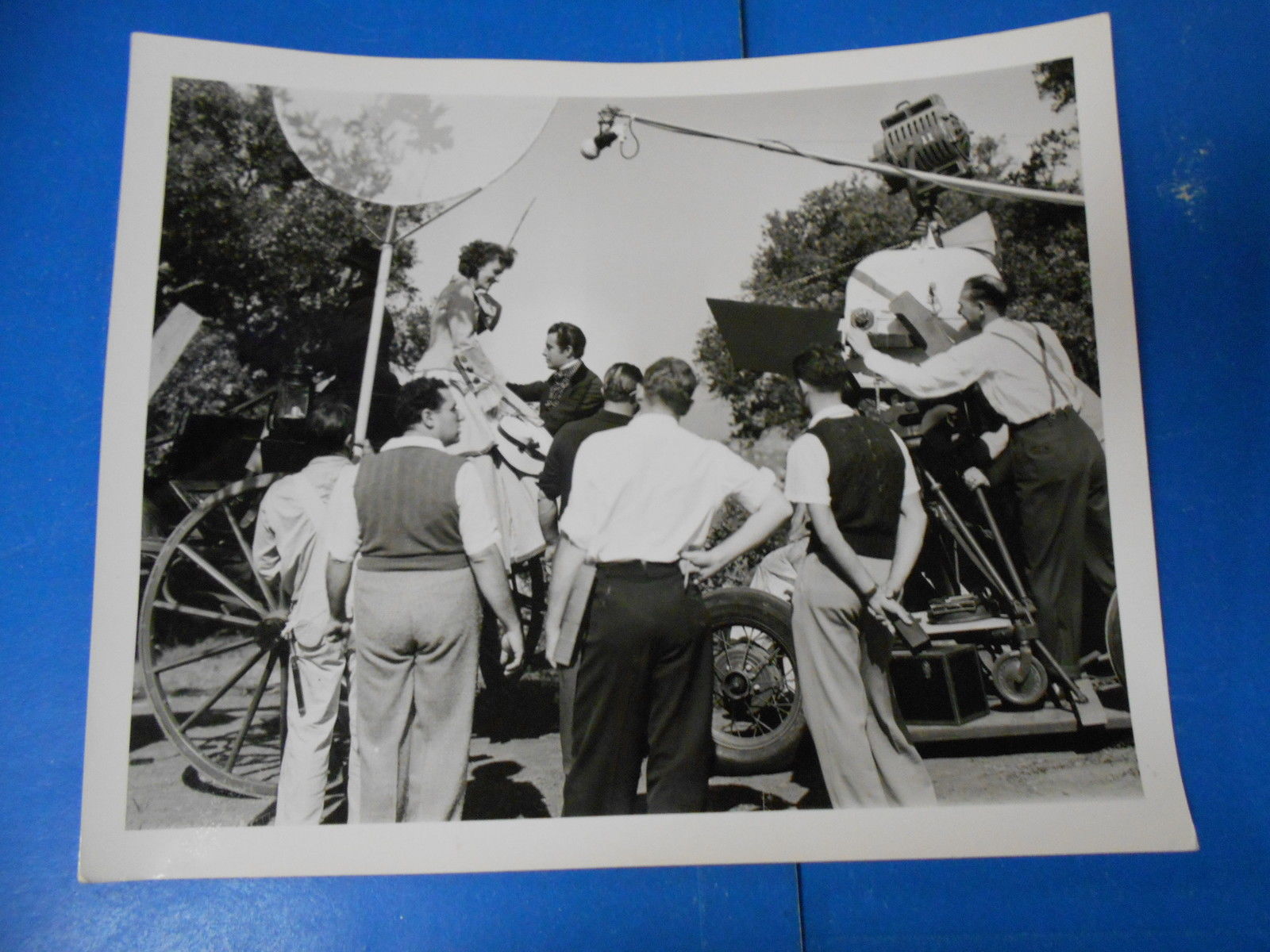
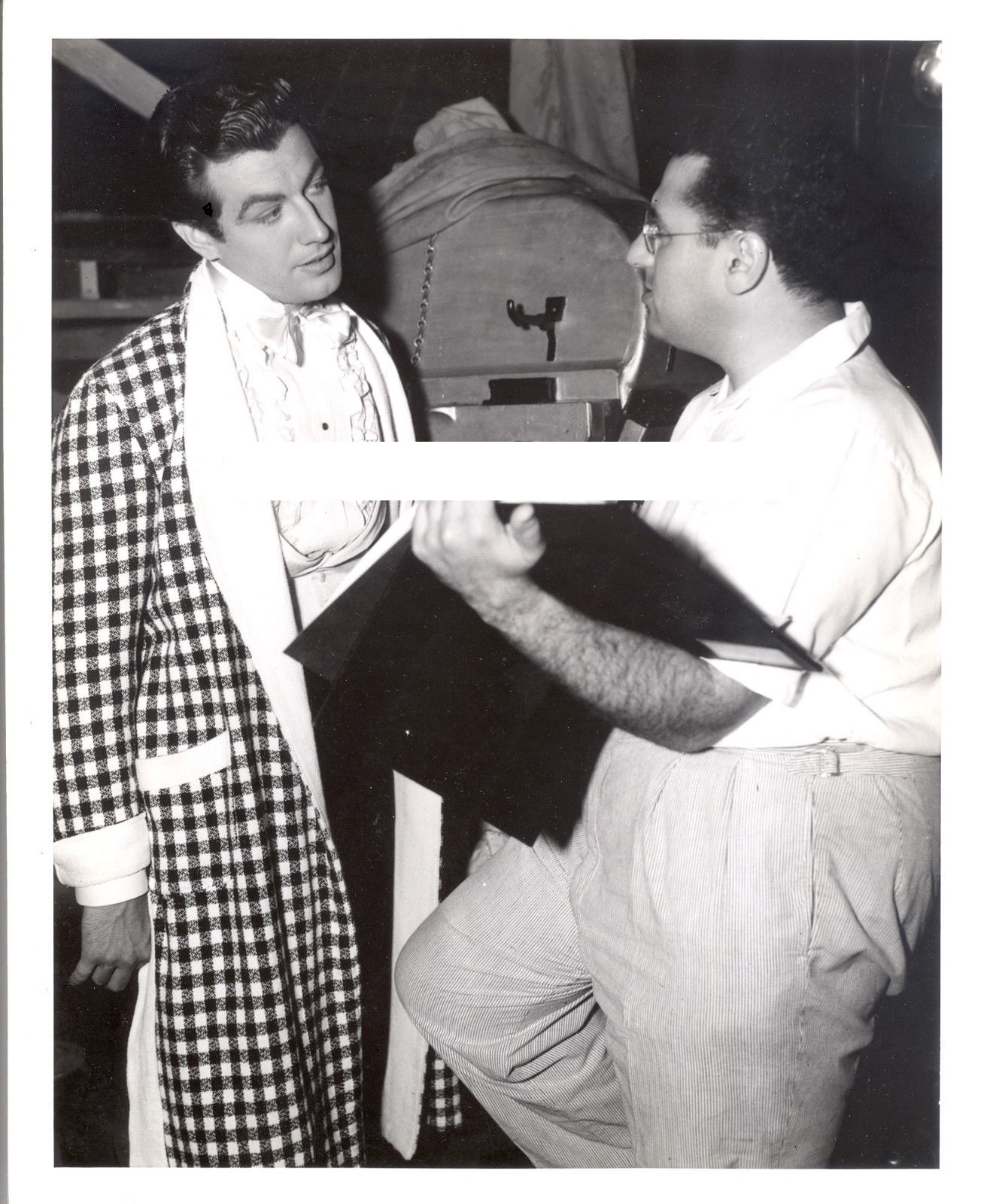
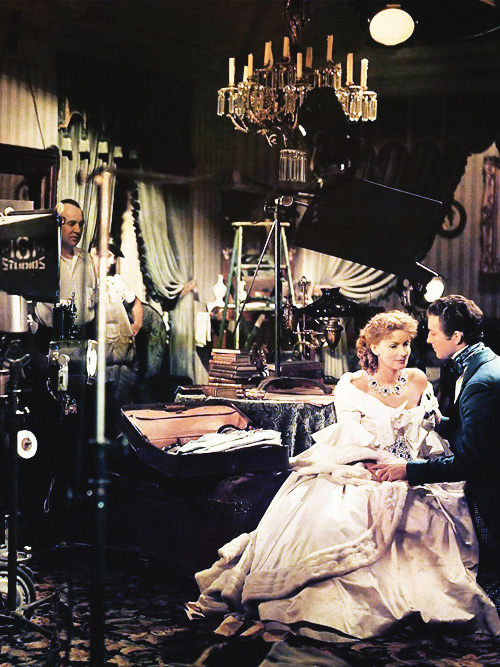
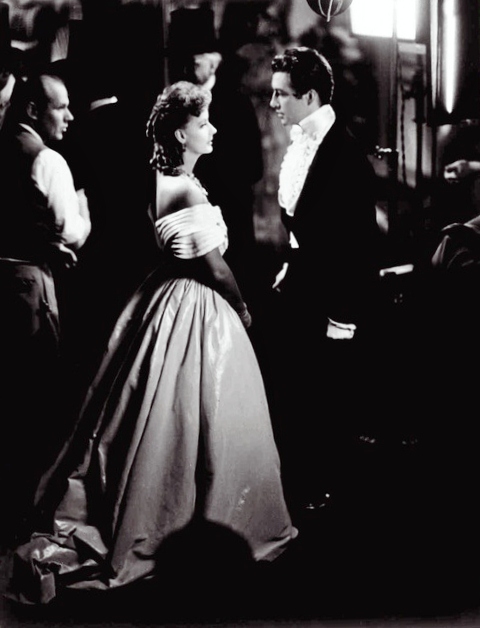
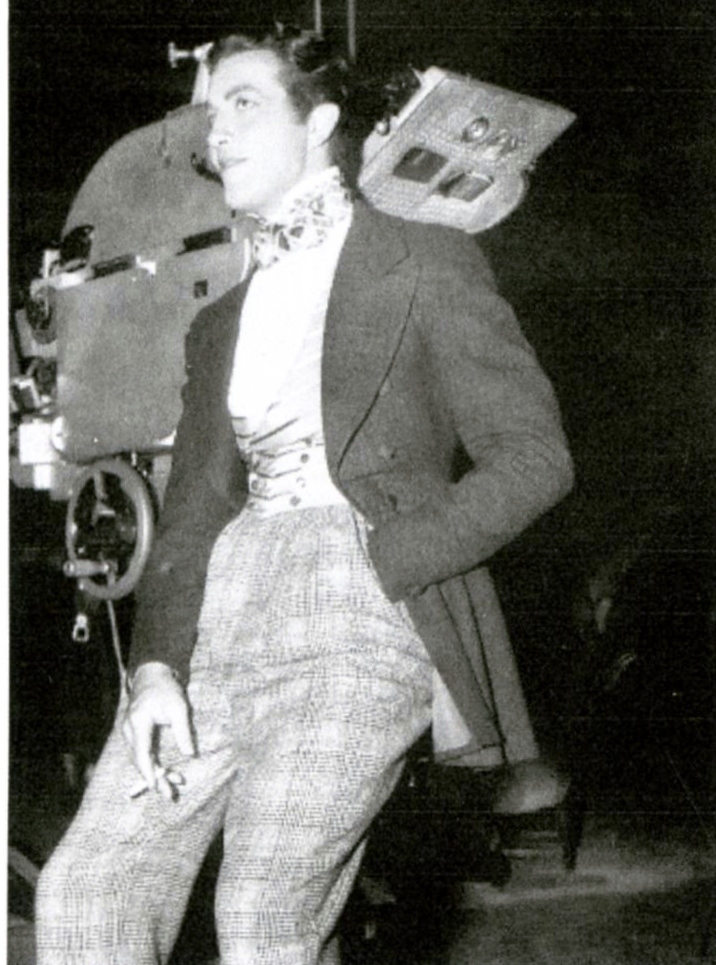
Behind the scenes photos from Camille: The heavy set man in several pictures is Director George Cukor.
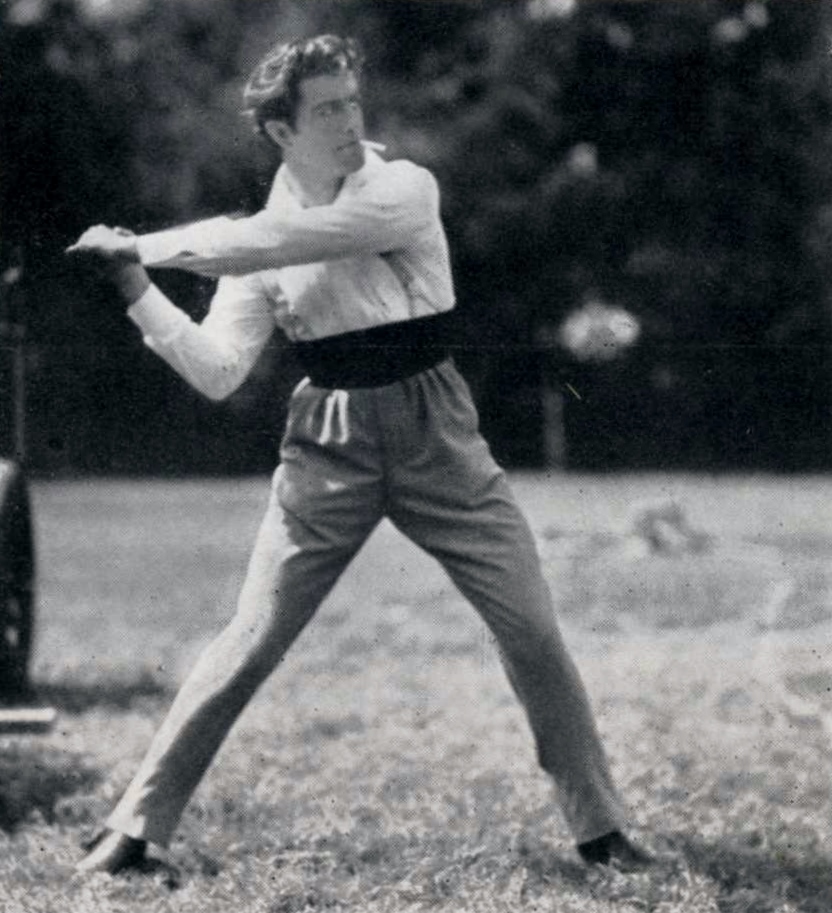
He also plays baseball-in costume on the set.
1936
1936
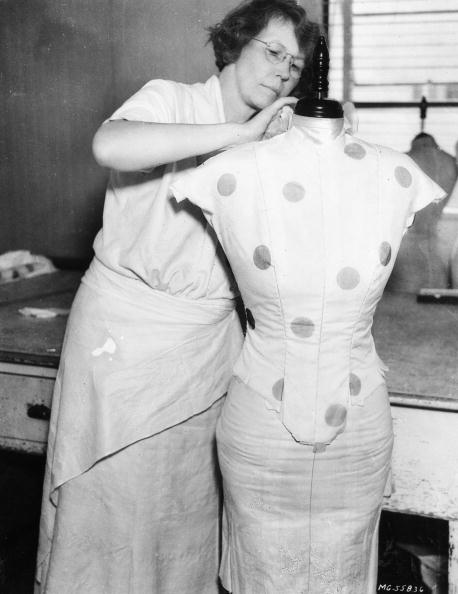
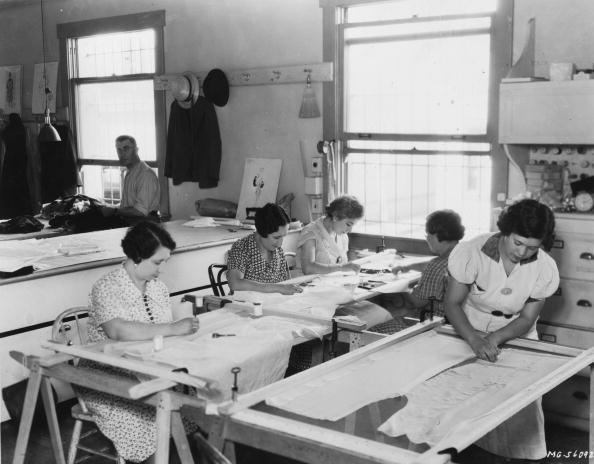
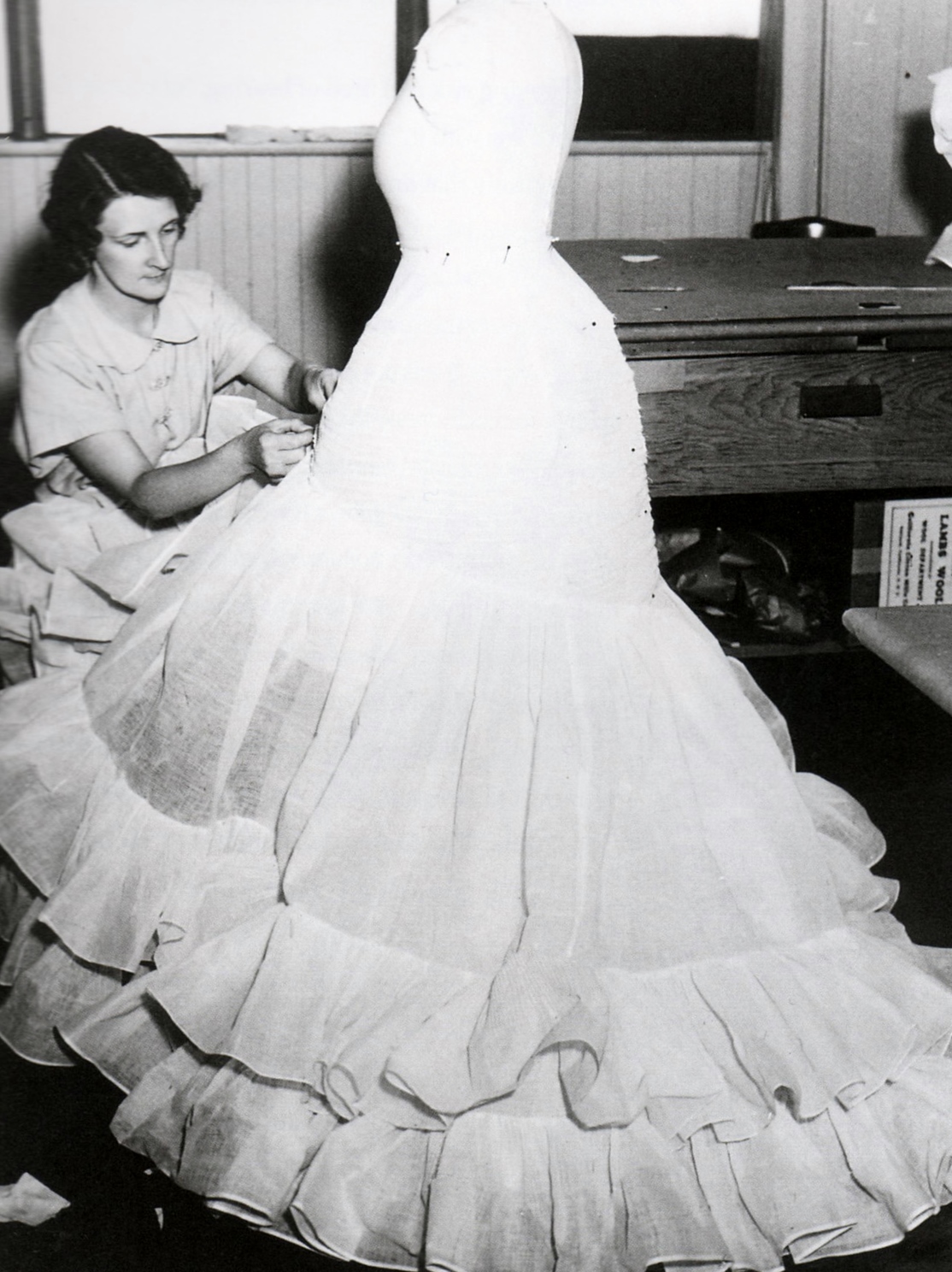
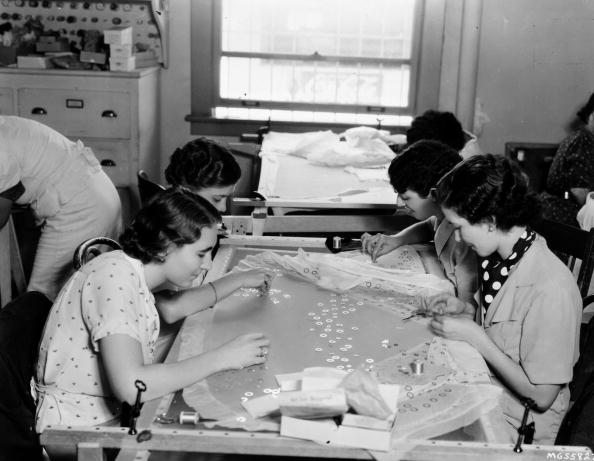
Making Marguerite’s dresses:
1936: A dressmaker working on one of Greta Garbo’s dresses for the MGM film ‘Camille’ which were designed by Adrian. (Photo by Hulton Archive/Getty Images)
circa 1936: Seamstresses at work cutting and sewing a dress to be worn by actress Greta Garbo in the film ‘Camille’. (Photo by Hulton Archive/Getty Images)
circa 1936: Seamstresses working on a dress to be worn by Greta Garbo in the MGM film ‘Camille’. (Photo by Hulton Archive/Getty Images)
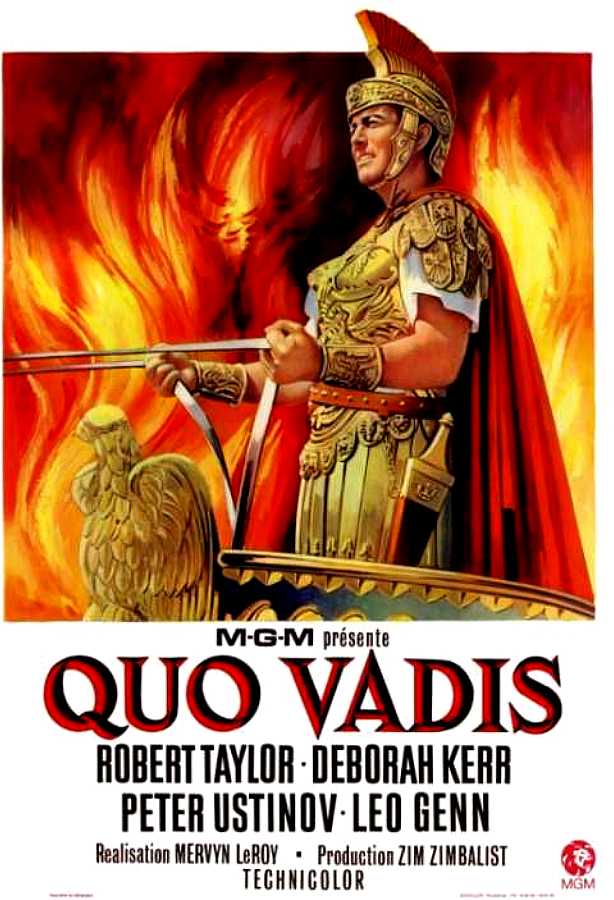
The epic Quo Vadis, 1951 is playing on Turner Classic Movies on Saturday, February 11 at 5:00 p.m. If you haven’t seen this, you’ve missed something truly special.
The 1st century Roman Empire, the fire of Rome, early Christianity, martyrdom…this historical content was dealt with in many films before and after 1951. Yet, it is LeRoy’s Quo Vadis most viewers associate with the infamous period of Roman history, the reign of Nero (A.D. 54-68). Why? There are, I think, several reasons. One is, definitely, the source, a Noble Prize winner novel by Henryk Sienkiewicz. The Polish writer, being an acknowledged historian, contained detailed historical facts and a vivid fictitious story in his novel. As a result, Quo Vadis is a universal masterpiece, absolutely worth reading for anyone. But, since the film, though an adaptation of the book, skips many events or even characters, we may treat Mervyn LeRoy’s Quo Vadis as a separate Hollywood production. In this respect, the movie is also well known as a gigantic spectacle with great cast, lavish sets, crowds of extras, which constitutes a magnificent journey to ancient Rome, the Rome which was on the verge of becoming “Neropolis”. Then, a viewer does not have to know the novel and will enjoy the film.
THE STORY: If we consider Quo Vadis? as an entertaining movie only (which is, of course, a limited view), then anyone more acquainted with cinema will find much in common with Cecil B DeMille’s great epic The Sign of the Cross (1932). Yet, comparison does not work that well concerning the perspective of Quo Vadis (1951). After deeper analysis of the films, a lot of differences occur. While DeMille’s film based on Wilson Barret’s play shows early Christianity in Rome, it foremost concentrates on the clash between the new religion and the Roman order being put in danger. LeRoy’s movie, since based on Henryk Sienkiewicz’s, focuses on the undeniable victory of Christianity. Marcus Vinicius (Robert Taylor) at first finds a new faith meaningless. He has reasonable arguments from the Roman point of view (what about slaves, conquest, enemy treating, etc). Yet gradually, thanks to love for Lygia (Deborah Kerr) and the courageous faith of the martyrs, he shouts out with confidence “Christ, give him strength!” The story of Nero and “the imperial companions” is also much more developed. Yet, Nero (Peter Ustinov) is not only the one who heads for delicious debauchery but also wishes the crowd to have one throat that could be cut. He is an artist who burns Rome in order to create a song. He is a coward who blames the innocent for his own guilts. He is a cynic who collects tears in a weeping phial after the death of his “best friend” Petronius (Leo Genn). Finally, he is a lunatic who praises his “divine ego” and screams at his death seeing no future for Rome without him.
CAST: Anyone who has seen ancient epics must admit that most of them can boast great performances. Nevertheless, I believe that Quo Vadis is one of the top movies in this matter. Robert Taylor and Deborah Kerr are a gorgeous couple portraying a Roman leader and a Christian girl. Taylor naturally expresses a change of heart. Kerr appealingly portrays innocence, gentleness and true love. Leo Genn is excellent as Petronius, a man of art and elegance who is fed up with Nero’s “secondary songs and meaningless poems.” Peter Ustinov gives a fabulous performance as Nero combining all wicked features of his character. I also loved Patricia Laffan as lustful empress Poppaea with her two pet leopards. There is no milk bath of hers, she does not imitate Ms Colbert but Laffan’s Poppaea is foremost a woman of sin, a woman of lust, and a woman of revenge. The Christians, except for a number of extras, are portrayed by very authentic-looking actors: Abraham Sofaer as Paul and Finlay Currie as Peter…not more to say than that they look identical to the old paintings.
SPECTACLE: The movie is a visually stunning epic that can be compared in its magnificence to Ben Hur (1959) and even Gladiator (2000). There are numerous breathtaking moments: arena scenes, lions, bull fighting, triumph in the streets, and foremost the fire of Rome. We see the real horror within the walls of the burning city. A moment that is also worth consideration is Vinicius hurrying to Rome on a chariot being chased by two other men. When he comes nearer, we see the red sky… The authenticity is increased by a lovely landscape of Cinecitta Studios near Rome where the film was shot. For the sake of spectacle, I went once to see Quo Vadis on a big screen in cinema and felt as if I watched a new film made with modern techniques. It was a wonderful experience.
All in all, I think that Quo Vadis by Mervyn LeRoy is a movie that has stood a test of time. Although it is 55 years old, it is still admired in many places of the world. It’s one of these movies that are the treasures of my film gallery. Not only a colossal spectacle, not only great performances but a very profound historical content at which Henryk Sienkiewicz was best.
Quo Vadis Domine? Where are you going, Lord? These are the words that Peter asked Christ while leaving Rome. After the answer that Peter heard from his Lord, he turned back… in order to proclaim peace to the martyrs and to be crucified. Yet, where once stood decadent “Neropolis” now stands the Holy See where people yearly pilgrim to the tombs of the martyrs and where the blessing “Urbi et Orbi” is goes to all the corners of the world. Sienkiewicz writes about it in the touching final words of the novel. Yet, LeRoy changes it a bit in the film…
A small group of Christians who survived, including Lygia and Marcus, are on a journey. But after a short stop at the place where Peter met Christ, the journey seems to turn into a pilgrimage towards “the Way, the Truth and the Life” Review by Marcin Kukuczka from Cieszyn, Poland for the IMDB
Robert Taylor, Deborah Kerr and Mervyn LeRoy touring Rome:
1950
1950
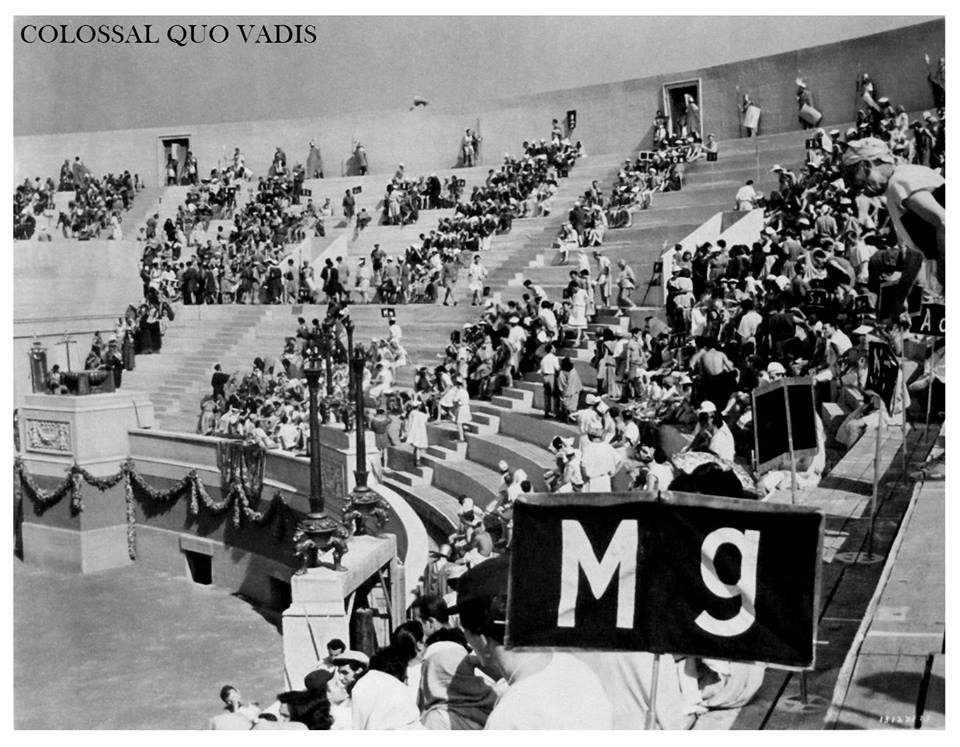
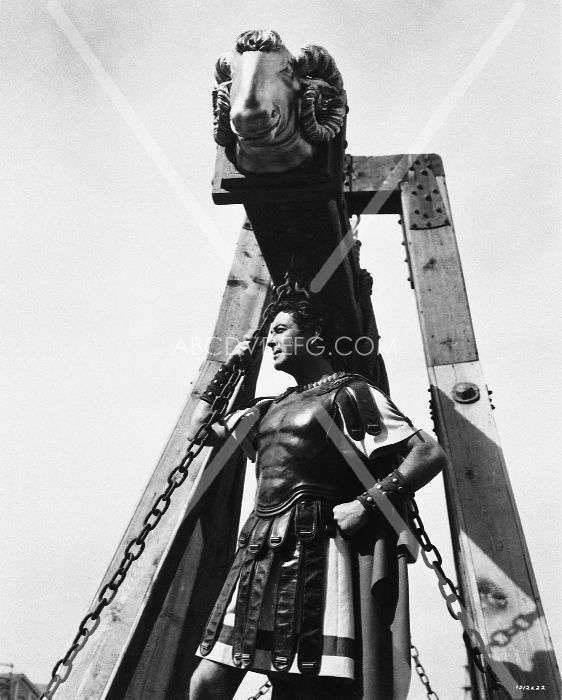
Some behind the scenes photos:
Circus Maximus Set
Some behind the scenes photos:
Robert Taylor reading about Tyrone Power
Marina Berti, Robert Taylor
Sam Zimbalist, far left, Mervyn LeRoy, in chair.
Robert Taylor, Peter Ustinov, Barbara Stanwyck, Patricia Laffan
Robert Taylor
Obeying the rules.
Premiere after party: Robert Taylor, Elizabeth Taylor
Comparing footwear: Norman Wooland, Deborah Kerr, Barbara Stanwyck, Robert Taylor.
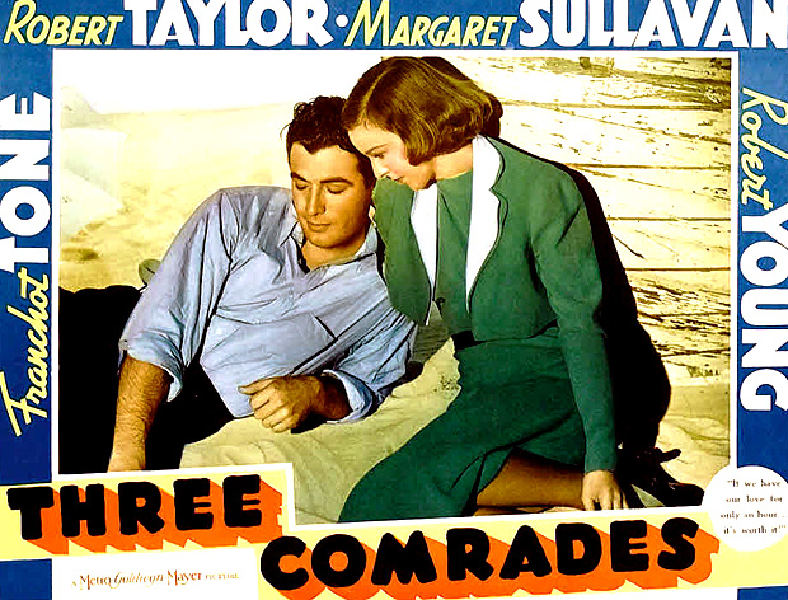
Robert Young, Robert Taylor, Franchot Tone, Margaret Sullavan
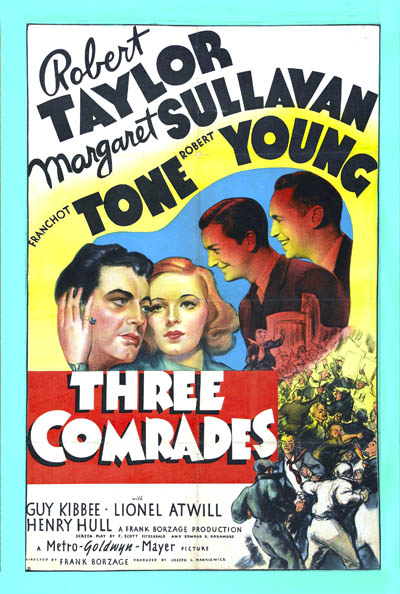
New York Times Review (summary): Based on a novel by Erich Maria Remarque, Three Comrades represented one of the few successful screenwriting efforts of F. Scott Fitzgerald. Set in Germany in the years just following World War I, the film stars Robert Taylor, Franchot Tone and Robert Young as three battle-weary, thoroughly disillusioned returning soldiers. The three friends pool their savings and open an auto-repair shop, and it is this that brings them in contact with wealthy motorist Lionel Atwill–and with Atwill’s lovely travelling companion Margaret Sullavan. Taylor begins a romance with Sullavan, who soon joins the three comrades, making the group a jovial, fun-seeking foursome Though Sullavan suffers from tuberculosis (her shady past is only alluded to), she is encouraged by her male companions to fully enjoy what is left of her life. This becomes increasingly difficult when one of the comrades, Young, is killed during a political riot (it’s a Nazi riot, though not so-labelled by ever-careful MGM). In the end, the four comrades are only two in number, with nothing but memories to see them through the cataclysmic years to come. Despite its Hollywoodized bowdlerization of the Remarque original, Three Comrades remains a poignant, haunting experience. ~ Hal Erickson, Rovi
Some promotional material:
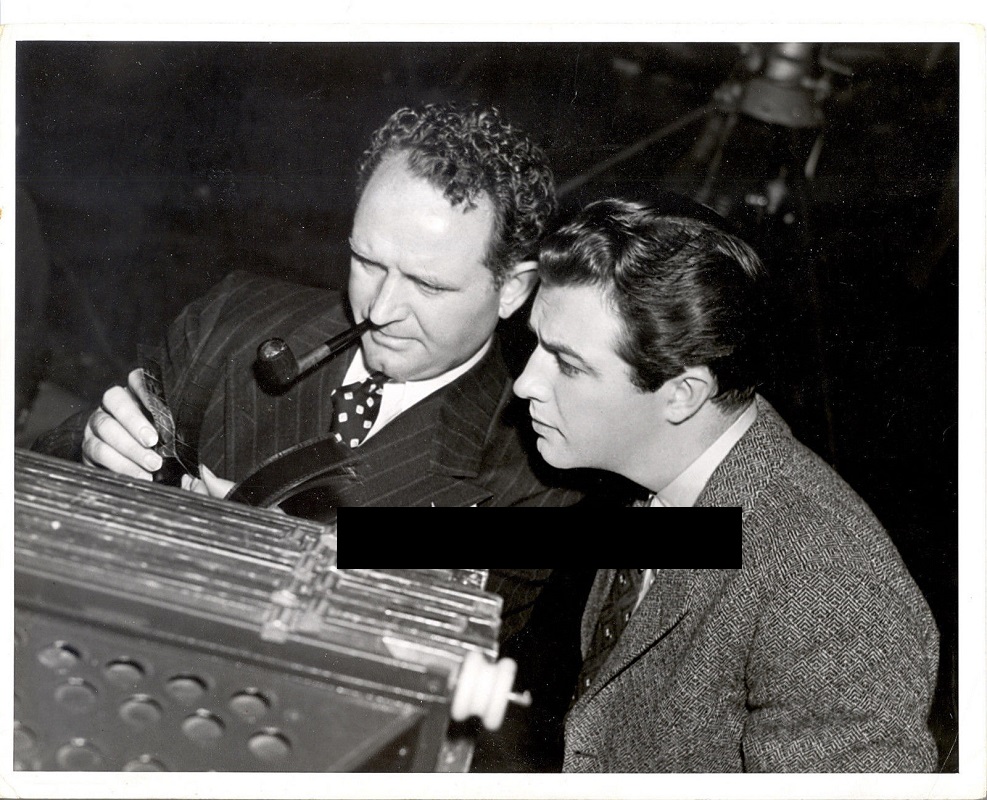
Behind the scenes:
Bottom to top: Director Frank Borzage and Robert Taylor; Robert Young, Franchot Tone, Robert Taylor
Waterloo Bridge, 1940 is playing on Turner Classic Movies on Saturday, January 21 at 2:00 p.m. est.
This was both Robert Taylor’s and Vivien Leigh’s favorite film. Waterloo Bridge cost $1,164,000.00 to make and made a profit of $491,000.00.
Robert Taylor was an inspired choice for the role… Not only does he have an imposing screen presence, but he brings the perfect mix of enlightenment, humor, compassion and emotion to the part…
Opposite him, Oscar Winner Vivien Leigh, perfect in her innocent lovely look, radiantly beautiful, specially that evening in a trailing white chiffon gown… Leigh floods her role with personal emotion giving her character a charismatic life of its own… As a great star, she delivers a heartfelt performance turning her character into a woman who undergoes an emotional awakening…
In this sensitive motion picture, Mervyn LeRoy captures all the tenderness and moving qualities… He makes every small thing eloquent, concentrating the highly skilled efforts of many technicians on the telling of a very simple bittersweet love story… Vivien Leigh paints a picture that few men will be able to resist… Her performance captures the audience to the point of complete absorption… Robert Taylor (carrying sympathy all the way) quietly throws all his vitality as an ambitious actor into the task… Their film, a credit to both, is a heavily sentimental tale about the vagaries of wartime…
Love is the only thing this movie is about… The story is simple: Myra Lester (Leigh) is a frail creature, an innocent young ballet dancer and Roy Cronin (Taylor) is an aristocratic British army officer… When their eyes met it took no time at all for their hearts to feel the loving call… They meet on London’s Waterloo Bridge during an air raid, and fall deeply in love… Their romance is sublime, and they soon agree to marry…
The lover’s marriage has to be postponed when the handsome officer is suddenly called to the front… Sadly, the sweet ballerina misses her performance to see her captain off at Waterloo Station… Fired from the troupe, she is joined by her loyal friend, Virginia Field (Kitty Meredith), and the two vainly try to find work, finally sinking into poverty and the threatening fear that goes with it…
The film is replete with beautiful and poignant scenes, specially the ‘Auld Lang Syne’ waltz scene in the Candlelight Club, before Taylor leaves for France…
Seen today, Waterloo Bridge has retained all its charm and power, all its rich sentiment, and tragic evocations… Review by Righty-Sock (robertfrangie@hotmail.com) from Mexico for the IMDB.
Some behind the scenes photos:
Mervyn LeRoy, Vivien Leigh, Robert Taylor.
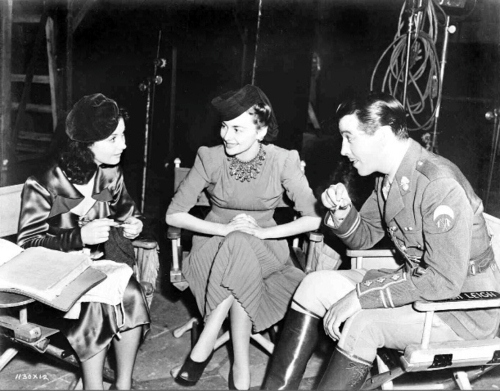
With Olivia deHavilland.
Helping a lady out.
circa 1940: British actors Vivien Leigh (1913-1967) and Laurence Olivier (1907-1989) entertaining millionaire Sir Victor Sassoon on the set of ‘Waterloo Bridge’, a Metro Goldwyn Mayer film in which Leigh is currently starring. (Photo by Hulton Archive/Getty Images)















 Robert Taylor Actor