Johnny Eager, 1942, is playing on Turner Classic Movies on Tuesday, April 13, at 4 a.m. This is one of Mr. Taylor’s best. Don’t miss it.
Robert Taylor and Lana Turner in “Johnny Eager.”
Directed by Mervyn LeRoy. Cast: Robert Taylor, Lana Turner, Edward Arnold, Van Heflin, Robert Sterling, Patricia Dane, Glenda Farrell, Barry Nelson. Slick MGM melodrama with convoluted plot about sociology student (and daughter of D.A. Arnold) Turner falling in love with unscrupulous racketeer Taylor. Heflin won Best Supporting Actor Oscar as Taylor’s alcoholic friend.(TCM)
Having only been familiar with Robert Taylor’s body of forgettable [humpf!] work from the thirties (The Broadway Melodies, Camille, etc), seeing him in the title role of Johnny Eager was stunning. Tom Hanks’s 180 degree turn from silly comedies to Philadelphia might be a modern day equivalent. Taylor steps into a role that would seem tailor made for Bogart, Cagney or Robinson, and does an arguably better job than any of them could have. Yes, Lana Turner is present, and yes, Van Heflin won a supporting Oscar, but Taylor owns this film.
Johnny Eager is one of the best films of the 40s, as well as one of the all time greats. (Taken from a review by Justin Behnke on the IMDB).
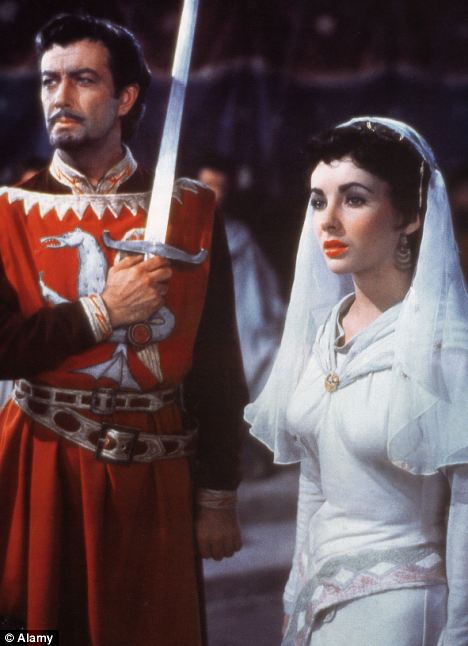
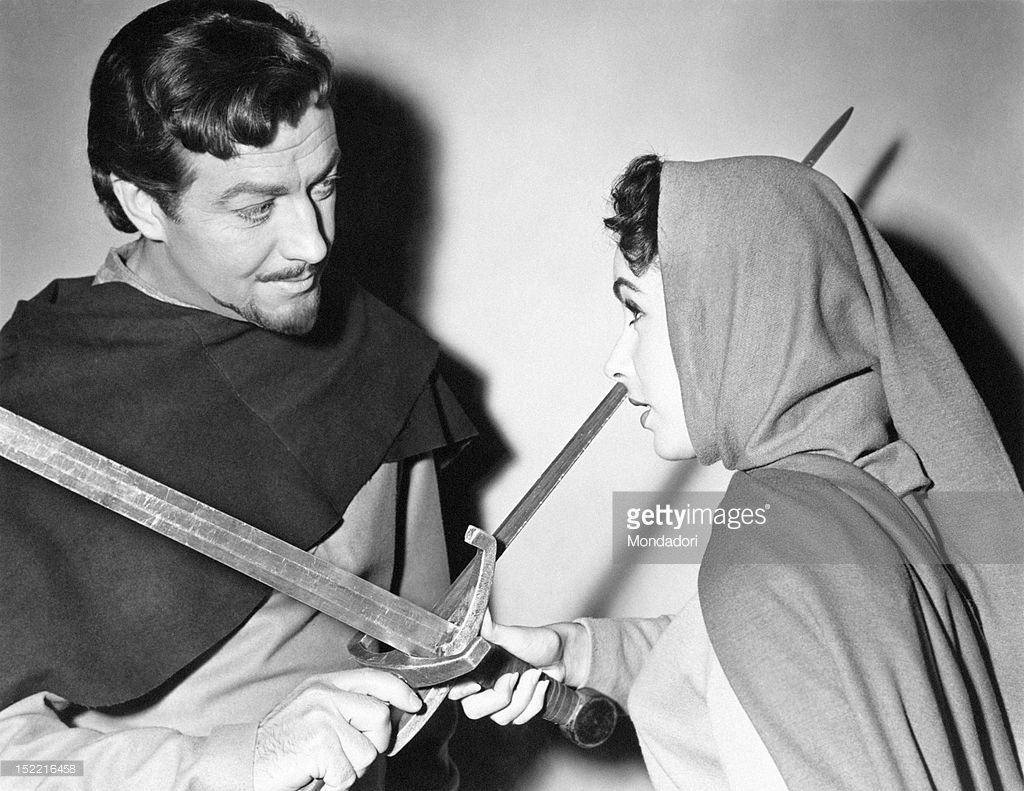
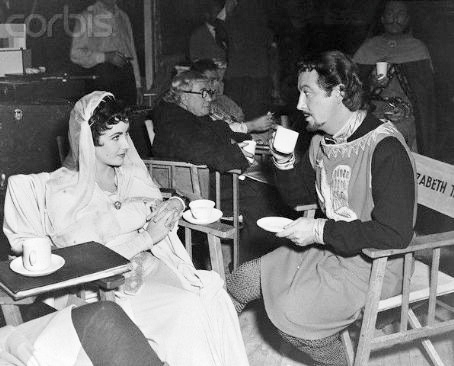
Ivanhoe, 1952 is playing on Turner Classic Movies on Monday, April 12 at 10 p.m. est.
Ivanhoe was one of the most successful films of the year and brought in over $10 million at the box office, about $89,823,018.87 in 2015.
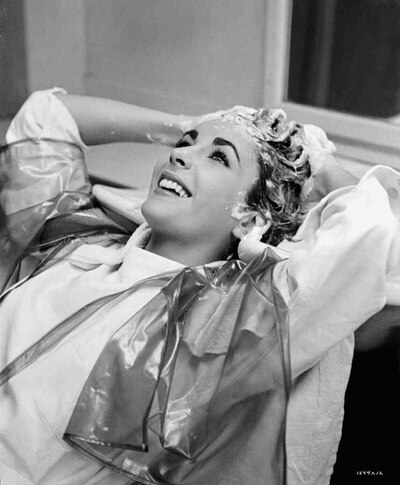
Robert Taylor and Liz Taylor in Ivanhoe.
Wonderful movie! This film is an exciting adventure-romance which never once loses its pace or feel. Robert Taylor brings depth to a potentially dull lead character. Jean Fontaine is great as his love, the Lady Rowenna. Elizabeth Taylor, though, steals the show with her stunning portrayal of Rebecca of York! This film has aged very well and shows first-hand to a young generation just why Elizabeth Taylor was such a star.
Although this film is an extremely enjoyable adventure, it also has the guts to tackle some complicated issues and resolve them in a very non-Hollywood fashion. As Ivanhoe feels his love for the beautiful Rebecca grow will he defy convention and pursue the lovely Jewish girl or remain with the safe charms of the blond, Anglo-Saxon Rowena? The answer is intelligently handled and surprising. This film is one of the greatest examples of the classic adventure. Review by David Arbury for the IMDB
Camille, 1936, Is Playing on TCM on Monday, March 29 at 1:15 p.m. January 19 (USA)
Closed Captioned. This is the love story of all love stories and shouldn’t be missed.
This film further proves that the assembly-line system of Hollywood studios back then should also be taken seriously in terms of artistry. Just because movies were produced run-of-the-mill doesn’t mean that they weren’t paid critical attention to by their makers. The usual impression on studio-era Hollywood is: take a formulaic narrative style, maybe adapt a stage play for the screen, blend in a handful of stars from the stable and the films rake in the profit at the box office. Not quite, that’s the easy perception. George Cukor, another of those versatile directors, made it apparent with Camille that filmmaking as an art may still flourish despite (and even within) certain parameters. Camille is beautiful, in so many respects. And it’s not just because of Greta Garbo.
Sure, the acting is amazing, the casting is perfect. Garbo is luminous, mysterious, cruel, and weak at the same time. Robert Taylor surrenders himself to be the heartbreakingly young and vulnerable Armand. Henry Daniell’s coldness and sadism is utterly human and familiar. The others are just plain wonderful. The writing contains so much wit and humor, devotion and pain – but it never overstates anything. The rapport and tensions between lovers, friends, and enemies are palpable and consistent. The actions flow so naturally, just like every scene, that checking for historical inconsistencies seem far beside the point.
There is so much that I love about Camille that it’s hard to enumerate them all, but with every little discovery comes the realization that this is “but” a studio production, so it makes the experience more exquisite. Camille is a gentle, poignant romantic movie that, like Garbo, takes its place delicately and self-effacingly in the history of American cinema, but makes itself indelible in the heart and mind of the lovelorn individual viewer. Review by tsarevna for the IMDb.
A behind-the scenes photos from Camille.
For more pictures, see the blog entry for January 12.
Billy the Kid, 1941, is playing on Turner Classic Movies on Monday, March 8 at 6:00 a.m.
Billy the Kid (1941) is an early example of the use of Technicolor. The film is visually outstanding. Cinematographers Leonard V. Skall and Leonard Smith received an Oscar nomination for their work on the film and should have won. From close-ups to panoramic views of Monument Valley, Kanab, Utah and other locations they used color, composition and especially light masterfully. Some scenes evoke the stillness of a Vermeer and others the chiaroscuro of Rembrandt. Near the end of the movie Billy is standing near the window of a tumbledown shack. The viewer is outside and can see his body fading into the shadows except for the upper part of his face, especially the intense blue eyes. There is a Caravaggio-like spotlight on the hand and gun the outlaw is pointing out the window.
Historically, there is little resemblance between the film and the actual life of Billy the Kid. The general details of his background is correct but the names have all been changed, perhaps to head off the complaints of purists. There is no Pat Garrett, but rather a Jim Sherman (Brian Donlevy), no William Tunstall but an Eric Keating (Ian Hunter). The filmmakers obviously wanted to tell a good story without regard to historical accuracy.
Robert Taylor was 30 when Billy the Kid was filmed. He’s too old for the part but not by as much as some have made out. To seem younger, Taylor plays Billy as uncouth, uneducated and probably illiterate. The outlaw is incapable of understanding the consequences of his actions. He’s always being bombarded by new ideas and new customs. There is a lighthearted scene where Billy is handed a teacup and saucer, objects obviously new to him. He picks the cup up as though it were a glass until he sees what Keating is doing. Billy holds the cup awkwardly by the handle until Keating turns away then he gulps the tea with his original hold.
This was Robert Taylor in his element. He was a superb rider and did all of his own riding in this film, even in the long shots. Taylor also had the western swagger down pat and seems very comfortable in his cowboy costumes. In private life, he often wore jeans, boots and a Stetson. In the first and last parts of the film, Billy dresses all in black. In the middle he wears a blue shirt to indicate his changed lifestyle. Robert Taylor practiced left-handed drawing and shooting for weeks before the film and used the skill again in the film Ride Vaquero in 1953.
Taylor and Donlevy are comfortable with one another, having worked together before in This Is My Affair in 1937. The easiness of their relationship makes Billy’s (temporary) transformation into an honest cowboy believable. Mary Howard has a small role as Eric Keating’s sister and makes the most of it. Ian Hunter is believable as rancher Keating.
The villains, especially Hickey (Gene Lockhart) are suitably nasty. Henry O’Neill, a leading character actor, throws himself with gusto into the role of a newspaper publisher whose press is constantly being sabotaged. Review by me for the imdb.
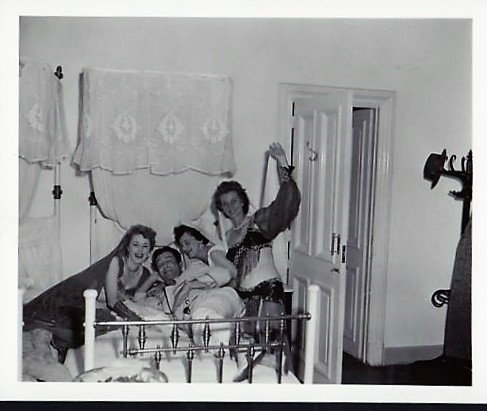
Here are a few behind the scenes photos:
Glad to meet you.
Rounding up some fillies.
With some of the ladies from the film Marie Antoinette.





 Robert Taylor Actor