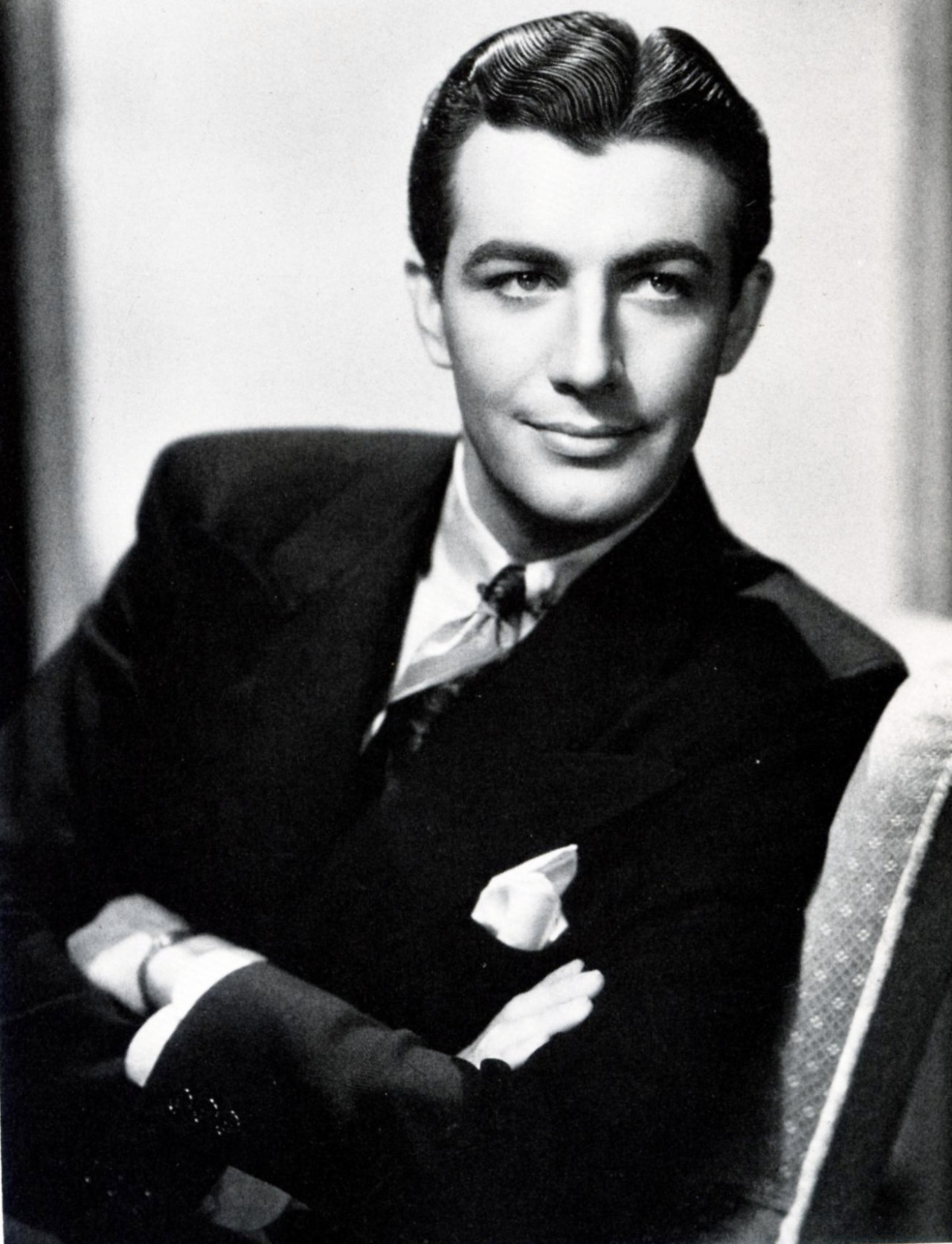
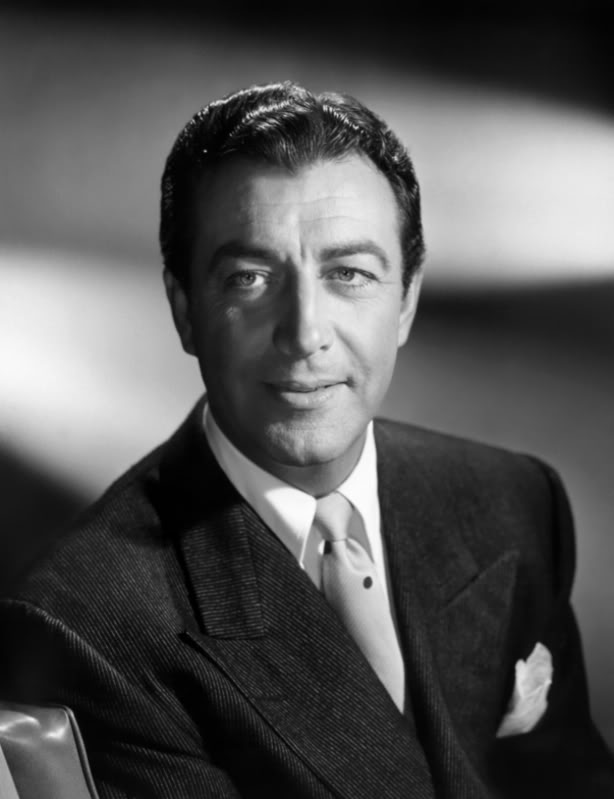
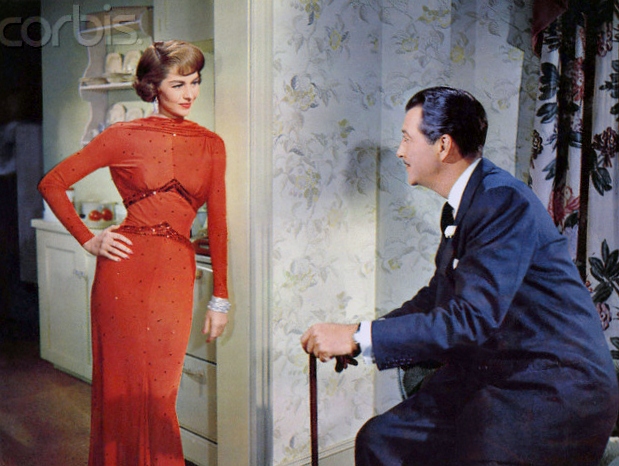
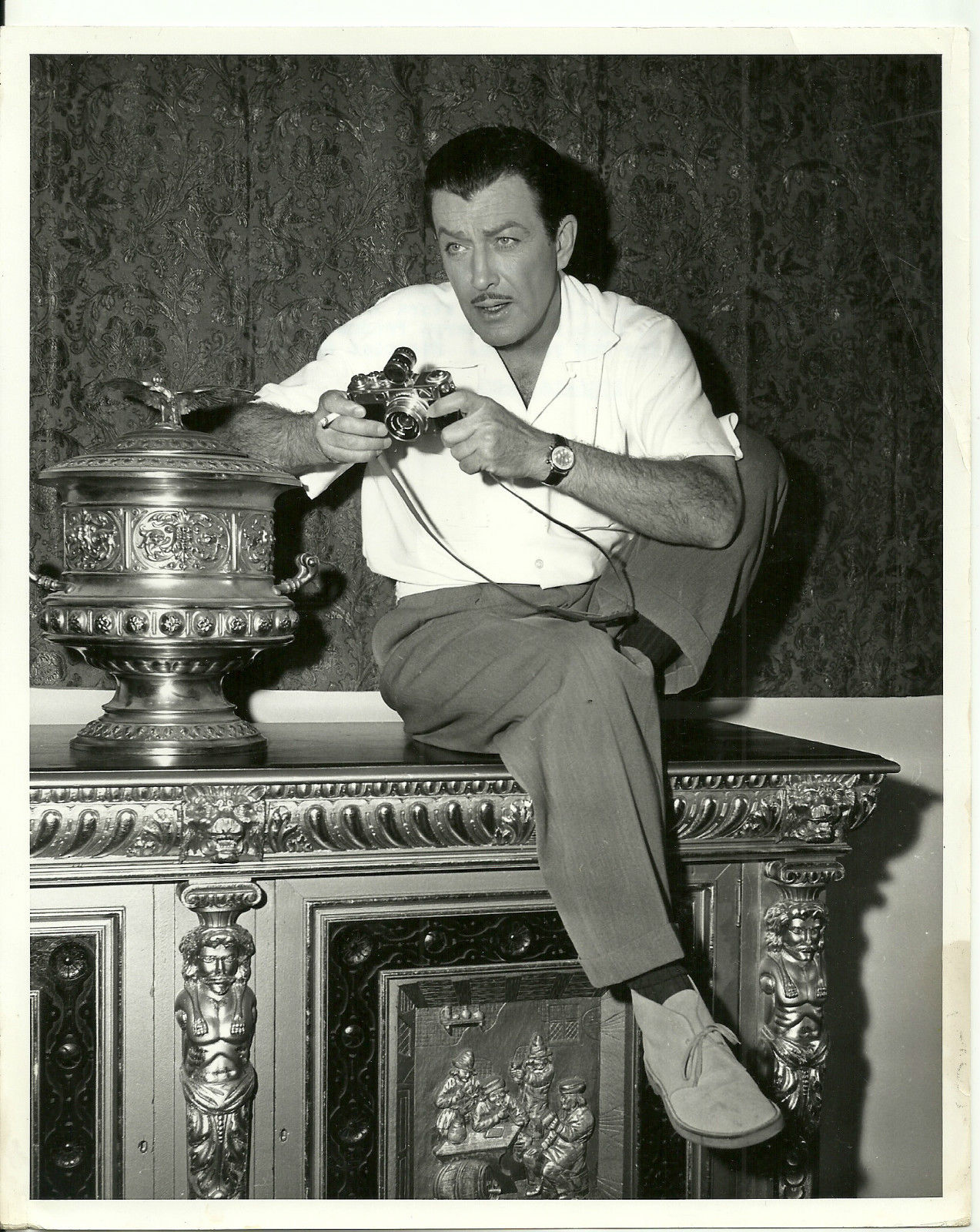
June 8, 2021 is the 52nd anniversary of Robert Taylor’s death. As a personal tribute to him, these are two of my favorite Taylor photos.
1935
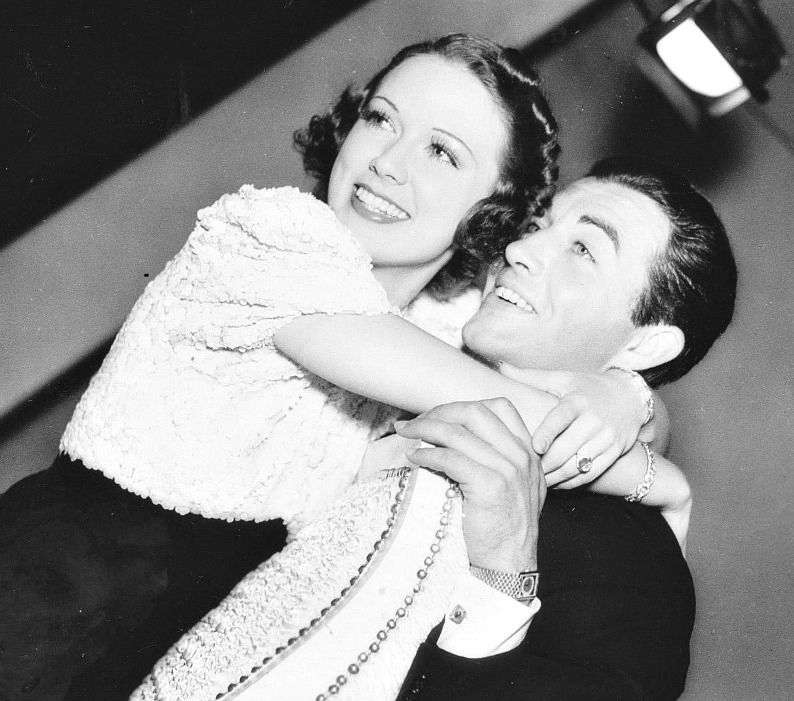
The top photo is from 1935 and the second one approximately 20 years later.
Robert Taylor was a talented and skilled actor, a true professional, a gentleman, a patriot who served in the Navy in World War II. His career lasted for three decades on the screen and television. He was a good husband and father with his second wife, Ursula Thiess.
Mr. Taylor was extremely versatile. He could play playboys, soldiers, gangsters, a Roman general, a mental patient, medieval “parfait gentle knights.” cops, Broadway producers, frontiersmen, businessmen, lawyers, a cowboy (his favorite) and always, as Ava Gardner put it, “a perfect gentle lover.”
Robert Taylor was without ego, never totally left his roots in rural Nebraska, never pushed himself forward. We could use more like him in Hollywood today.
In 1960 he entered politics, campaigning for Ronald Reagan for Governor of California. He also campaigned for other Republicans.
Robert Taylor was married twice, first to Barbara Stanwyck and secondly to Ursula Thiess. With Ms. Thiess, he had two children, Terry and Tessa.
Mr. Taylor was a heavy smoker, which caused his death from lung cancer at age 57. He was cremated and his ashes are in the Forest Lawn cemetery, with his beloved Ursula, who died 40 years later. RIP
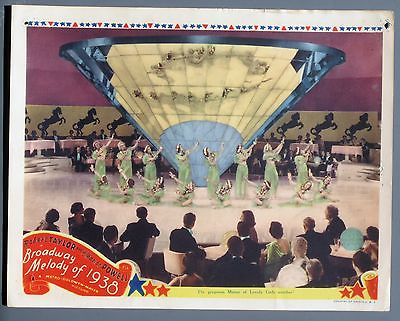
Broadway Melody of 1938, 1937, is playing on Turner Classic Movies on Saturday, June 12 at 6:00 a.m. The film cost $1,588,000 and made a profit of $271,000 or $4,609,188.57 in today’s money.
Broadway Melody of 1938 is one of those pure escapist type films that folks in the Thirties paid their money to see. It’s a nice film combining both a backstage and a racetrack story with one of the most eclectic casts ever assembled for a film.
What can you say when you’ve got dancing covered by Eleanor Powell, George Murphy and Buddy Ebsen, the varied singing styles of Judy Garland, Sophie Tucker, and Igor Gorin and such incredible character actors as Raymond Walburn, Charley Grapewin, Billy Gilbert, and Robert Benchley. All of them such great performers and such vivid personalities there’s no way that the film could be bad.
Almost lost in the shuffle are Robert Taylor and Binnie Barnes who don’t sing or dance and aren’t colorful. But Binnie Barnes is one fine actress and she’s the villain of the piece as Raymond Walburn’s wife who was once part of the chorus, but wants not to be reminded of from where she came. She’s jealous of Eleanor Powell and has a thing for Taylor, As did half the young women in America in 1937. Though the part doesn’t call for any kind of real acting, Robert Taylor shows every bit as to why he was such a screen heart throb that year. He’s the nice guy producer/director who gets caught in a crunch between his financial backer Raymond Walburn and his wife and the girl of his dreams, Eleanor Powell. Walburn is in the role that Guy Kibbee had in 42nd Street and he does it well with his own avuncular touches.
Powell is not just an ambitious hoofer as are Ebsen and Murphy. She’s also the owner of race horse upon whose performance everyone’s future eventually rides. Just how the racetrack and backstage are woven into the same plot you have to see the film for.
Vocal highlights are provided by Judy Garland who sings her famous Dear Mr. Gable version of that old Al Jolson song, You Made Me Love You. She also sings Everybody Sing which is a number I personally like a whole lot better. Honest Indian.
Sophie Tucker is her mother who owns and operates a theatrical boarding house where half the cast lives. She’s an old trooper herself and of course she gets to sing her famous theme, Some of These Days.
Other material that the MGM songwriting team of Arthur Freed and Nacio Herb Brown did not provide for this film are a couple operatic arias sung by the great concert singer Igor Gorin. He sings Largo Al Factotum from The Barber of Seville and the Toreador Song from Carmen. I’d venture a guess that Louis B. Mayer signed Gorin for this as an effort to keep his other two singers Nelson Eddy and Allan Jones in line. In fact Eddy and Mayer did not get along and Jones would be leaving MGM the following year. Gorin is in fine voice, but did not have much screen presence and has very few spoken lines. I don’t think that was an accident.
Broadway Melody of 1938 is one of MGM’s best musicals from the Thirties and how can you not like a film with as much talent as this one is loaded with. Review by bkoganbing from Buffalo, New York for the IMDb.
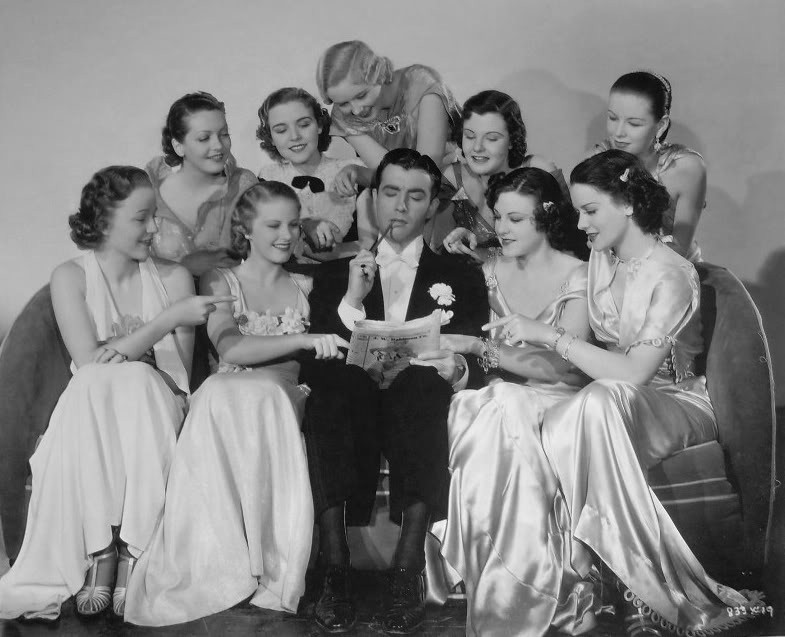
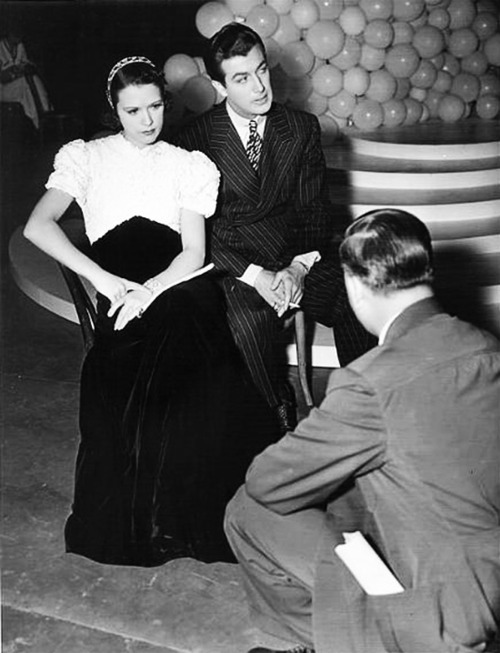
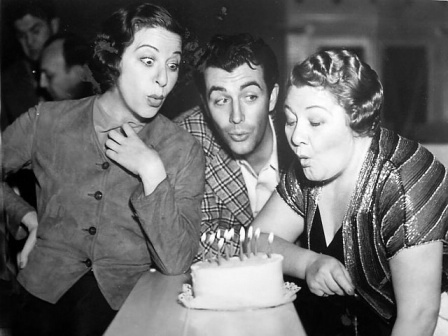
Some behind the scenes photos:
Billy Gilbert, George Murphy, Judy Garland, Igor Gorin, Sophie Tucker, Eleanor Powell, Robert Taylor, Vilma Ebsen, Unknown, Buddy Ebsen.
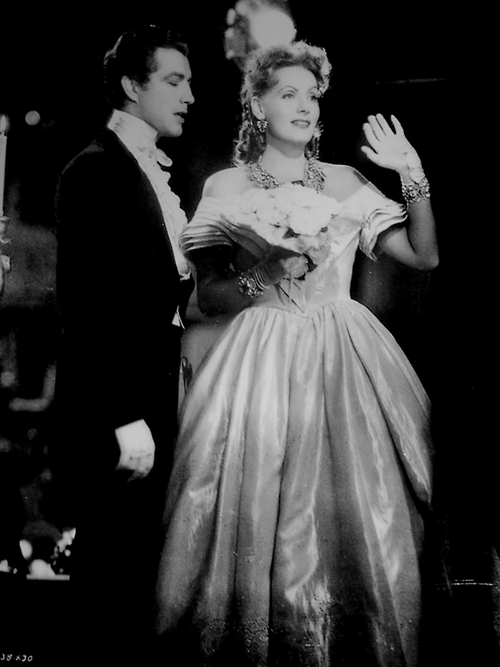
Camille, 1936, Is Playing on TCM on Friday, June 11 at 4:00 p.m. This is the love story of all love stories and shouldn’t be missed.
This film further proves that the assembly-line system of Hollywood studios back then should also be taken seriously in terms of artistry. Just because movies were produced run-of-the-mill doesn’t mean that they weren’t paid critical attention to by their makers. The usual impression on studio-era Hollywood is: take a formulaic narrative style, maybe adapt a stage play for the screen, blend in a handful of stars from the stable and the films rake in the profit at the box office. Not quite, that’s the easy perception. George Cukor, another of those versatile directors, made it apparent with Camille that filmmaking as an art may still flourish despite (and even within) certain parameters. Camille is beautiful, in so many respects. And it’s not just because of Greta Garbo.
Sure, the acting is amazing, the casting is perfect. Garbo is luminous, mysterious, cruel, and weak at the same time. Robert Taylor surrenders himself to be the heartbreakingly young and vulnerable Armand. Henry Daniell’s coldness and sadism is utterly human and familiar. The others are just plain wonderful. The writing contains so much wit and humor, devotion and pain – but it never overstates anything. The rapport and tensions between lovers, friends, and enemies are palpable and consistent. The actions flow so naturally, just like every scene, that checking for historical inconsistencies seem far beside the point.
here is so much that I love about Camille that it’s hard to enumerate them all, but with every little discovery comes the realization that this is “but” a studio production, so it makes the experience more exquisite. Camille is a gentle, poignant romantic movie that, like Garbo, takes its place delicately and self-effacingly in the history of American cinema, but makes itself indelible in the heart and mind of the lovelorn individual viewer. Review by tsarevna for the IMDb.
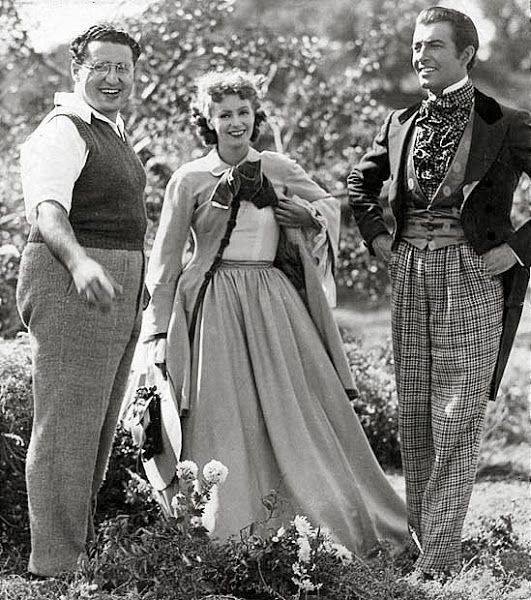
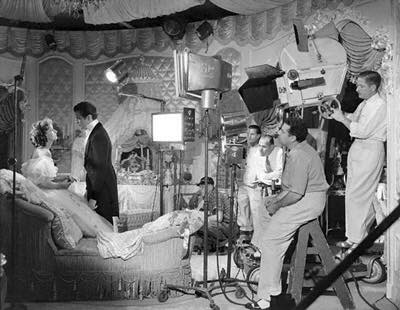
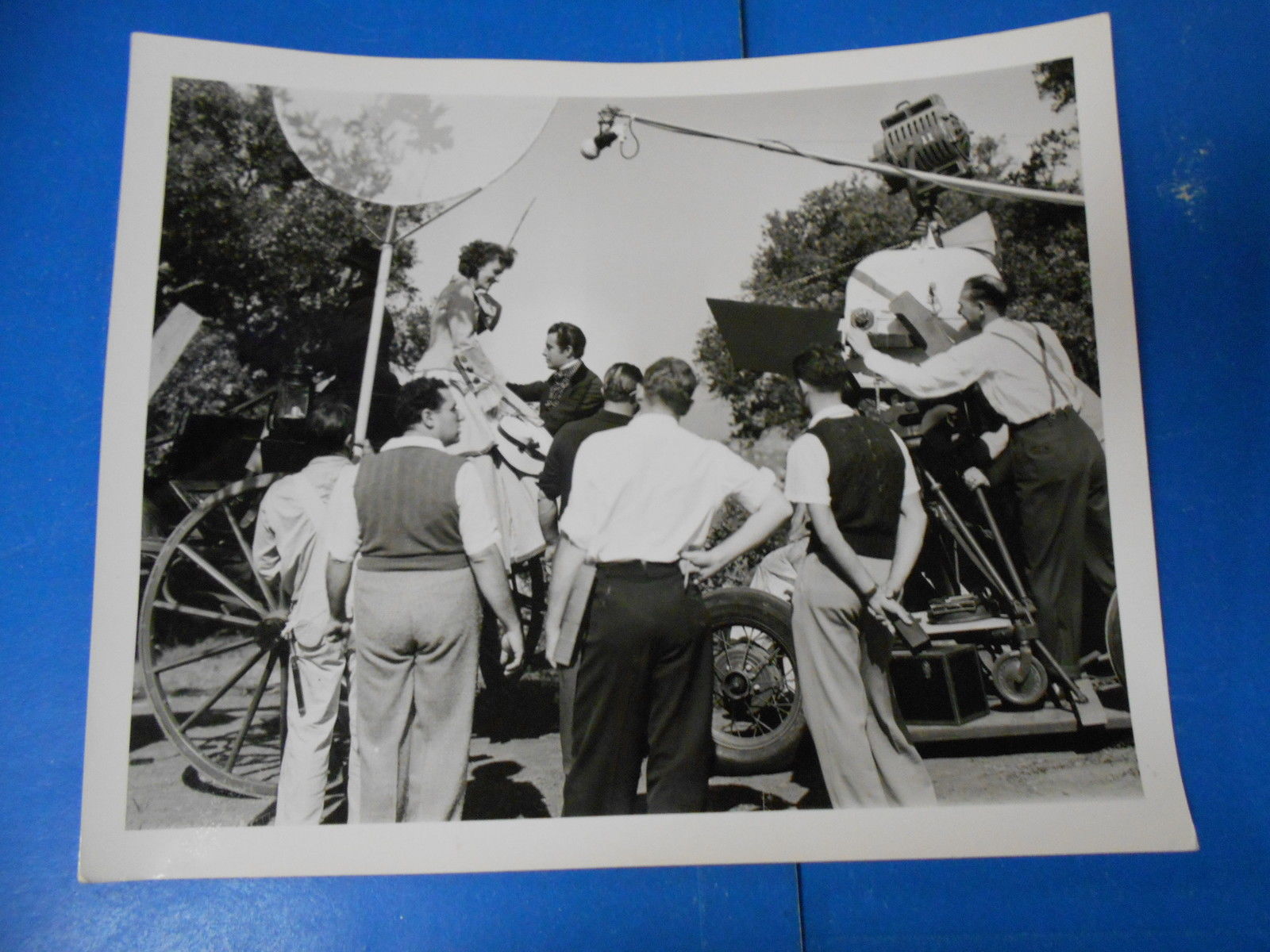
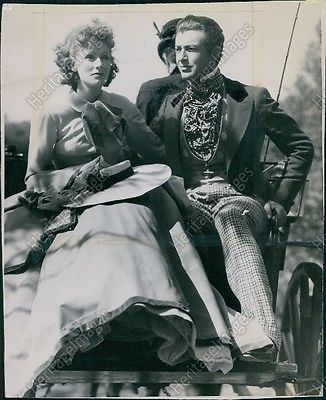
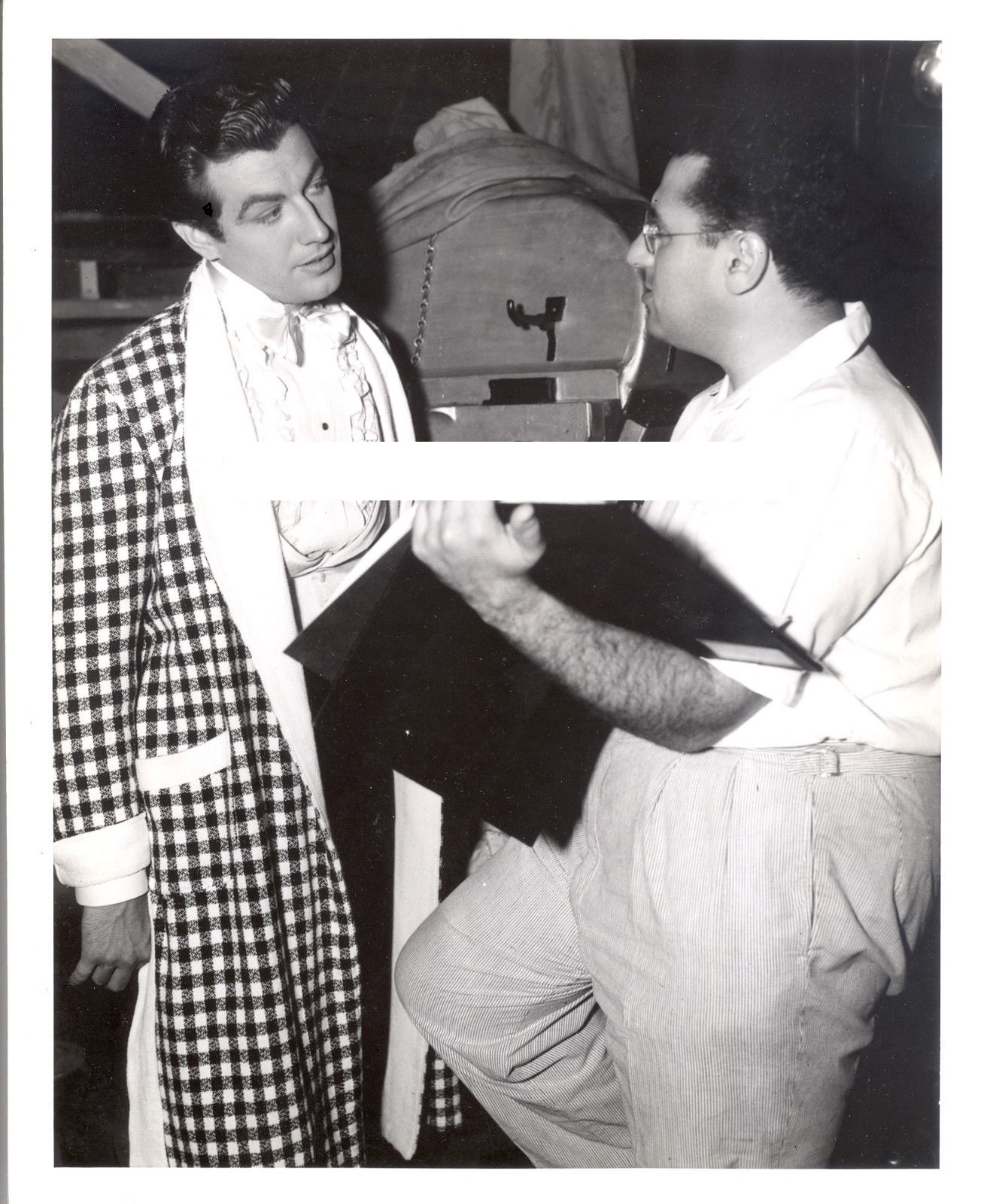
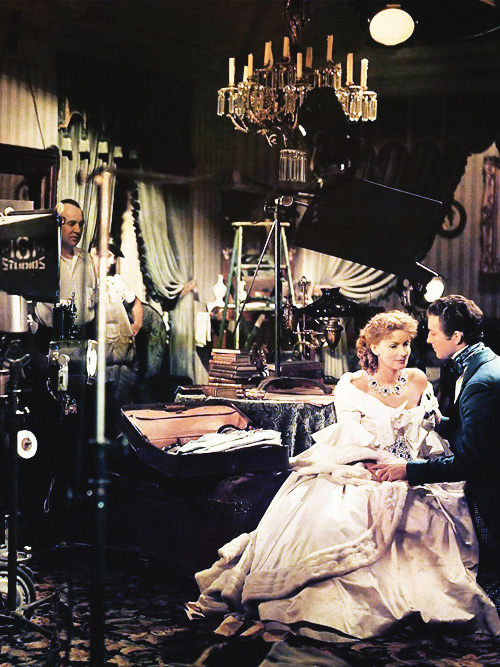
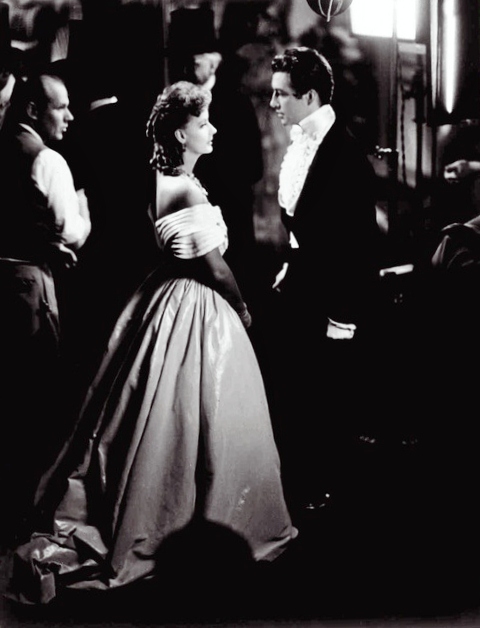
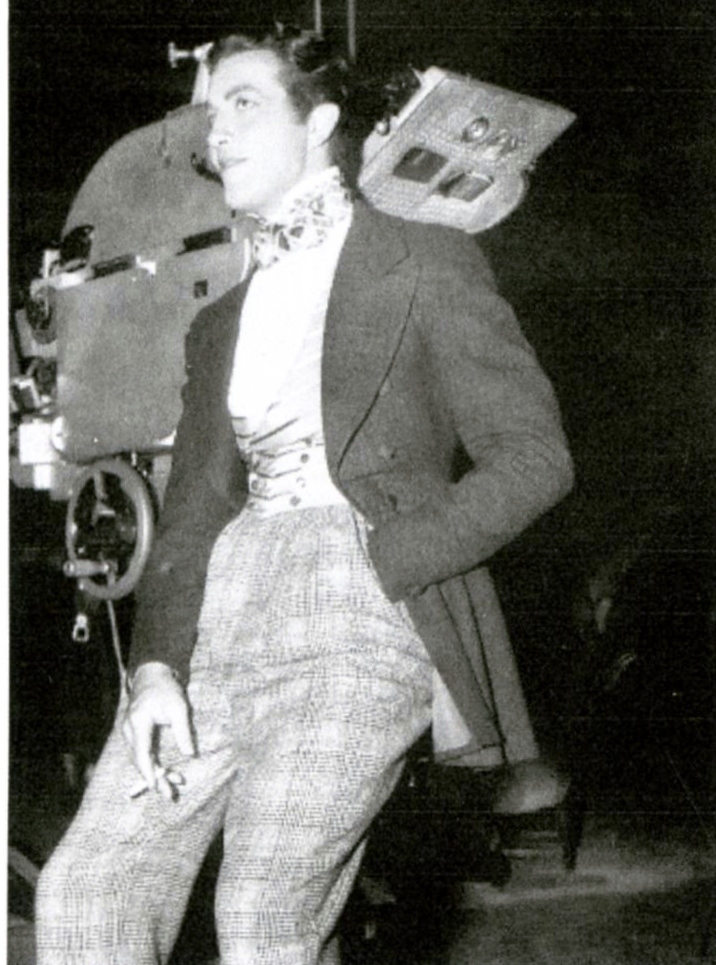
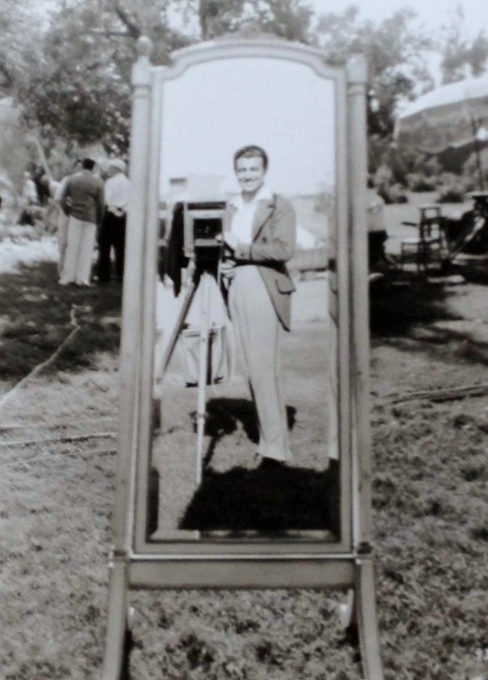
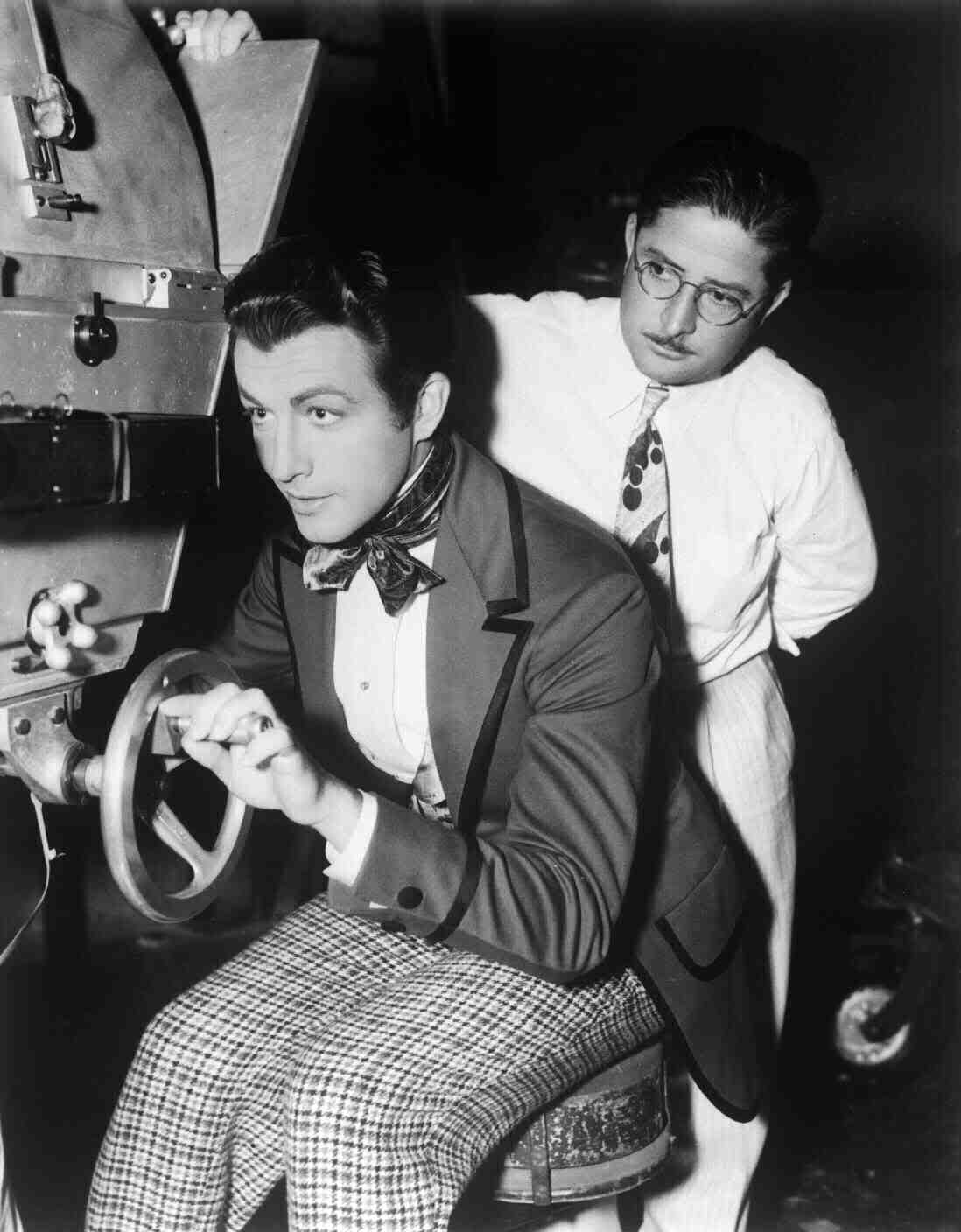
Behind the scenes photos from Camille: The heavy set man in several pictures is Director George Cukor.
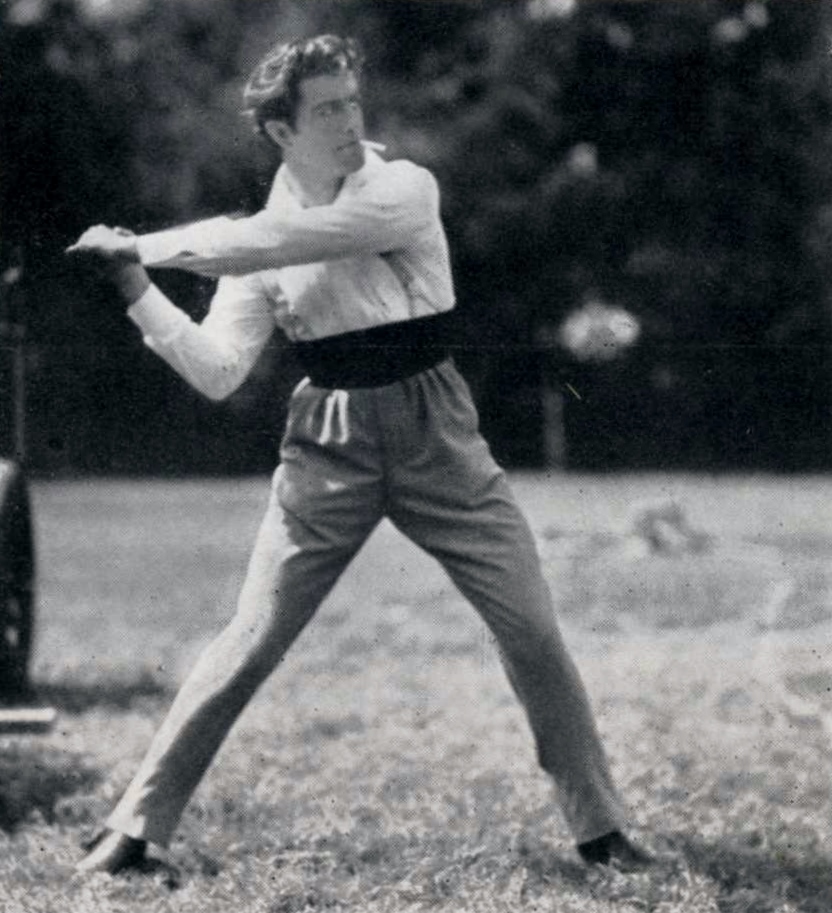
He also plays baseball-in costume on the set.
1936
1936
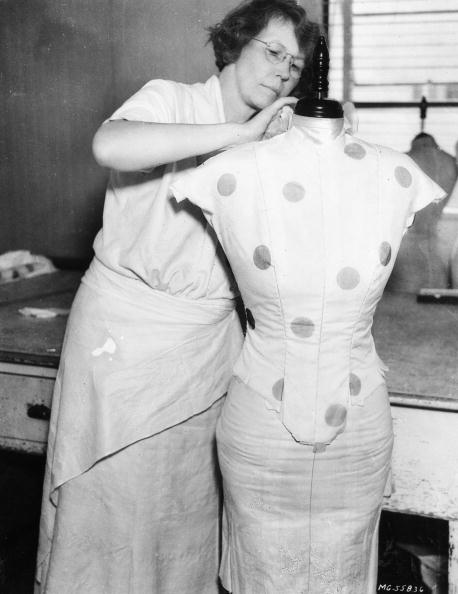
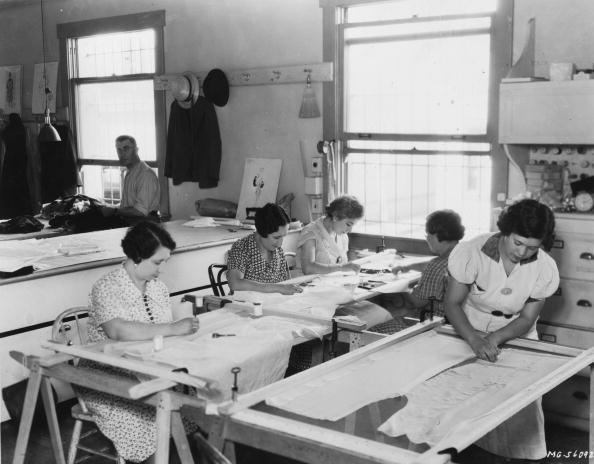
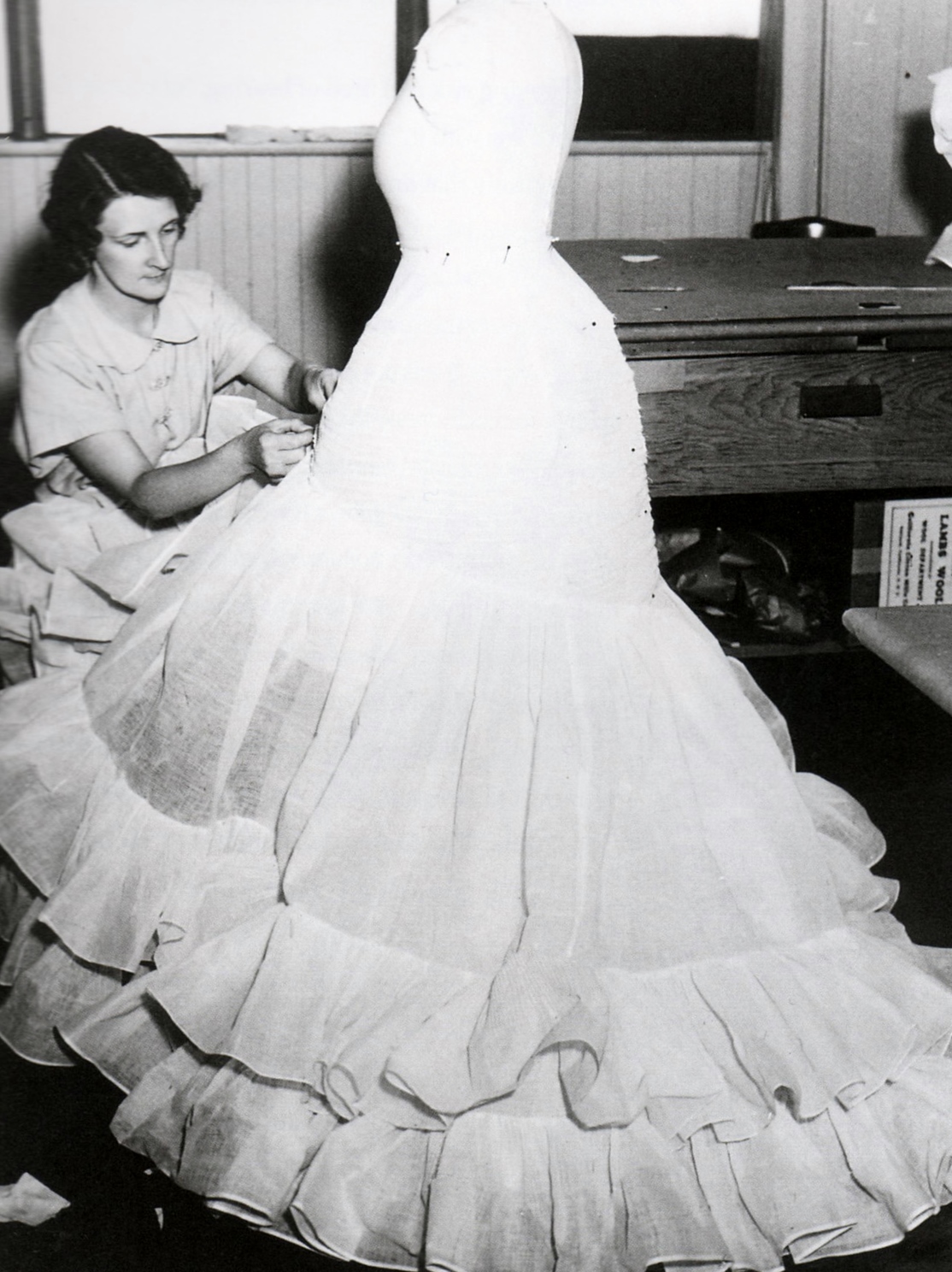
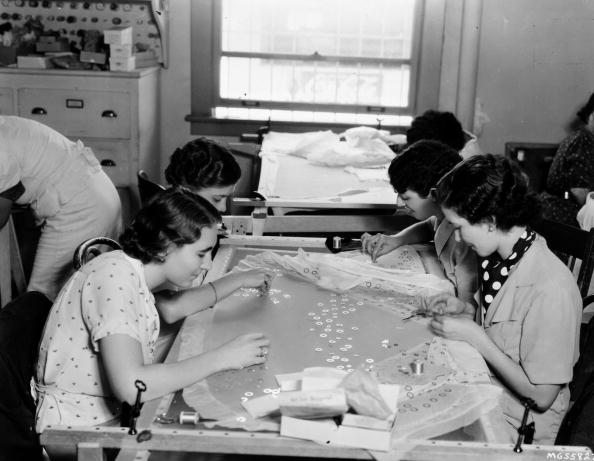
Making Marguerite’s dresses:
1936: A dressmaker working on one of Greta Garbo’s dresses for the MGM film ‘Camille’ which were designed by Adrian. (Photo by Hulton Archive/Getty Images)
circa 1936: Seamstresses at work cutting and sewing a dress to be worn by actress Greta Garbo in the film ‘Camille’. (Photo by Hulton Archive/Getty Images)
Making Marguerite’s dresses:
1936: A dressmaker working on one of Greta Garbo’s dresses for the MGM film ‘Camille’ which were designed by Adrian. (Photo by Hulton Archive/Getty Images)
circa 1936: Seamstresses at work cutting and sewing a dress to be worn by actress Greta Garbo in the film ‘Camille’. (Photo by Hulton Archive/Getty Images)
circa 1936: Seamstresses working on a dress to be worn by Greta Garbo in the MGM film ‘Camille’. (Photo by Hulton Archive/Getty Images)
Party Girl, 1958, is playing on Turner Classic Movies on Tuesday, June 8 at 10:00 p.m.
1958 — American actors Cyd Charisse and Robert Taylor on the set of Party Girl, directed by Nicholas Ray.
Nicolas Ray uses color in this movie like some directors use dialogue. It is spectacular to look at with reds and blacks predominate all through the film. It is old-fashioned in it’s appeal to the film noir lover. This is the last film Robert Taylor did for MGM, and it is a great performance. The character of Tommy Farrell is, if you excuse the pun, tailor made for Taylor. Again he is the man with a secret past, as he has been in other film noir classics such as the High Wall, and Rogue Cop, two of his better roles. He is a mob attorney who is drawn to the “fastest way,” which in this case is working for Rico Angelo (Lee J Cobb). Cobb is always wonderful to watch and his role here is one of overstated ignorance, and brutal power. Tommy walks with a limp due to a childhood accident, and hates women because of his ex-wife’s repulsion of his crookedness. She destroyed his masculinity, by denying him access to both her bed and her love. He meets Vicki, played well by Cyd Charisse, at a party given by Angelo, takes her home to find her room mate dead in a bloody tub scene. He is drawn to her, but chases her away telling her “a girl deserves what she can get,” after Vicki wants him to return money given to her by John Ireland at the party.
She follows him to court and watches as he uses his limp to get sympathy from the jury, freeing murderer Ireland. His unique approach also includes the use of an old simple watch that he tells the jury was given to him by his father while he was in the hospital as a boy. It is the secret to his success with the jury. She tells him if that is what he wants “pity” then he has hers. He snarls at her telling her to get out. Afterwards he goes to the club where she is a dancer, every night finally taking her home, and telling her about his past with the wife. They fall in love and that is the beginning of the end for Farrell. She wants him to quit, he can’t. He does go to Europe to have his hip fixed and they vacation, until Rico summons him back to Chicago. There is finds that Rico has a job for him, defending a young gangster who Farrell refers to as a “dog with the rabies.” He tries to leave only to find that Rico will disfigure Vickie if he doesn’t go along. Reluctantly he agrees and in the pursuit there is a massive machine gunning down of the young gangster and his associates.
Farrell escapes unharmed, and goes to Vicki, telling her they must run. She refuses, and the cops take them both to jail. In the end he rats on Rico to save Vicki, he thinks, until he is taken to a broken down meeting hall, where Rico presents Vicki to him, wrapped in bandages. They unveil her still perfect face, but also a bottle of acid, which Rico tells Tommy he will use if he doesn’t take back the testimony. The cops were tipped where to find Rico, and they attack the hall with a hail of bullets causing Rico to tip the acid on his own face, falling to his death through a plate glass window. Vicki and Farrell leave, meeting the District Attorney on the way, with Farrel giving his watch to Kent Smith, “as a remembrance.”
The wonderful thing about this performance by Taylor is that his looks only add to the sadness of the character, his blue eyes showing the conflict within this man. Still magnificent to look at we feel for his plight with the crooked body, not be able to love again until Charisse loves him as is. Taylor is just great here, a mature, restrained Tommy Farrell, in love at last but conflicted about his job, and how he gets his money. A must see film noir. Revew by Mamalv, United States for the IMDB.
There are 6 Robert Taylor films playing between June 5 and June 16 and perhaps more after that. June is the month Mr. Taylor died and June 8 is the date of his death. TCM has often played a lot of Mr. Taylor’s films in June, sometimes dedicating a whole day to him.
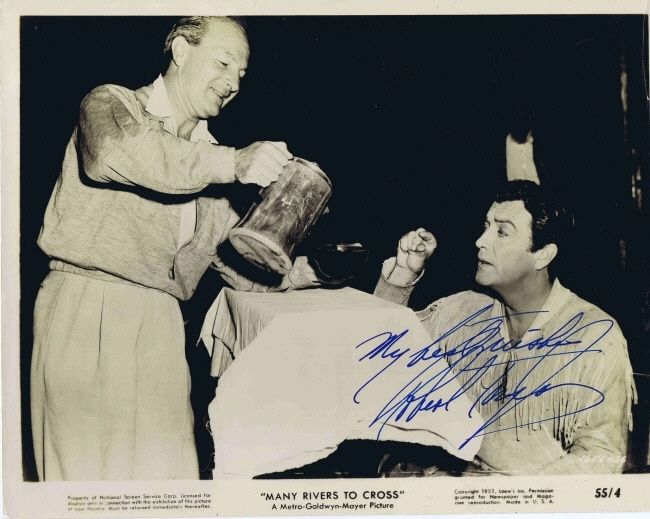
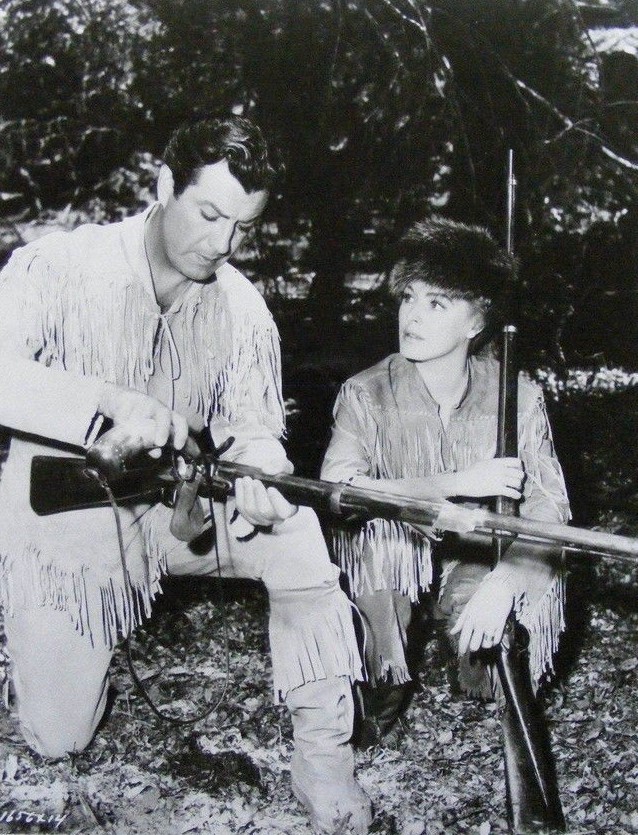
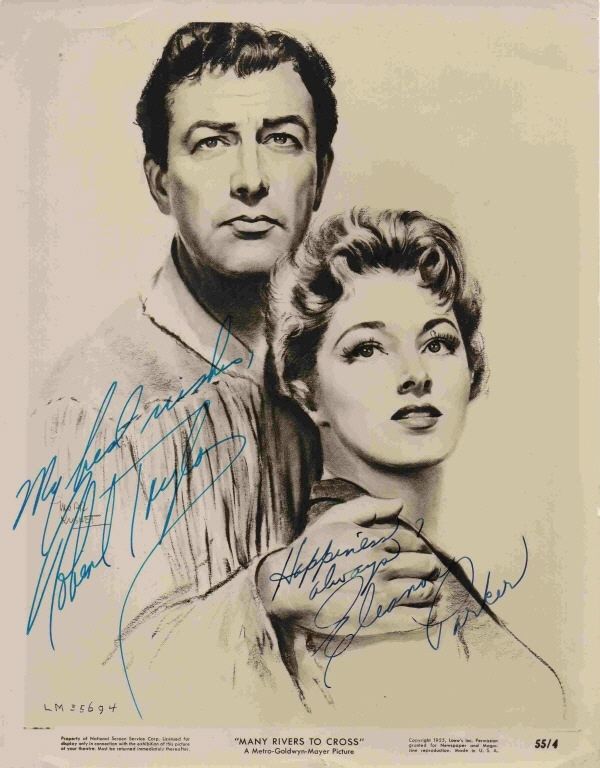
Many Rivers To Cross, 1955, is playing on Turner Classic Movies on Tuesday, June 8 at 4:15 p.m. This outrageous farce is one of my favorites–tremendous performances from both of the leads.
This wonderful rollicking comedy set in the early days of the republic, roughly sometime in the Federalist era had to take its inspiration from Seven Brides for Seven Brothers from the year before. In fact two of the brothers, Jeff Richards and Russ Tamblyn are featured in Many Rivers to Cross.
The surprise to me in this film is Robert Taylor. At the time he did this film Taylor had been doing dramatic parts for many years. He did some comedy roles in his early days at MGM, but they were of the modern sophisticated sort.
Robert Taylor is Bushrod Gentry, a frontier trapper who’s a pretty fancy free and footloose sort of character very much like Adam Pontipee in Seven Brides for Seven Brothers. But while it was Howard Keel who was looking for a wife in that film, here it’s the woman who does the chasing and it’s the woman who comes from a pretty frisky frontier family herself. Eleanor Parker is Federalist era Calamity Jane who takes a real shine to Taylor.
Of course she pursues Taylor through out the film, try as he may to get back to his trapping. Their last escape from some pursuing Shawnee Indians is an absolute comic riot.
Good as Taylor and Parker are, Many Rivers to Cross almost cries for a song or two other than the theme about the Berry Tree. In a musical I could have seen Howard Keel and Doris Day doing it easily.
In any event I’m sure that when Taylor and Parker settle down and commence to having children that they were the ancestors a hundred years later of that Pontipee clan in the Pacific Northwest. Review by bkoganbing from Buffalo, New York for the IMDb.









 Robert Taylor Actor