The Gorgeous Hussy, 1936

Here is a review I wrote for Amazon and the IMDB.

It’s a story about Washington D.C. It’s about dirty tricks, sleazy operatives, scurrilous personal attacks and lies. The 2012 presidential campaign? No, “The Gorgeous Hussy.”

Many people have noted that “The Gorgeous Hussy” is not historically accurate. This is true and at the beginning of the picture they call it “fiction”-drawn from real characters, but definitely fiction. What did you expect? It’s MGM in 1936. There is a huge budget, lavish production values, beautiful costumes (male and female), top-notch acting and, of course, romance.

The story centers around Peggy O’Neill, Joan Crawford, an innkeeper’s daughter called “Pothouse Peg,” for her politics and her men. The men are a list of Metro’s best—Robert Taylor, Jimmy Stewart, Franchot Tone, Melvyn Douglas and Lionel Barrymore. Robert Taylor dominates the first quarter of the picture with his enormous energy, his playfulness, his rapport with Crawford and his skin-tight costume. Taylor even sings and dances.

Jimmy Stewart, Joan Crawford, Robert Taylor

After Bow Timberlake’s (Taylor’s) heroic off screen death, things settle down. Andrew Jackson (Barrymore) dominates every scene he’s in. Beulah Bondi, as Rachel Jackson, is equally good. She won an Oscar nomination for her role.

Joan Crawford is usually criticized for appearing in an historical picture because she was too “modern.” Here she handles her costumes beautifully, using her skirts to express a range of emotions. While her acting is fine, she is overwhelmed by the male contingent.

Franchot Tone, Crawford’s husband at the time, is quietly effective as Peg’s second husband John Eaton. Melvyn Douglas brings strength and intelligence to his role as Virginian John Randolph. Jimmy Stewart is wasted as Peg’s failed suitor.

Taylor and Crawford

“The Gorgeous Hussy” is fun, sometimes moving and a reminder that political behavior wasn’t all that different in the 1820s.

Posted in Films | Tagged , , , , , , , , , , , , , , , , | 2 Comments

Sometimes It’s Difficult To Be Famous

Buffalo Bulletin, Buffalo, Wyoming
Sometimes it’s difficult to be famous
Sagebrush Sven
Published: Tuesday, July 3rd, 2012
(Permission to use requested.)

How about the members of Buffalo Downtown Association, the Buffalo Chamber of Commerce and Johnson County Arts and Humanities Council?

They had their “creative side” working full blast when they came up with the idea of featuring a “Longmire Day” in Buffalo later this month (July 21 to be exact).

Most of the Bench Sitters are hooked on the TV series “Longmire” and are avid readers of Craig Johnson’s books.

You may know the star of A&E’s featured series who plays Walt Longmire is an Australian actor by the name of Robert Taylor.

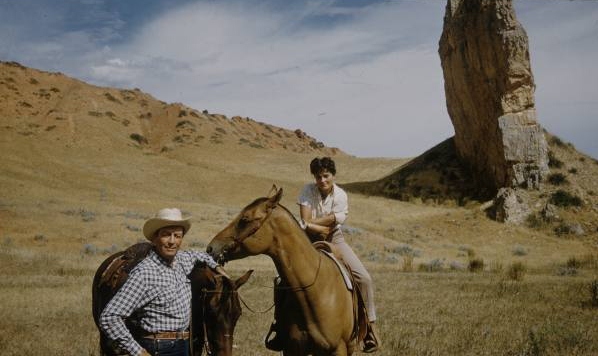
The Taylors in Wyoming, 1961.

What you might not know is that a famous actor by the name of Robert Taylor once spent many of his summers here in Johnson County.

Check it out.

That Robert Taylor was one of Hollywood’s top stars in the 1940s and 50s.

He usually played the fearless hero in Westerns and always ended up with the pretty girl. In real life, he was married to Barbara Stanwyck and later to German-born actress Ursula Thiess.

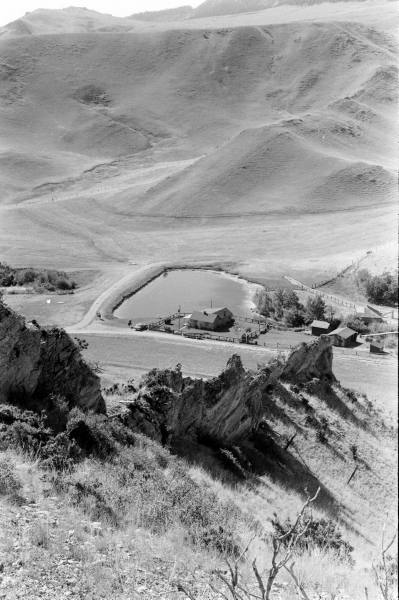
The earlier Robert Taylor was a friend of the people who owned the UM Ranch at that time, and he had a cabin (summer home) on what is now part of the Bud Love Wildlife Management Area.

The Taylor “Cabin” in Wyoming.

Taylor liked to come into Buffalo with his faded Levi pants, Western shirt, boots and worn-out Stetson. He enjoyed having an ice cream “float” at Seney’s Drug and picked up his mail at the post office two or three times a week.

He told a friend here that he liked Buffalo because no one made a fuss about him, asked for his autograph or wanted a photo taken with him.

Truth was, he may have looked familiar to some locals, but the idea that a famous movie star was among us – well, it just didn’t seem possible.

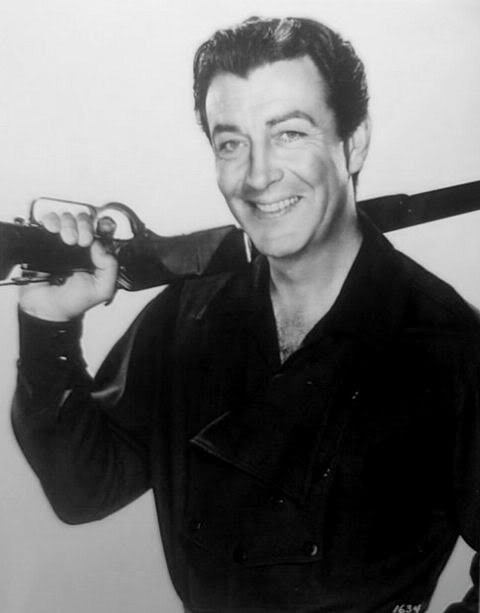
“The Last Hunt,” 1955.

Early one summer the movie star walked into Washut’s Propane to order the tank at his place filled up. Bart Green was working there at the time.

The handsome movie star thumbed his cowboy hat back and said, “I’d like a load of propane delivered to my place out near the UM.”

“Ok,” says Bart. “What’s the name?

The actor smiled and said, “I’m Robert Taylor.” – knowing that for once it would be just fine for someone to realize they were talking to a movie star.

“Billy the Kid,” 1940.

“Uh huh” … Bart said as he scribbled on the order form.

“Will that be cash or charge?”

“I’ll need to charge it,” smiled Taylor.

“OK,” retorts Bart. “But I don’t know you for sure. Are you related to the Taylors down at Kaycee? How about Orange Taylor? Is he a cousin?”

The movie actor didn’t say anything more. He just pulled his checkbook out and took care of the bill.

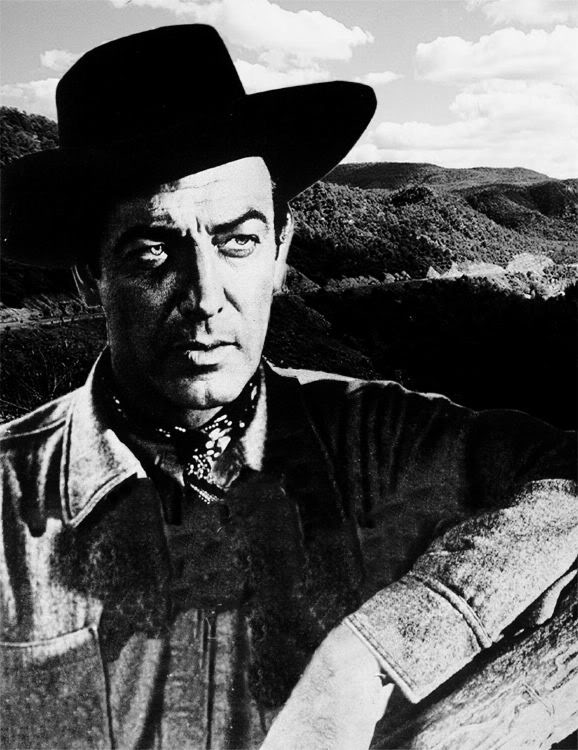
“Ambush,” 1950.

Sometimes it’s harder to be famous than you might think.

Take care and we’ll write again next week.

SVEN

Posted in Biography | Tagged , , , , , , , , , , , , , , , | 4 Comments

Happy Birthday, Robert Taylor

Happy 101st Birthday Robert Taylor!

August 5, 2012

Robert Taylor at 6 months of age, 1912.

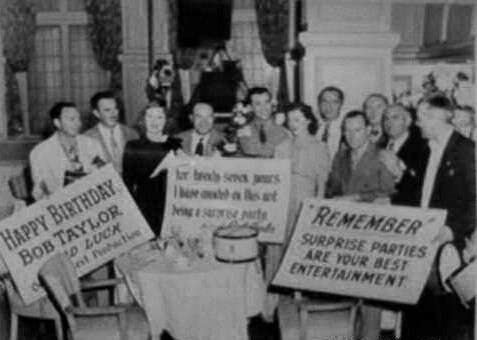
28th Birthday, 1939 at a party given by Barbara Stanwyck.

Probably 1938. Stanwyck, Taylor and cake.

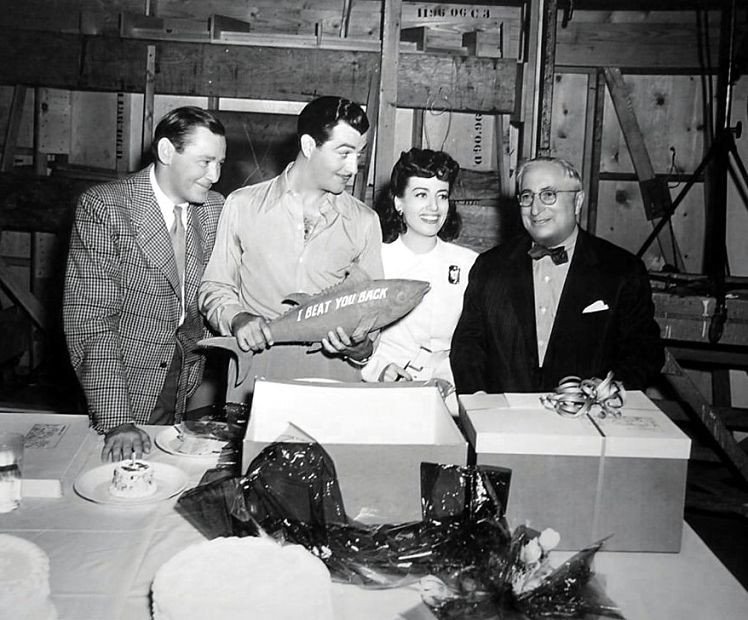
Louis B. Mayer celebrates the Taylor birthday in 1940 or 1941.

Unknown, probably the 1930s.

Probably 1949.

1961–with Ursula.

From all the fans who still love you.

Posted in Biography | Tagged , , , , , , , , , , , , | Leave a comment

A Dentist’s Brush with Fame

Copyright 1999 Robert E. Horseman, DDS
(Permission to use requested; one party says he thinks it’s o.k.)

I used to have a plan for what I would do if I ever came face-to-face with a real celebrity. Cool, I decided, would be the way to go. Never let them see that you’re impressed, no obsequious toadying. No fawning, just detached coolness. So much for planning. When I came across the first and only celebrity I’ve ever met, I saluted, called him “Sir” and nearly became incontinent.
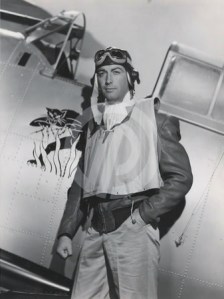
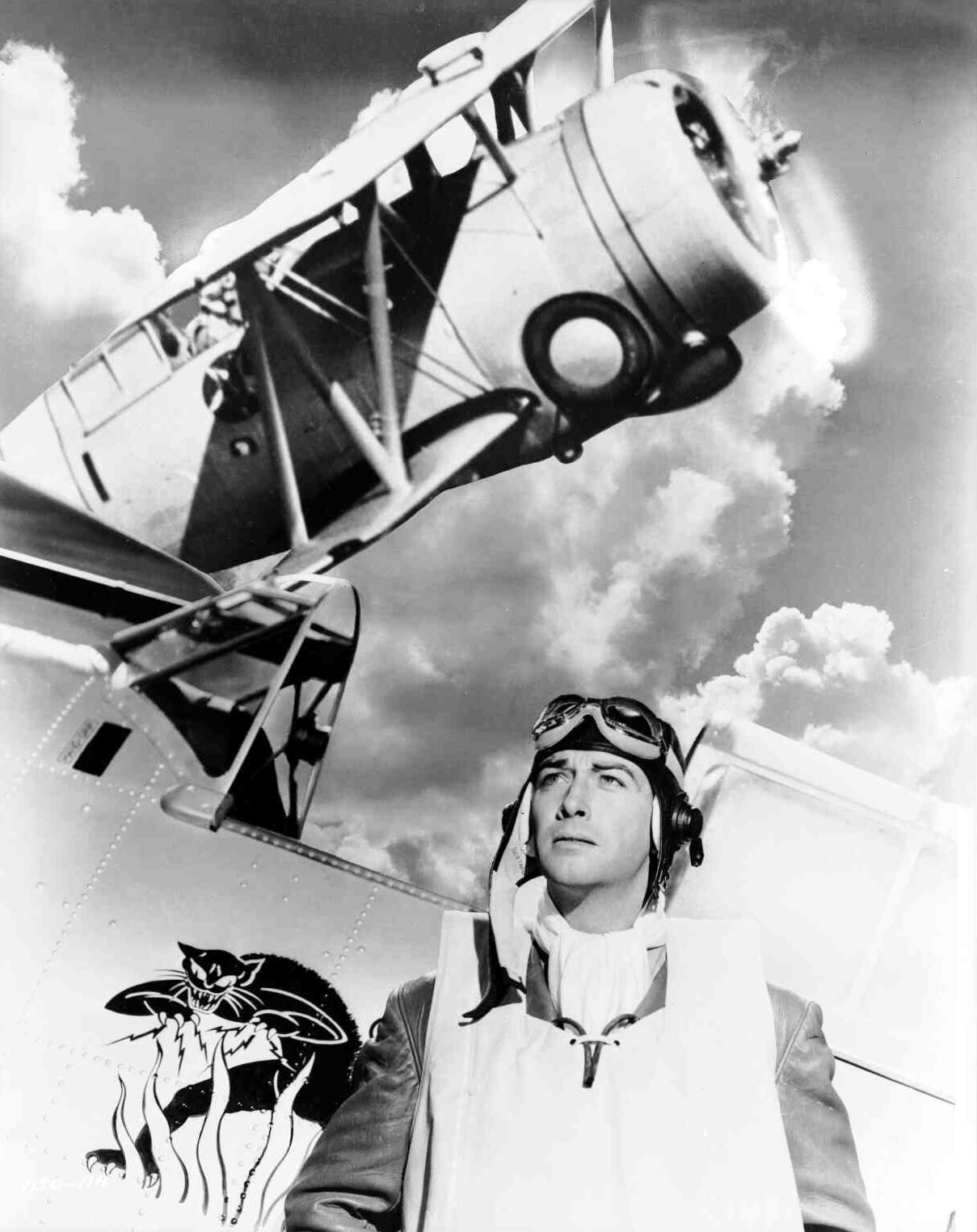
“Flight Command,” 1940; in 3 years, life will copy art. Clarence Bull photo.

It’s early morning, summer of 1944, Livermore Naval Air Station, California. I’m sitting in the rear cockpit of an N-2S Stearman primary trainer, commonly called “The Yellow Peril.” Yellow, because that’s the color of it; Peril, because there are thousands of them here at NAS Livermore, and they’re all trying to either take off or land on the mile square mat fronting the control tower.

As an AvCad-V-5, my job is to sit here, strapped in, helmeted and goggled, on a concrete parachute. There are 100 Stearmans on the flight line this morning, engines warming up, ticking over noisily. Along with the other cadets, I am awaiting the arrival of The Man. The Man is my flight instructor. He is God and I am an Idiot; it’s a relationship all cadets accept as normal.

“Flight Command,” 1940

Threading his way carefully between the whirling props, supporting his chute behind him with both hands, God approacheth. Navy protocol requires that, upon his recognition that I am alive, I pop him a smart salute and yell out, “Cadet Horseman, SIR!” Preparing to mount the front cockpit, he looks up, expressionless, returning the salute and that’s when it happens!

My God! My instructor today is Spangler Arlington Brugh! That’s right, Spangler Arlington Brugh, a.k.a. Robert Taylor, movie star, matinee idol, billed as “The Man With the Perfect Profile” and husband of Barbara Stanwyck. Only the fact that I’m securely pinioned in my seat prevents me from making a perfect fool of myself by leaping out to kiss the hem of his garment. We are going flying, me and a movie star. Alone, in an airplane, Bob and Bob.

Taylor doesn’t seem to notice my absence of cool. He tells me via the gosport tube that connects his mouthpiece to my earphones to taxi out, take off and climb to 2,000 feet south of the field. That voice! The same plummy baritone that knocked ’em dead in the 1935 version of “Magnificent Obsession,” caused Vivien Leigh to swoon in “Waterloo Bridge,” broke the heart of Deborah Kerr in “Quo Vadis,” and inflamed both Elizabeth Taylor and Joan Fontaine in “Ivanhoe.” That same voice is telling me to turn right 30 degrees. I could die!

“Flight Command,” 1940

Lt. Taylor doesn’t seem to be in the mood for routine instruction today. He demonstrates an “8 point slow roll.” It’s perfect. Thank heaven he doesn’t ask me to do one. We then go to an outlying field used to practice “S turns to a circle” and “slips to a circle.” He demonstrates one of each. I have done this a hundred times, but again, he doesn’t ask me to show my stuff. I’m beginning to wonder — is he trying to impress me? Me? Does he think that because he’s a movie star everybody thinks he can’t really hack it in the Navy? That it’s just a cushy assignment until the war’s over?

He suddenly elects to land on the grassy field, gets out and motions me to do likewise. We stand there for a moment, side by side. I’m acutely aware that he is short — five-seven, maybe eight with lifts. I feel like scrunching down to his level from my six-one. He offers me a cigarette; I decline, embarrassed. Then I think, you moron! That cigarette would have made a priceless souvenir. He’s 33 years old; I’m 24 and feel like 6. While he’s lighting up, I study him, looking for flaws that I can report back to show how unimpressed I was, how cool. There aren’t any. Hair, complexion, voice — he’s got it all. OK, so he’s a little short. Maybe he has to stand on a box like Alan Ladd when he busses these women. If Barbara Stanwyck can live with that, it’s no skin off my nose.
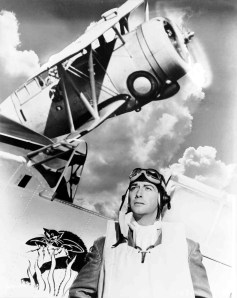
“Flight Command,” 1940

I’ll say this: He’s not much of a conversationalist. I have to say something. He’s finished one cigarette and is lighting up another.

“It’s a strange war, isn’t it, Sir?” I offer.

“Hmmm,” he says in his Taylor voice.

“I mean, here I am, a dentist from Laguna Beach and you a movie star from Hollywood flying primary trainers in Livermore.”

“Hmmm,” he says. I was hoping for more, like “How come you’re not doing dentistry?” or “Would you mind taking a look at this molar? It’s been bothering me.” Maybe without a script, he hasn’t a clue. I can’t even get a good look at his teeth to see if they’re capped.

We fly back to the base, stick our Yellow Peril in with the others and manage to land safely. Once out of the plane, he offers his hand, we shake, salute and he’s gone. That’s the last I ever see of him, walking away, supporting his chute with one hand and trying to get at his cigarettes with the other.
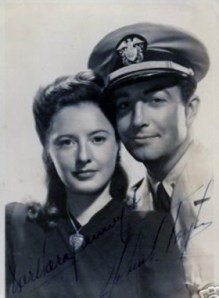
Lt. and Mrs. Taylor ca.1944

Later I learn that I am his last student at Livermore before he departs to narrate a documentary about the USS Enterprise, called “The Fighting Lady.” Twenty-five years later in 1969 he is dead at 57 of lung cancer. I blame myself for not pointing out to him on that grassy field that all Perils weren’t necessarily Yellow, that he should quit smoking right then, cold turkey. Then maybe he and I and Barbara could go out for some Chinese and a movie. But I guess that wouldn’t have been cool.

Short? Who’s short?
I think Dr. Horseman exaggerated Mr. Taylor’s lack of height to enhance the humor of the piece. Taylor was probably 5’11”–not hugely tall but definitely not short. My husband is 5’11” so I know whereof I speak. I offer two pieces of evidence:

1948 Royal Command Performance. Liz Taylor was said to be 5’4″

Gable was 6’2″ by all accounts.

Posted in Biography | Tagged , , , , , , , , , , , , , , , , , , , , , | Leave a comment

Taylor and Stanwyck–The Long Goodbye

The marriage of Robert Taylor and Barbara Stanwyck was an odd one from the start.  They met in 1936 on a blind date just before working together in “His Brother’s Wife.”  There seemed to be a mutual attraction from the start but at this point MGM did not want Mr. Taylor to marry.  They had already scuttled his engagement to Irene Hervey.  Nevertheless the two became close and lived on adjoining ranches.  They were considered a couple.  In January of 1939 Photoplay magazine published a lengthy article about “Hollywood’s unmarried couples,” naming Taylor and Stanwyck, Gable and Lombard and others.

This changed MGM’s mind and the couples were encouraged to marry.  In fact, the Taylor-Stanwyck union was essentially an arranged marriage. The arrangements for their May 1939 wedding were made by the studio and the only say Mr. Taylor had in it all was “I do.”  Whether they would have married on their own is doubtful, although possible. From all reports, Stanwyck’s emotional commitment was far greater than Taylor’s.

Nonetheless, the marriage lasted for nearly twelve years.  It wasn’t a marriage of equals–Stanwyck considered herself Taylor’s teacher and called him Junior.  He called her the Queen.  Given his tremendous dislike of confrontation, she was able to have things her way.

Within two years of the marriage, he had begun to stray with a fling of some sort with Lana Turner.  Stanwyck was devastated and some reports say she cut her wrists to hold onto him.  Robert Taylor continued to see other women during his marriage, included having affairs with Ava Gardner and Eleanor Parker  The fact that the Taylors were separated so much–including his three year stint in the Navy–probably prolonged the marriage.

In 1950 Mr. Taylor spent most of the year in Rome making “Quo Vadis.”  He indulged in an active social life, including a very public dalliance with Italian starlet Lia de Leo.  Stanwyck flew to Rome to confront him and ask for a divorce.  This is widely thought to have been a ruse to hold on to him rather than an actual desire to separate.  In any case, to her horror, he accepted.  Stanwyck stayed in Italy for six weeks, during which they apparently negotiated their future.  The pictures below are from those six weeks, taken in Rome and Venice. Note the Italian couple marching by them as they pose in one shot.

On February 21, 1951 Barbara Stanwyck divorced Robert Taylor.  The divorce became final a year later.  As part of the settlement, she was granted 15% of his gross earnings until she remarried or died.  No one expected him to die first.  The two remained friends despite everything and Stanwyck never remarried.  She did collect her money religiously and by some reports, tried to get more from Mr. Taylor’s estate.  Despite this, she always claimed that he was her one true love.

(This material comes from too many sources to name, but I’ve tried to be accurate.)

Posted in Biography | Tagged , , , , , , , , , , , , , , , , , , , | 80 Comments