A Yank at Oxford, 1938, Is Playing on TCM on February 5 (USA)

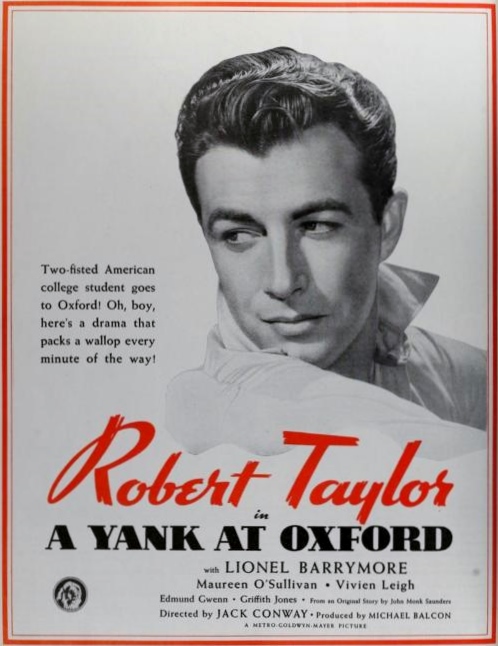
A Yank at Oxford, 1938, is playing on Turner Classic Movies on Saturday, February 5 at 6:00 a.m. est.
RT6528

A Yank at Oxford is one of several films intended to “toughen up” Robert Taylor’s image after his success in a number of boudoir romances. Taylor plays Lee Sheridan, a college boy who has been spoiled rotten by his newspaper owner father, played by Lionel Barrymore. Father Sheridan’s habit of holding the presses for Lee’s latest athletic triumph has only contributed to the boy’s swollen head.

Despite his lack of academic focus, Taylor is offered a place at Oxford. Upon his arrival, he immediately encounters a group of his fellow students, who begin a campaign to humiliate him. He also meets the leading lady, Maureen O’Sullivan.

The rest of the delightful and humorous picture focuses on the relationships among three people: Taylor and O’Sullivan, boyfriend and girlfriend; Taylor and Griffith Jones, his leading tormentor; O’Sullivan and Jones, brother and sister. A nymphomaniac Vivien Leigh adds spice to the mix.

A Yank at Oxford allows Robert Taylor to show that he is not only a fine actor but also a fine athlete. Granted that the script specified that he would always win, Taylor is believable as a runner and as a rower. He can also swim.

O’Sullivan is a charming coed torn between her boyfriend and her loyalty to her brother. Jones and Taylor cover up for one other for different peccadilloes. They evolve from antagonists to teammates to friends. A remarkable scene that deserves special mention concerns the venerable English tradition of “debagging.”

The cast is uniformly good. Taylor looks and acts younger than his twenty-seven years. Jones is one of a fine contingent of British actors including Edmund Gwenn, Robert Coote and Edward Rigby. Lionel Barrymore shines as the older Sheridan. A pre-Scarlett Vivien Leigh is lovely and engaging.

A Yank at Oxford was MGM’s first British-made film. Jack Conway, the American director keeps things moving at a brisk pace. Harold Rosson’s photography has a newsreel-like immediacy. And Oxford, of course, looks wonderful. Review by me for the IMDB.

1938

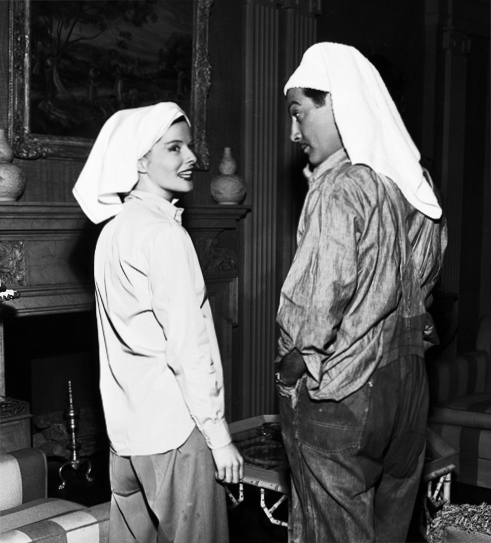
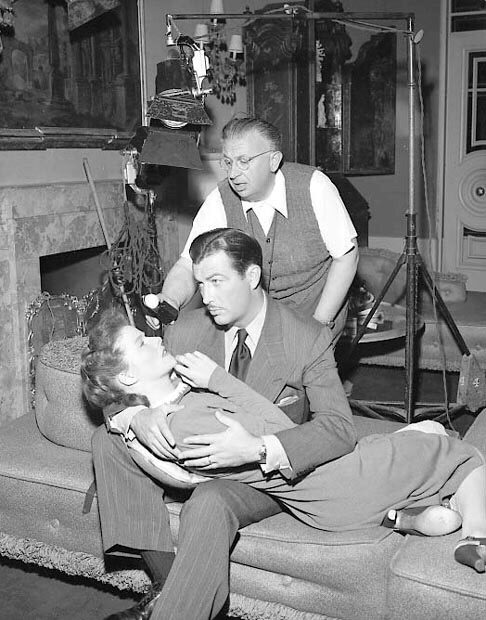
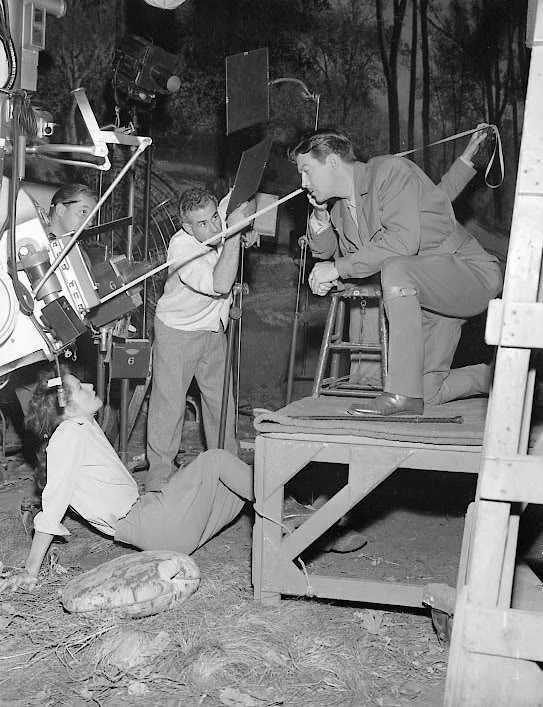
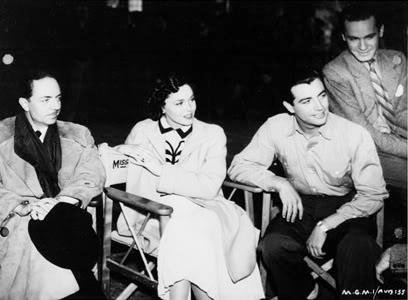
Some behind the scenes photos:

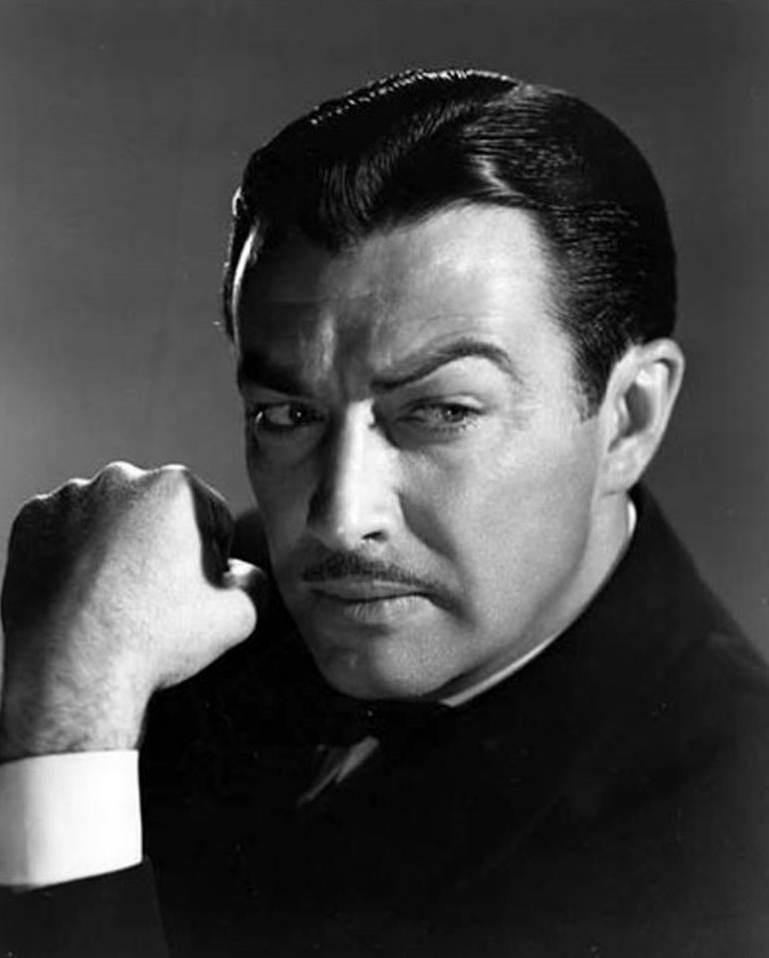
Wet and cold Robert Taylor
1937
Griffith Jones, Maureen O’Sullivan, Robert Taylor
Dir. Jack Conway & producer Michael Balcon on set of film A Yank at Oxford, starring Robert Taylor filming in England.
William Powell, Maureen O’Sullivan, Robert Taylor, Griffith Jones
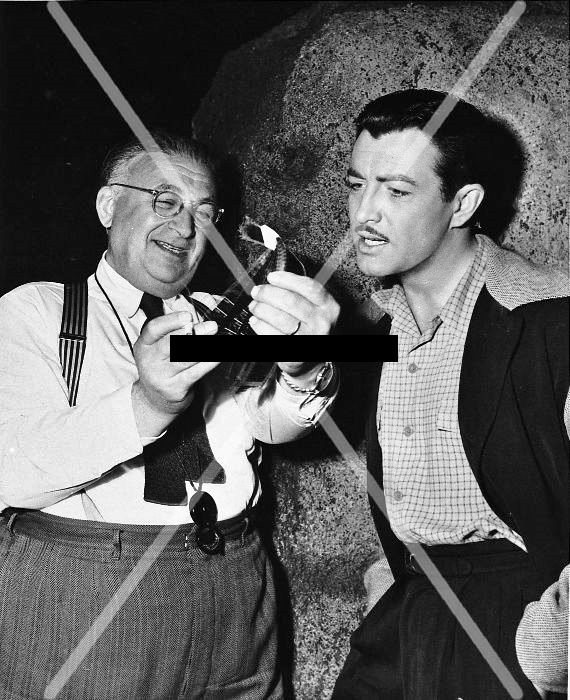
Robert Taylor and Edmund Gwenn, seen here with Director Jack Conway, discussing a scene of MGM British Studios’ “A Yank at Oxford,” in which Maureen O’Sullivan and Lionel Barrymore have leading roles.
Posted in Films | Tagged , , , , , , , , , , | 4 Comments

Undercurrent, 1946, Is Playing on TCM on January 21 (USA)

Undercurrent, 1946, is playing on Turner Classic Movies on January 21 at 6:00 p.m. est.

Director Vincente Minneli said of Undercurrent : He [Robert Taylor] out-acted her [Katharine Hepburn] and stole the picture as the demanding and sadistic husband.  It was Kate who was miscast. (Charles Tranberg, Robert Taylor: a Biography, BearManor Media, 2011, pages 176-177.)

abc

All of the criticisms of this movie might well be flushed down the loo. This is one powerhouse of an interesting movie.  Call it Film-Noir. Call it Mystery/Suspense. Call it Psychological Thriller. Call it what you may…I call it: absorbing drama.  It moves very deliberately…and the facts are revealed one by one, in true mystery fashion, until the fantastic, thrilling ending.

Those who say that Hepburn and Mitchum were miscast are just so wrong. Hepburn wasn’t playing Hepburn here…she wasn’t Tracy Lord here. She wasn’t a know-it-all New England uppity snob here. Not a worldly character at all. She played a different character than I’ve ever seen her do. Hepburn doesn’t rely on her stable of clichés to capture our imagination here. She does it with imagination and as few of the Hepburn cornerstone mannerisms as possible. Good result!

Und23 (10)

Robert Taylor is fascinating to watch. He has so many secrets in this role. And they reside behind his facade for us to watch and enjoy. He slowly swirls into controlled mania and desperate determination. Very fine, indeed. He should have been nominated for this one.

And then there’s Mitchum! What can one say about Mitchum without gushing foolishly. Gee whiz…the first time you see him…he shows us a side of him we have hardly ever seen! He seems at peace, mild in character, mellow in mood…pensive…other worldly. Likable even! Never gruff or abrasive like we’ve seen him so many times before.

What is unique about this story is that we really do not know what is going to happen next. We spend most of the movie residing in Hepburn’s character’s mind. Her wondering, her confusion, her search for the truth — at all costs.

RT677

I was expecting not to like this movie. I was expecting it to be another formulaic Hepburn vehicle about high society. But this is where this movie takes a left turn into an underrated mystery.  I enjoyed the use of the theme to the Third Movement of Johannes Brahms’ Third Symphony throughout the movie. It lent a delicious air of mystery, love and luscious pastoral passion to the whole affair.

And to say that Vincente Minnelli was WRONG for this movie? Gee whiz! He was perfect! Why compare him to Hitchcock? Minnelli has manufactured a mystery world all his own. Sure there are devices. All movies have devices. But they are handled so deftly…we don’t rely on them to make us aware of the story — they don’t get in our way. They heighten our interest and this very absorbing plot.

Well done. I wish it had been a longer movie…it was THAT kind of movie. I recommend this one…Review by Enrique Sanchez, Miami, FL for the IMDB.

Some behind the scenes photos:

Karl Freund, Cinematographer and Robert Taylor

Katharine Hepburn, Robert Taylor, Director Vincente Minelli

Mr. Taylor, Robert Mitchum, Mr. Minelli

Ms. Hepburn, Mr. Taylor
Mr. Taylor

Posted in Films, Uncategorized | Tagged , , , , , , , , , | 5 Comments

Conspirator, 1949, Is Playing on TCM on January 21 (USA)

Conspirator, 1949, is rarely shown on TV.  It will show on Turner Classic Movies on Friday, January 21 at 8:15 a.m. est.  This is the first film Elizabeth Taylor and Robert Taylor made together.

1606-151305

Most of the anti-Communist films of the 1940s – 1950s are crap. No doubt about that. Thrown together they had preposterous plots emanating from the Kremlin to sap our national resources or strength. For example one film has Lee Marvin heading a major atomic spy ring outside a missile range from a hamburger/hash stand! The best films of the period dealing with communist threats were the science fiction films like The Thing or Them wherein the monster was a symbol for the threat to Americans (from an “alien” source). Occasionally a semi-documentary might attract attention, but not much.

Oddly enough this early movie was somewhat above average. First it correctly looked at our wartime friend and partner England as a possible source of leakage. This turned out to be somewhat true (but the Rosenberg Case would soon show homegrown spy rings existed as well). Secondly it showed something usually ignored or rendered minor in most of these films. Here it is developed into the issue: who are you going to show greater loyalty to, the Communist Party or your naive spouse?

What I really like about Conspirator is that Robert Taylor plays the central figure. He had tackled a few ambiguous characters before World War II, most notably William Bonney in  Billy the Kid (but that screenplay, like Darryl Zanuck’s film of Jessie James, whitewashed a great deal of the bad out of the central character). But after the war MGM treated Taylor (now a seasoned leading star of theirs) to a wider variety of parts, including more villainous characters. Think of him in the somewhat earlier Undercurrent with Kate Hepburn and Robert Mitchum. Both of these films could not have been made with Taylor in the 1930s.

I also sort of enjoy the idea that Taylor, a friendly [No-this has been disproved, see my posts here under HUAC], but sincere witness for the H.U.A.C subcommittee against Communist infiltration into the movie industry actually did this film. It is his only chance to show what he thought of a Communist agent, and his interpretation (and the screenplay’s) show he saw them as naive fools.

Also it is the first time in his career that Taylor starred with the only female star of his rank with the same last name: Elizabeth Taylor. Just leaving such films as National Velvet, Little Women and Life with Father, she finally came of age here as a young bride. In some ways I have always felt that Ms Taylor’s glorious beauty was at a pristine height in films of the early 1950s like this one or Father of the Bride. Here she is in love with her dashing wartime hero husband, whom she gradually realizes is not as heroic (for England) as she thought (though he would disagree – witness his scene telling her about how he has joined one of the great causes of all time!).

The film follows their courtship, their marriage, and the discovery of his treason by her. The issue of course is whether or not he will be turned in by her, or will he love her enough to withstand pressure by his Kremlin bosses to (errr)…eradicate his error totally.

The film (as mentioned in another recent review) is above average. Taylor does play this English “Col. Redl” (of an earlier war, in a different country – but serving another Russia) as a man torn apart, but refusing to acknowledge his error of judgment. In fact his final decision puts to stop to any type of acknowledgment. The one flaw in this film is similar to the later, wretched Rogue’s March with Peter Lawford and Leo G. Carroll. The omnipotence of the British Secret Service in ferreting out traitors is shown at the tale-end. I may add that in 1949 that Secret Service (MR5) contained such “patriots” as Burgess, McClean, and Philby. Yeah they really would have been watching Taylor closely! Review by Theo Winthrop for the IMDb, 2009.

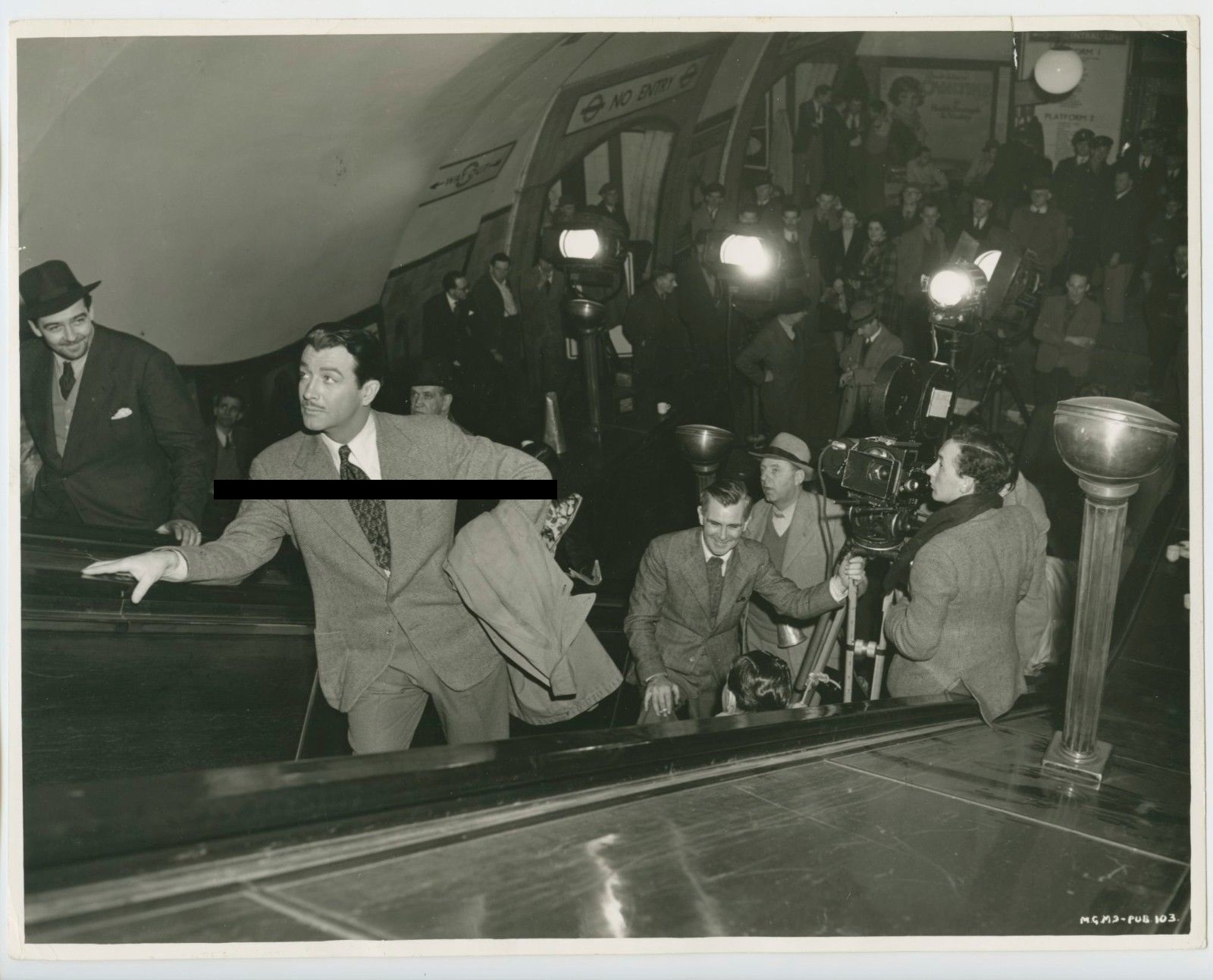
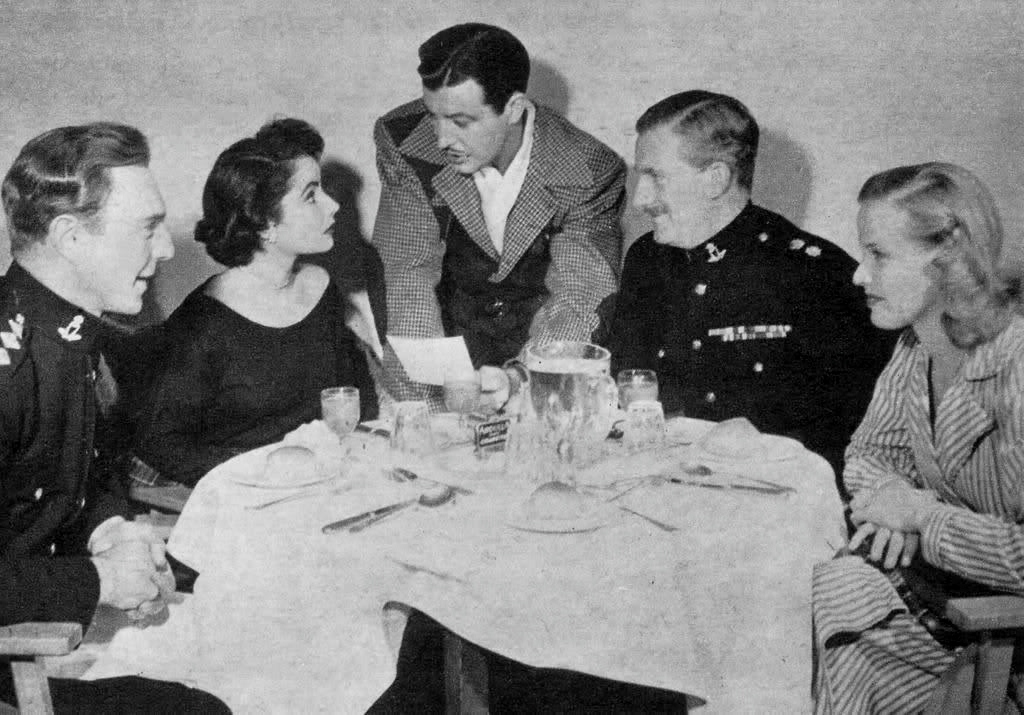
Some behind the scenes photos:
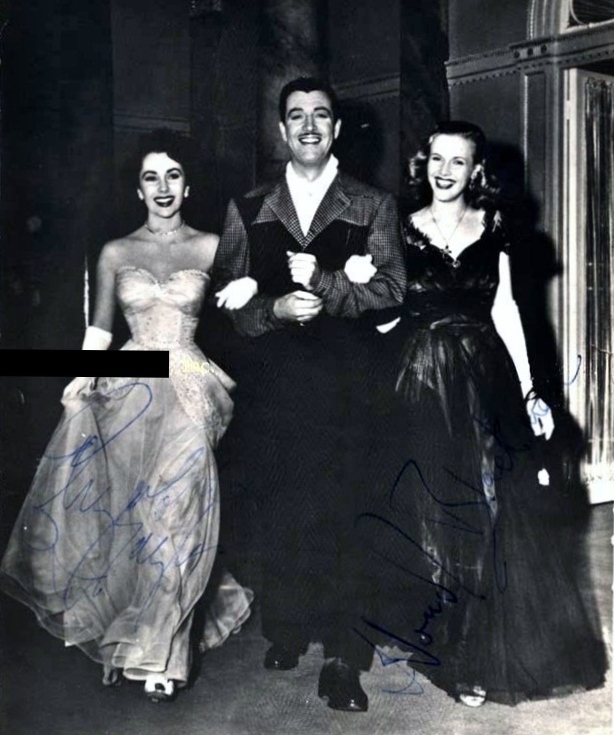
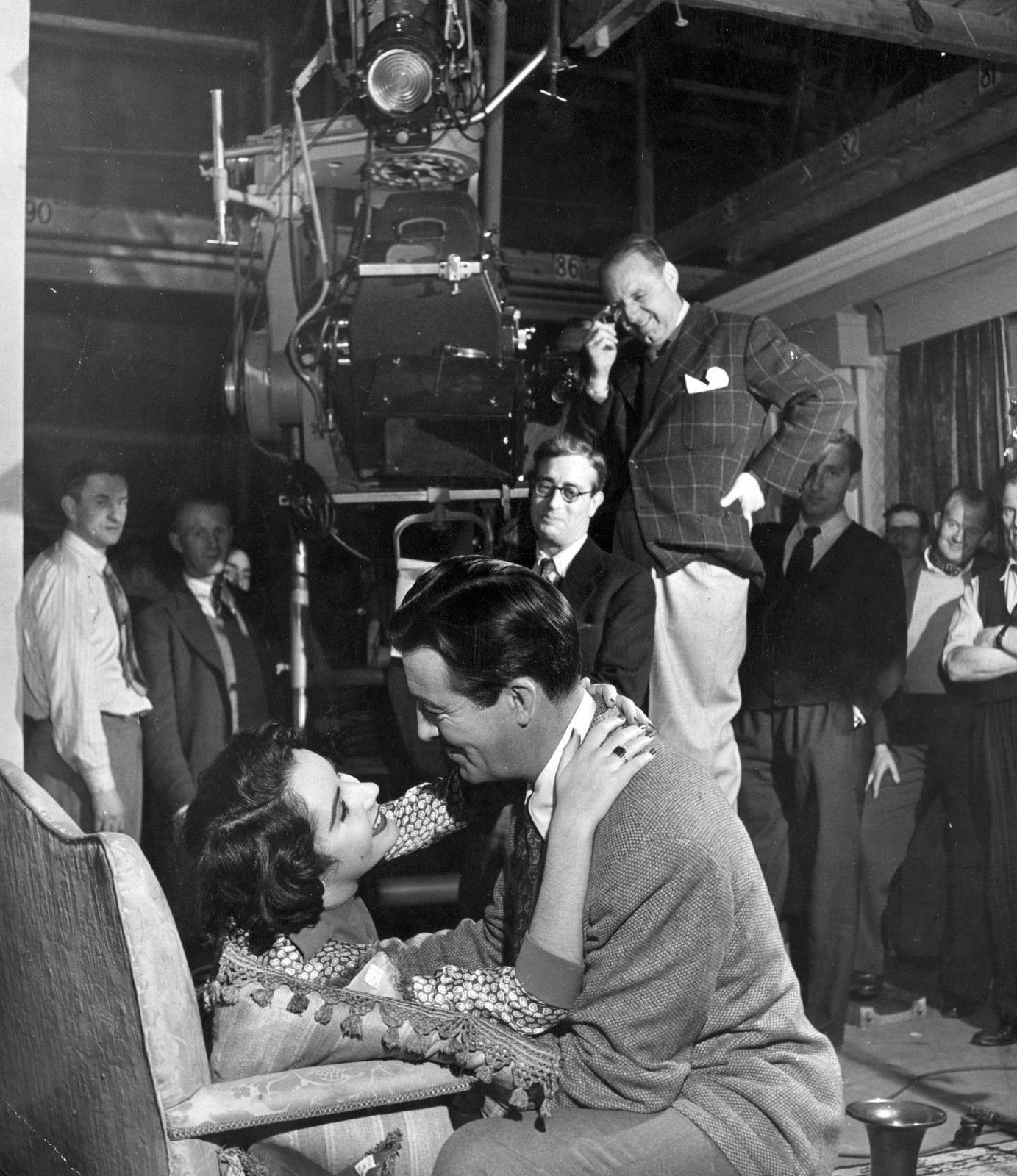
Robert Taylor and Elizabeth Taylor


Mr. Taylor at Premiere?

Filming in the subway.

Robert Flemyng?, Elizabeth Taylor, Robert Taylor, Harold Warrrender?, Honor Blackman
Coffee time.

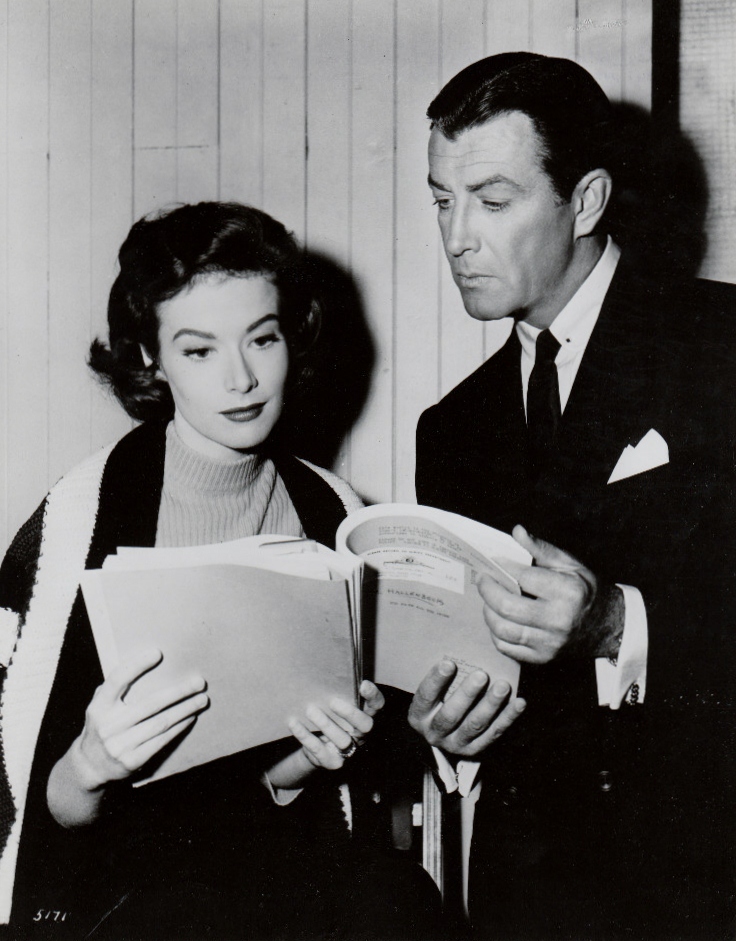
Mr. Taylor, Director Victor Saville, Ms. Taylor
Posted in Films | Tagged , , , , , , , , , , , , | 1 Comment

The Power and the Prize, 1956, Is Playing on TCM on January 20 (USA)

“The Power and the Prize” (1956) is playing on Turner Classic Movies on Thursday, January 20 at 6:15 p.m.

RT5174


The Power and the Prize is very much a movie of its time. Released in 1956, it reflects both the international situation of the mid fifties and the changing power structure at M-G-M.

Amalgamated World Metals is, on the surface, the perfect liberal paradigm for America. It is a huge international corporation run by unscrupulous men whose only interests are power and wealth. The Chairman, George Salt (of the earth? Burl Ives) is determined on destroying a small English metals company by forcing it into a disadvantageous deal. He sends Cliff Barton, the Vice-Chairman (Robert Taylor) to London negotiate the deal by pulling a fast one on the Brits.

Taylor, however, is to be the exception to the American-power-lust stereotype. When we meet him he seems pleasant but weak, going along with his boss’s plans, even planning to marry the boss’s niece. In London he meets a young woman (Elisabeth Mueller) who is administering a refugee agency for displaced artists. Since the agency is financed by Mrs. Salt, Barton is asked to verify its integrity while he is in London.

Mueller is emotional, almost hysterical, most of the time. She is artsy, hates Americans, hates businessmen, hates everything Barton stands for. Of course they fall in love. And, of course, Barton finds his true self by being exposed to her noble European sensibility. Within a week he turns his life around.

“Power and the Prize” was released in September 1956, two years after the notorious Army-McCarthy hearings into communism in America. The film satirizes the “red scare” culture of the times, with various people inquiring into Mrs. Linka’s (Mueller’s) possible “commie” background.

M-G-M was undergoing significant changes at this time. In 1951 Dore Schary had maneuvered the legendary Louis B. Mayer out of the company. Mayer’s last production was Quo Vadis, representing the grand vision of quality entertainment that he had pursued for decades. Schary, while not rejecting entertainment, believed that movies should have a message. His films were tougher, grittier and didn’t always have a happy ending. Schary himself left the studio in 1956.

Robert Taylor worked for M-G-M longer than any other top ranked player. He had a relationship with Mayer that was close to that of a father and son. Mayer looked after his protégé while exploiting him at the same time. Robert Taylor and Cliff Barton have similar histories—both men who worked loyally for a large company and prospered by doing so. While Taylor and Schary weren’t close, the studio continued to support him while it dropped many others. Barton and Taylor are also decent, honorable men who can, with a little nudging in Barton’s case, be counted on to do the right thing.

The anti-communism theme is also relevant to the actor. In October of 1947, Taylor testified, albeit under duress, before the House Un-American Activities Committee. He did not call anyone a communist but made his opposition to communism in general very clear. The film even refers specifically to testifying before a congressional committee.

“The Power and the Prize,” is, then, a movie with layers. It is well acted by all of the principals. Sir Cedric Hardwicke is particularly effective as the beleaguered head of the British company that Amalgamated tries to con. Burl Ives blusters and bullies with gusto. Mueller throws herself into her part and has good chemistry with Taylor. Taylor, as always, brings a combination of restraint, glamor and goodness to his character. The other characters bounce off him like waves on a rock.

For some reason the film was filmed in black and white and in Cinemascope, which seems a waste. It would have been better in color or not in Cinemascope since it is essentially an interior oriented drama. Nonetheless it is visually sumptuous with a sort of East coast “Dallas” ambiance. Well worth a look. Review by me for the IMDB.

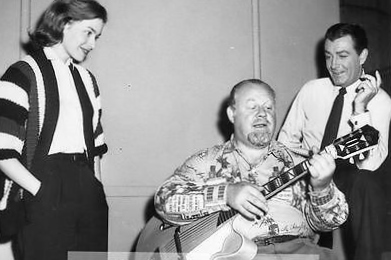
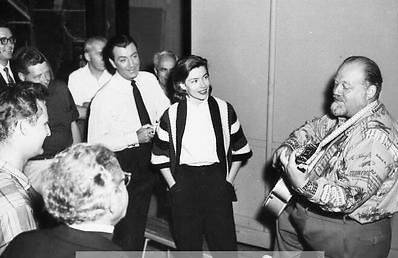
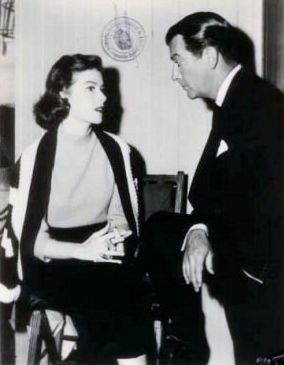
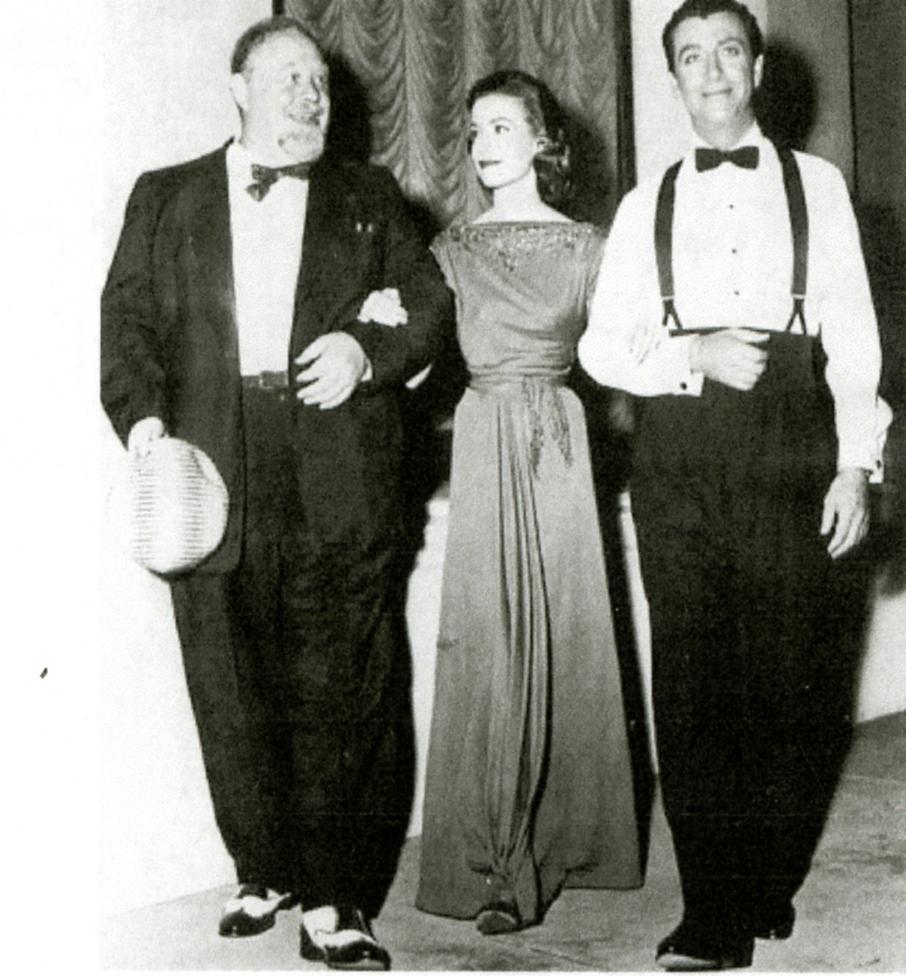
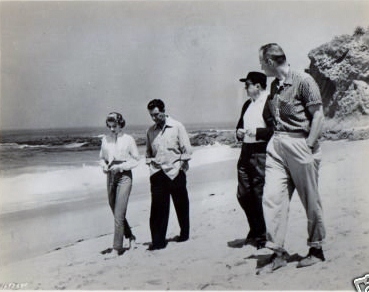
Behind-the-scenes photos:

Elisabeth Mueller, Burl Ives, Robert Taylor
Mr. Taylor, Ms. Mueller, Mr. Ives
Ms. Mueller, Mr. Taylor
Ms. Meller, Mr. Taylor, Director Henry Koster
Mr. Ives. Ms. Mueller, Mr. Taylor
Nicola Michaels, Mr. Taylor, 2 unknown
Ms. Mueller, Mr. Taylor

Posted in Films | Tagged , , , , , , , , , , , , , | 1 Comment

Ivanhoe, 1952, Is Playing on TCM on January 8, 2022 (USA)

Ivanhoe, 1952 is playing on Turner Classic Movies on Saturday, January 8 at 2:30 p.m.est.

Ivanhoe was one of the most successful films of the year and brought in over $10 million at the box office, about $89,823,018.87 in 2015.

RT4867
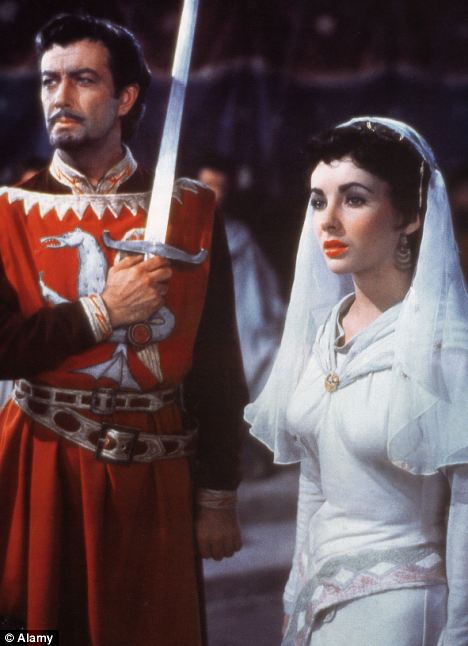
Robert Taylor and Liz Taylor in Ivanhoe.

Wonderful movie! This film is an exciting adventure-romance which never once loses its pace or feel. Robert Taylor brings depth to a potentially dull lead character. Jean Fontaine is great as his love, the Lady Rowenna. Elizabeth Taylor, though, steals the show with her stunning portrayal of Rebecca of York! This film has aged very well and shows first-hand to a young generation just why Elizabeth Taylor was such a star.

Although this film is an extremely enjoyable adventure, it also has the guts to tackle some complicated issues and resolve them in a very non-Hollywood fashion. As Ivanhoe feels his love for the beautiful Rebecca grow will he defy convention and pursue the lovely Jewish girl or remain with the safe charms of the blond, Anglo-Saxon Rowena?  The answer is intelligently handled and surprising. This film is one of the greatest examples of the classic adventure.  Review by David Arbury for the IMDB

Here are a few behind the scenes photos:

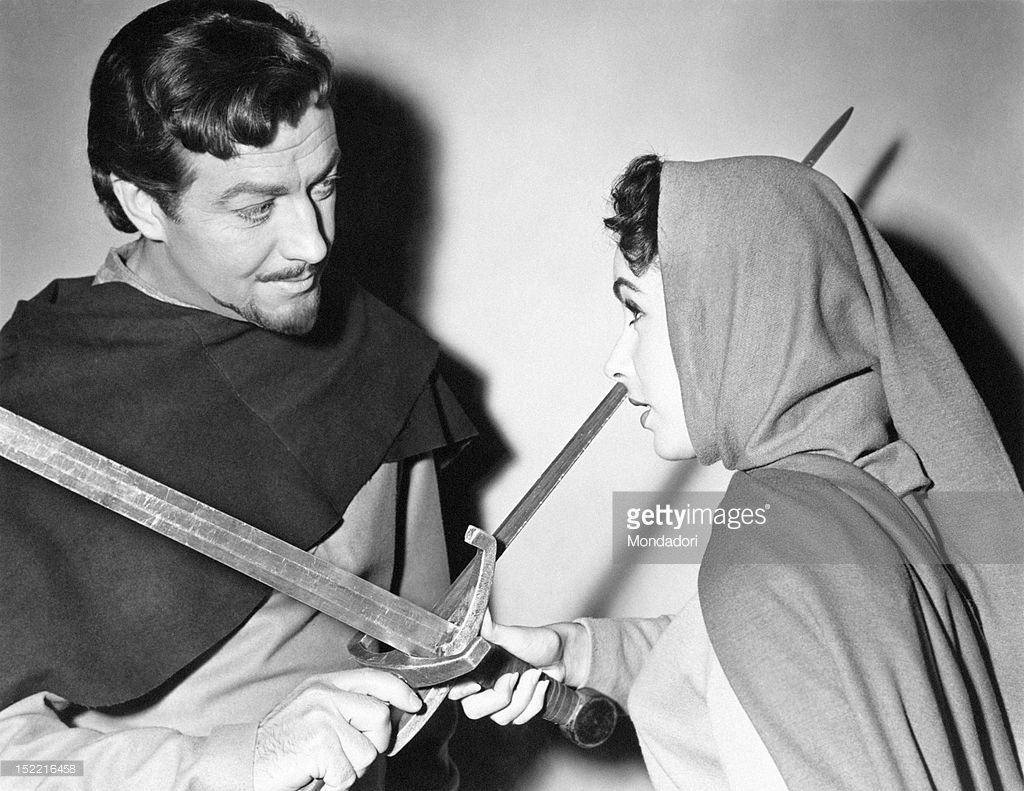
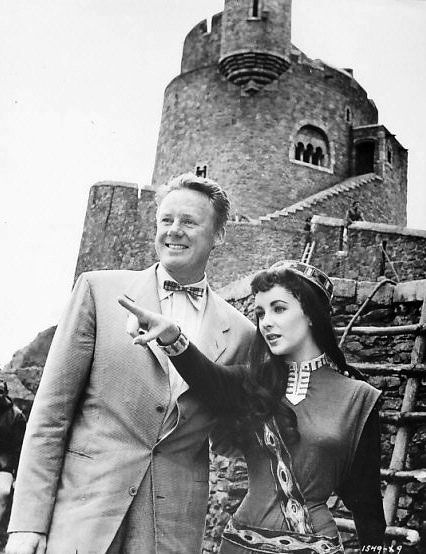
With Elizabeth Taylor.
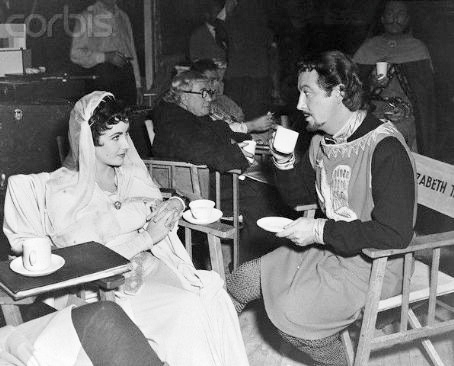
Coffee time.
Liz Taylor and Van Johnson.

Liz Taylor having her hair done.
Posted in Films | Tagged , , , , , , , , , , , , , , , , , | 3 Comments