Johnny Eager, 1942, is playing on Turner Classic Movies on Saturday, March 12 at 8:00 a.m. est. This is one of Mr. Taylor’s best. Don’t miss it.
Robert Taylor and Lana Turner in “Johnny Eager.”
Directed by Mervyn LeRoy. Cast: Robert Taylor, Lana Turner, Edward Arnold, Van Heflin, Robert Sterling, Patricia Dane, Glenda Farrell, Barry Nelson. Slick MGM melodrama with convoluted plot about sociology student (and daughter of D.A. Arnold) Turner falling in love with unscrupulous racketeer Taylor. Heflin won Best Supporting Actor Oscar as Taylor’s alcoholic friend.(TCM)
Having only been familiar with Robert Taylor’s body of forgettable [humpf!] work from the thirties (The Broadway Melodies, Camille, etc), seeing him in the title role of Johnny Eager was stunning. Tom Hanks’s 180 degree turn from silly comedies to Philadelphia might be a modern day equivalent. Taylor steps into a role that would seem tailor made for Bogart, Cagney or Robinson, and does an arguably better job than any of them could have. Yes, Lana Turner is present, and yes, Van Heflin won a supporting Oscar, but Taylor owns this film.
Johnny Eager is one of the best films of the 40s, as well as one of the all time greats. (Taken from a review by Justin Behnke on the IMDB).
Broadway Melody of 1936, made in 1935, is playing on Turner Classic Movies on Monday, March 7 at 6:30 a.m. est.
Robert Taylor, Eleanor Powell, Jack Benny, Una Merkel. June Knight, Buddy Ebsen, Vilma Ebsen.
Broadway Melody of 1936 is a confection of a movie, meant to sweeten the lives of Depression weary Americans. It stars the unlikely triumvirate of Jack Benny, Eleanor Powell and Robert Taylor. The plot is flimsy, involving the parallel efforts of a columnist (Benny) trying to save his career, a Broadway producer (Taylor) trying to find a star for his new show and a dancer (Powell) trying to get her big break on Broadway.
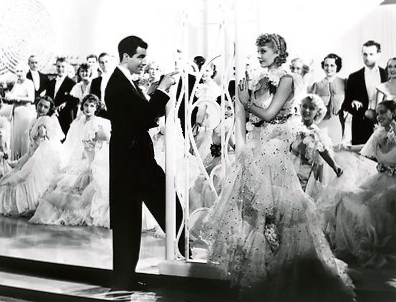
All this is secondary to the wonderful songs by Nacio Herb Brown and Arthur Freed: “I’ve Got a Feelin’ You’re Foolin’”; “Broadway Rhythm”; “You Are My Lucky Star”; “On a Sunday Afternoon”;” Sing Before Breakfast.” The production numbers for each song range from clever to spectacular. “I’ve Got a Feelin’ You’re Foolin” is sung by Taylor and New York actress June Knight. The special effects are a delight, especially as they are done so long before CGI.
Powell proves, as always, that she is unmatched as a dancer—her energy, grace and strength are a marvel. She dances solo, with Buddy and Vilma Ebsen, with Nick Long, Jr. and with huge choruses.
Nor can the acting be faulted. Jack Benny is excellent as the gossip-obsessed wise-cracking and scheming columnist. Robert Taylor is remarkably poised and mature for his years (24) and even has a nice singing voice. The second banana roles are filled admirably by Sid Silvers and Una Merkel. If Powell and Knight are less impressive when their feet are still, it doesn’t matter—their dancing more than redeems them.
“Broadway Melody of 1936 was a high budget, high gloss, pull out all the stops, MGM production. No expense was spared for the costumes, sets, choreography or photography. The direction by Roy del Ruth is crisp and effective. We could use more films like this in our own difficult times. Review by me for the IMDB.
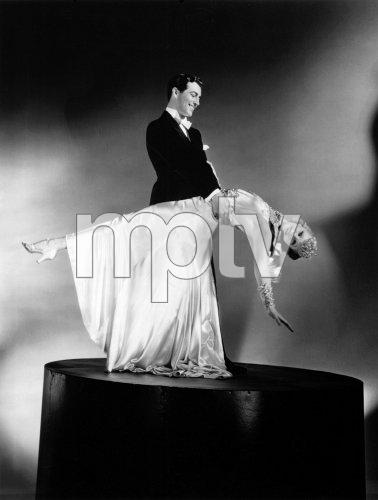
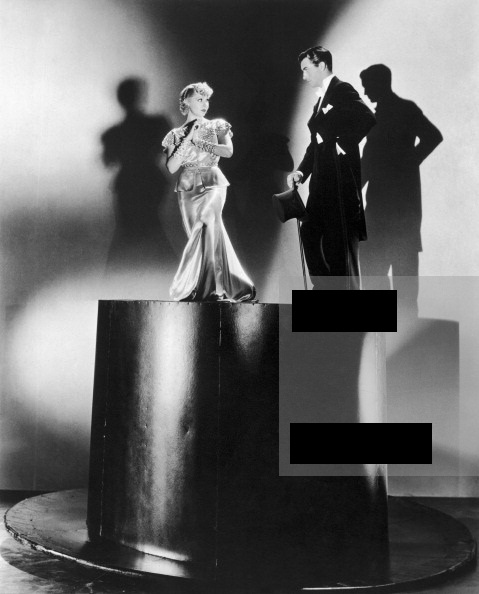
Robert Taylor and June Knight filmed a dance sequence for Broadway Melody of 1936 that did not appear in the final film. These pictures are all that is left.
Some behind the scenes photos:
Robert Taylor and Eleanor PowellJune Knight, Robert TaylorRobert Taylor and Eleanor Powell
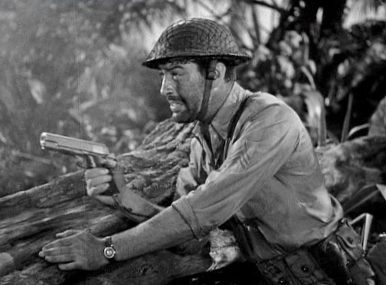
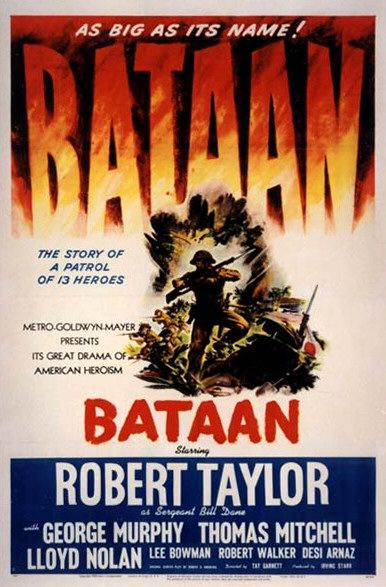
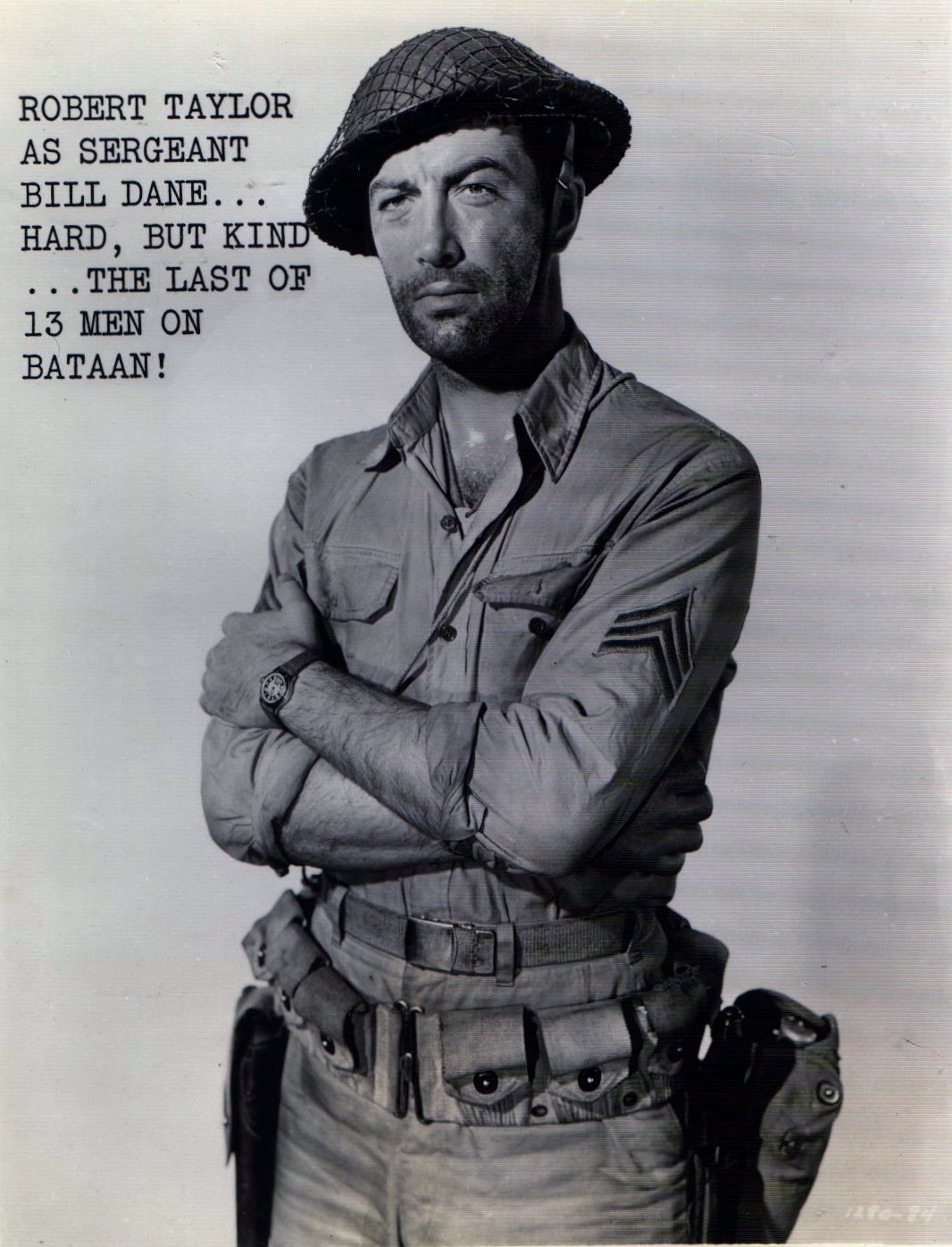
Bataan (1943) is playing on Turner Classic Movies on Tuesday, February 22 at 2:00 p.m. est.
This is an extremely intense picture, made when nobody knew for sure how the war (World War II) would end. Well worth watching.
This is one of the best war films of its era, and it is actually less anti-Japanese than many that came later, such as John Wayne’s Back to Bataan. But never forget the very real and common – and ubiquitous – Japanese atrocities, which they still are loathe to admit. Here, a small number of Americans are acting as a rear guard preventing the invading Japanese from driving south on Bataan in 1942. They have to blow a bridge and hold a ravine, and are subject to snipers, air attacks, and infantry assaults. It is superbly done with a great cast (Desi Arnaz was quite good too). Robert Taylor cast off forever his pretty boy image of the 1930’s with Garbo in his very tough portrayal of the sergeant.
Lucy on the set of Bataan.
Most notably, Bataan stands out for perhaps the best and most violent hand-to-hand combat footage ever filmed, certainly the best of its era. Also, and often neglected in reviews, is that Bataan featured a fully INTEGRATED Army: a Jew, a black, an Hispanic, a Filipino, and so on. They were all treated equally and heroically. Bataan could not even be shown in parts of the South in the 1940’s due to this. Only two other movies of the WW II period featured a black fighting bravely – Sahara and Crash Dive, but none as well as here. Bataan is a marvelous film on many levels. A classic. Review by Kirasjeri from Brooklyn, New York for the IMDB.
Turner Classic Movies is playing 2 of Robert Taylor’s best romantic films on Monday, Valentine’s Day, February 14. Camille, 1936, is playing at 8:15 a.m. est. Waterloo Bridge, 1940, is on at 10:15. The love interests are Greta Garbo and Vivien Leigh.
Camille
This is the love story of all love stories and shouldn’t be missed.
This film further proves that the assembly-line system of Hollywood studios back then should also be taken seriously in terms of artistry. Just because movies were produced run-of-the-mill doesn’t mean that they weren’t paid critical attention to by their makers. The usual impression on studio-era Hollywood is: take a formulaic narrative style, maybe adapt a stage play for the screen, blend in a handful of stars from the stable and the films rake in the profit at the box office. Not quite, that’s the easy perception. George Cukor, another of those versatile directors, made it apparent with Camille that filmmaking as an art may still flourish despite (and even within) certain parameters. Camille is beautiful, in so many respects. And it’s not just because of Greta Garbo.
Sure, the acting is amazing, the casting is perfect. Garbo is luminous, mysterious, cruel, and weak at the same time. Robert Taylor surrenders himself to be the heartbreakingly young and vulnerable Armand. Henry Daniell’s coldness and sadism is utterly human and familiar. The others are just plain wonderful. The writing contains so much wit and humor, devotion and pain – but it never overstates anything. The rapport and tensions between lovers, friends, and enemies are palpable and consistent. The actions flow so naturally, just like every scene, that checking for historical inconsistencies seem far beside the point.
There is so much that I love about Camille that it’s hard to enumerate them all, but with every little discovery comes the realization that this is “but” a studio production, so it makes the experience more exquisite. Camille is a gentle, poignant romantic movie that, like Garbo, takes its place delicately and self-effacingly in the history of American cinema, but makes itself indelible in the heart and mind of the lovelorn individual viewer. Review by tsarevna for the IMDb.
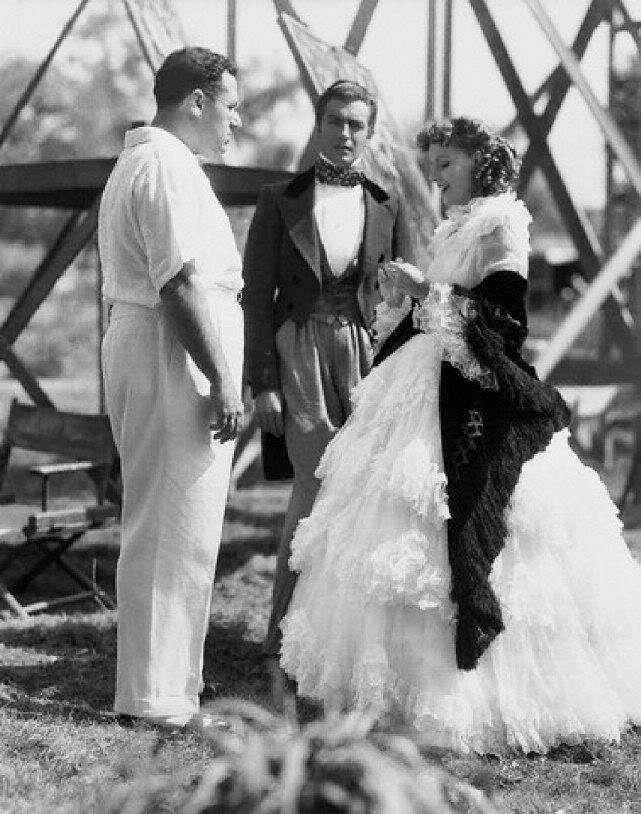
A behind-the scenes photos from Camille.
1936
1936; original caption–time out for movie idols; George Cukor. Robert Taylor, Greta Garbo
He also plays baseball-in costume on the set.
Waterloo Bridge
This was both Robert Taylor’s and Vivien Leigh’s favorite film. Waterloo Bridge cost $1,164,000.00 to make and made a profit of $491,000.00.
Robert Taylor was an inspired choice for the role… Not only does he have an imposing screen presence, but he brings the perfect mix of enlightenment, humor, compassion and emotion to the part…
Opposite him, Oscar Winner Vivien Leigh, perfect in her innocent lovely look, radiantly beautiful, specially that evening in a trailing white chiffon gown… Leigh floods her role with personal emotion giving her character a charismatic life of its own… As a great star, she delivers a heartfelt performance turning her character into a woman who undergoes an emotional awakening…
In this sensitive motion picture, Mervyn LeRoy captures all the tenderness and moving qualities… He makes every small thing eloquent, concentrating the highly skilled efforts of many technicians on the telling of a very simple bittersweet love story… Vivien Leigh paints a picture that few men will be able to resist… Her performance captures the audience to the point of complete absorption… Robert Taylor (carrying sympathy all the way) quietly throws all his vitality as an ambitious actor into the task… Their film, a credit to both, is a heavily sentimental tale about the vagaries of wartime…
Love is the only thing this movie is about… The story is simple: Myra Lester (Leigh) is a frail creature, an innocent young ballet dancer and Roy Cronin (Taylor) is an aristocratic British army officer… When their eyes met it took no time at all for their hearts to feel the loving call… They meet on London’s Waterloo Bridge during an air raid, and fall deeply in love… Their romance is sublime, and they soon agree to marry…
The lover’s marriage has to be postponed when the handsome officer is suddenly called to the front… Sadly, the sweet ballerina misses her performance to see her captain off at Waterloo Station… Fired from the troupe, she is joined by her loyal friend, Virginia Field (Kitty Meredith), and the two vainly try to find work, finally sinking into poverty and the threatening fear that goes with it…
The film is replete with beautiful and poignant scenes, specially the ‘Auld Lang Syne’ waltz scene in the Candlelight Club, before Taylor leaves for France…
Seen today, Waterloo Bridge has retained all its charm and power, all its rich sentiment, and tragic evocations… Review by Righty-Sock (robertfrangie@hotmail.com) from Mexico for the IMDB.
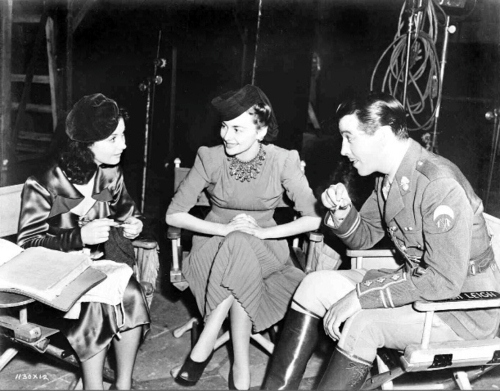
Some behind the scenes photos:
Mervyn LeRoy, Vivien Leigh, Robert Taylor.
With Olivia deHavilland.
Helping a lady out.
circa 1940: British actors Vivien Leigh (1913-1967) and Laurence Olivier (1907-1989) entertaining millionaire Sir Victor Sassoon on the set of ‘Waterloo Bridge’, a Metro Goldwyn Mayer film in which Leigh is currently starring. (Photo by Hulton Archive/Getty Images)
Ambush (1950) is playing on Turner Classic Movies on Friday, February at 9:30 a.m. est.
There are at least two versions of Ambush. The longer one contains the opening scene with an Indian attack on a wagon train and the kidnapping of a woman. It also has a fairly long scene of Robert Taylor and John Hodiak in the shower, behind a modesty wall. However, for us of the female persuasion, they both appear to be nude and Mr. Taylor moves slightly out of the shower which shows him nude. Prurient, perhaps, but I was so surprised, having only seen the shorter version.
Ambush is a gripping, authentic, action-packed, dramatically compelling picture of the United States Cavalry in the 1870’s Arizona territory. It was producer/director Sam Wood’s final movie, filmed shortly before his sudden death in September 1949 and released in January 1950. For top star Robert Taylor, now in his early forties (actually 38), weathered but gracefully aged, it was an auspicious beginning to what would be a close association with the Western genre for the rest of his career.
While there is plenty of action in Ambush, its intense, nuanced character studies are what sets this dynamic Western apart from the crowd. Taylor plays a tough, savvy civilian scout at odds with by the book Army captain John Hodiak, both over campaign strategy and the affections of gorgeous Arlene Dahl, a late general’s daughter hoping the cavalry can rescue her sister from Apache captivity. As if one love triangle were not enough for a dusty, little Army post, the first lieutenant Don Taylor is madly and hopelessly in love with the beautiful Irish laundress (Jean Hagen), the loyal Catholic wife to a drunken lout of an enlisted man (Bruce Cowling), who frequently socks her around. When a disabling injury to the major in command of the post (Leon Ames) puts the spit-and-polish captain temporarily in charge, everything comes to a boil. Not as soapy as it sounds but sensitively directed by Wood and perfectly acted by all concerned. The scenes of poignant longing tinged with guilt between Don Taylor and Ms. Hagen nearly steal the show. The rich supporting cast includes, as well as Ames and Cowling, John McIntire as an older scout, Pat Moriarity as the top sergeant, and also Charles Stevens, who claimed descent from Geronimo, as the vicious, resourceful Apache leader Diablito.
The script by Marguerite Roberts from a Luke Short story is intelligent and engaging with clever, brisk, colorful dialog. Harold Lipstein’s moody black and white cinematography and Rudolph G. Kopp’s textured score enhance the gritty, realistic, yet slightly nostalgic ambiance. Editing is silky smooth, as in almost any big studio picture of this era. The all important pacing is perfect. The compact 89-minute running time moves along at a brisk pace, building suspense, never dragging, but taking enough breathers to build character and create atmosphere. Costumes and sets are first-rate and authentic. Real-life western Army forts during the Indian War era did not have palisade walls, and, refreshingly, neither does the one in this handsomely turned out Western. More importantly, the characters act like nineteenth century people, with the social attitudes of the time, yet without seeming stiff.
With apologies to John Ford fans, which includes yours truly, Ambush is the best of its type. Whereas Ford, who liked to portray everything bigger than life, tended to make the cavalry too grand and romantic, Wood gives us the real Old West Army — long-service soldiers serving loyally but thanklessly at dusty, out of the way posts neither finding nor expecting much in the way of comfort or glory.
Ambush is a thrilling, dramatic, atmospheric, authentic adult Western, engaging, charming, and entertaining from beginning to end. The opening and closing scenes of this picture are both real knockouts! This is an unappreciated classic. Top-notch entertainment from Old Hollywood’s Golden Era. Author: oldblackandwhite from North Texas stocks for the IMDb.
Behind the scenes photos:
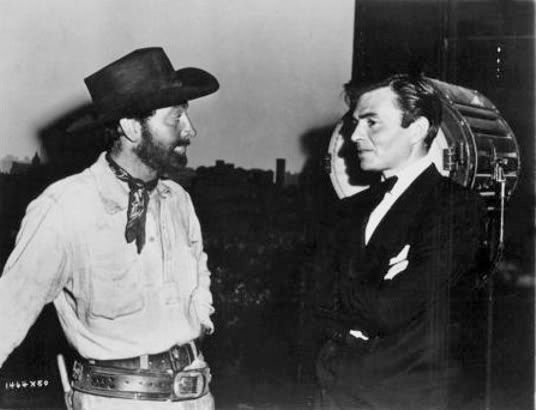
Robert Taylor and Barbara StanwyckMr. Taylor and unknown person.Mr. Taylor and James MasonMr. Taylor and unknown actor.Birthday Party.
And the shower:
The Shower.Mr. Taylor, John Hodiak.Messrs. Taylor and Hodiak.
















 Robert Taylor Actor